How a helmet liner turns a hard hit into a slower one
Most bicycle helmets use a thick layer of lightweight, crushable foam beneath a hard outer shell. In a crash, the shell helps spread the impact across a wider area, while the foam compresses. That compression takes time and distance: instead of the head stopping almost instantly against a hard surface, it slows as the liner deforms.
The distinction matters because a sudden stop can make the brain move inside the skull. By extending the stopping process, the liner can reduce the force reaching the head. It does not make a crash harmless, but it is designed to lessen the blow.
Why a used helmet may not protect as well
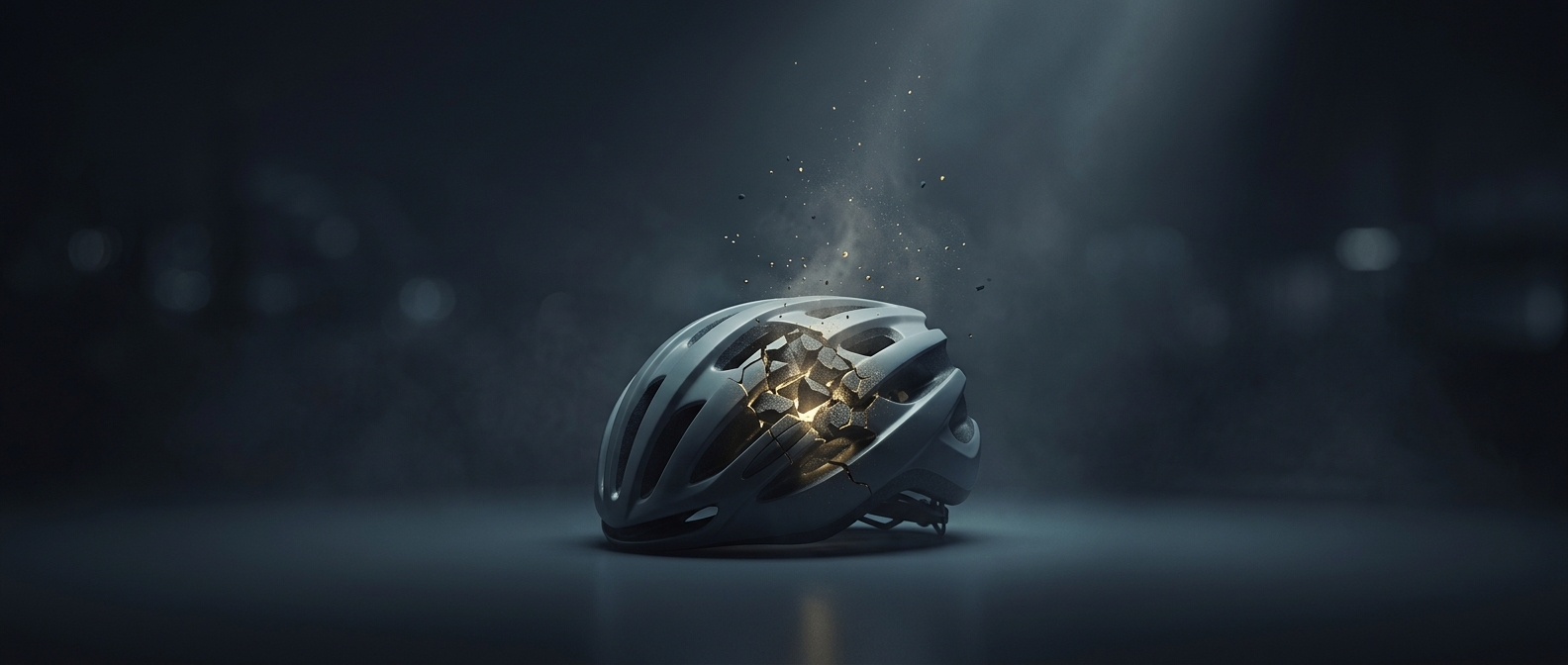
The foam works by collapsing internally. After a serious impact, it may be crushed, cracked, or otherwise damaged—even if the helmet’s outer shell looks mostly intact. A compressed section has less room to deform in another hit, so it may absorb less energy.
That is why a helmet involved in a significant crash should generally be replaced, following the manufacturer’s guidance. The damage can be difficult to judge by appearance alone. A helmet is not simply a hard shell that keeps its full protective ability indefinitely: its liner spends some of its structure to slow the head down.