How phone wires carried internet
Early broadband over telephone lines commonly used digital subscriber line, or DSL. It sent data as rapid electrical changes at frequencies above the range used for ordinary voice calls. A filter or splitter separated the two signals, so a household could often talk on the phone and use the internet at the same time.
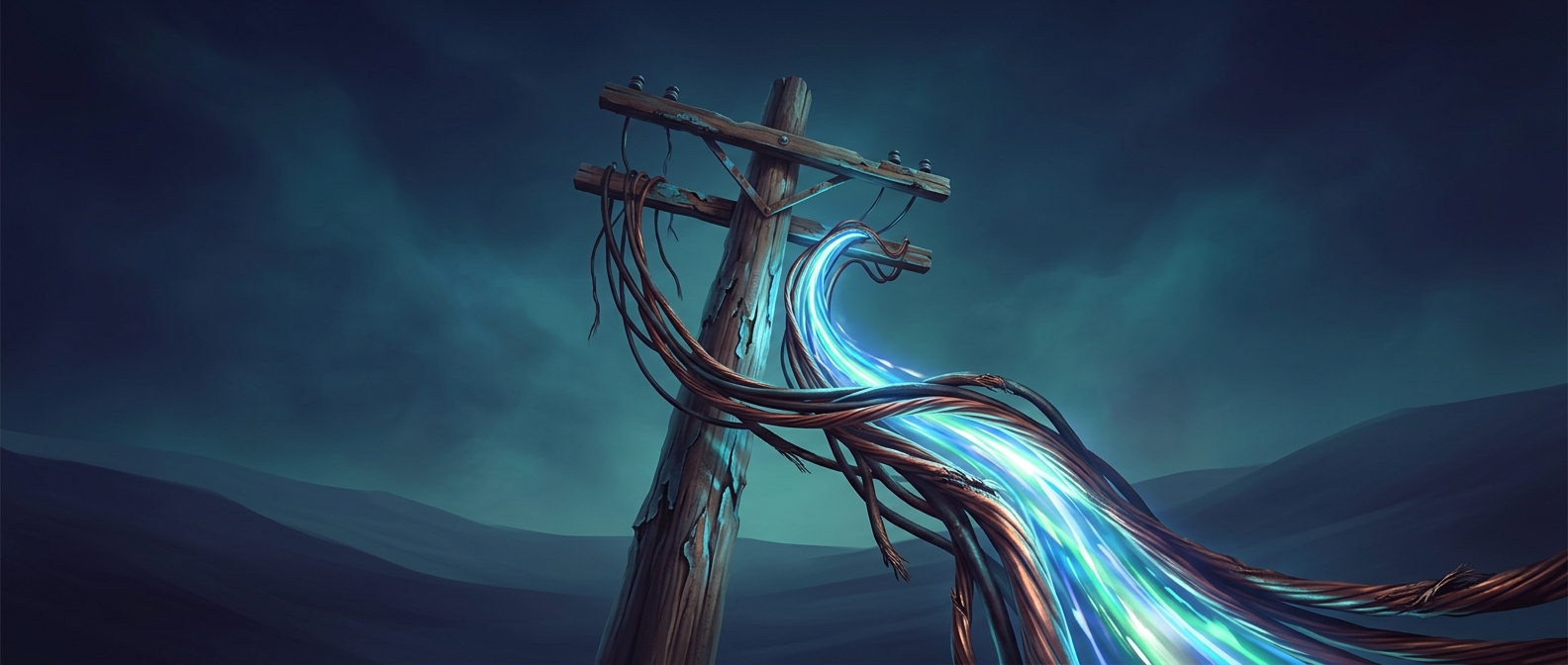
The clever part was not a new kind of wire; it was making old wiring do more. Telephone companies had already run copper pairs from neighborhood equipment to homes. By adding DSL equipment at both ends, providers could offer faster service without digging up streets to install a separate cable to every house.
The tradeoff built into the connection
Copper was convenient, but it was never an ideal long-distance data path. The higher-frequency signal weakens as it travels, so homes farther from the provider’s equipment generally get slower or less reliable service. The condition of the line matters, too: aging connections, corrosion, or water getting into damaged cables can interfere with the electrical signal.
Storms could expose those weaknesses. Wind, flooding, or lightning-related electrical disturbances might damage or disrupt parts of the network, and a line already in poor condition had less margin for trouble. The result was a practical bridge to home broadband: internet arrived over wires already in the ground, but the same aging copper that made rollout inexpensive could also limit speed and reliability.