The crossing gets harder with every runner
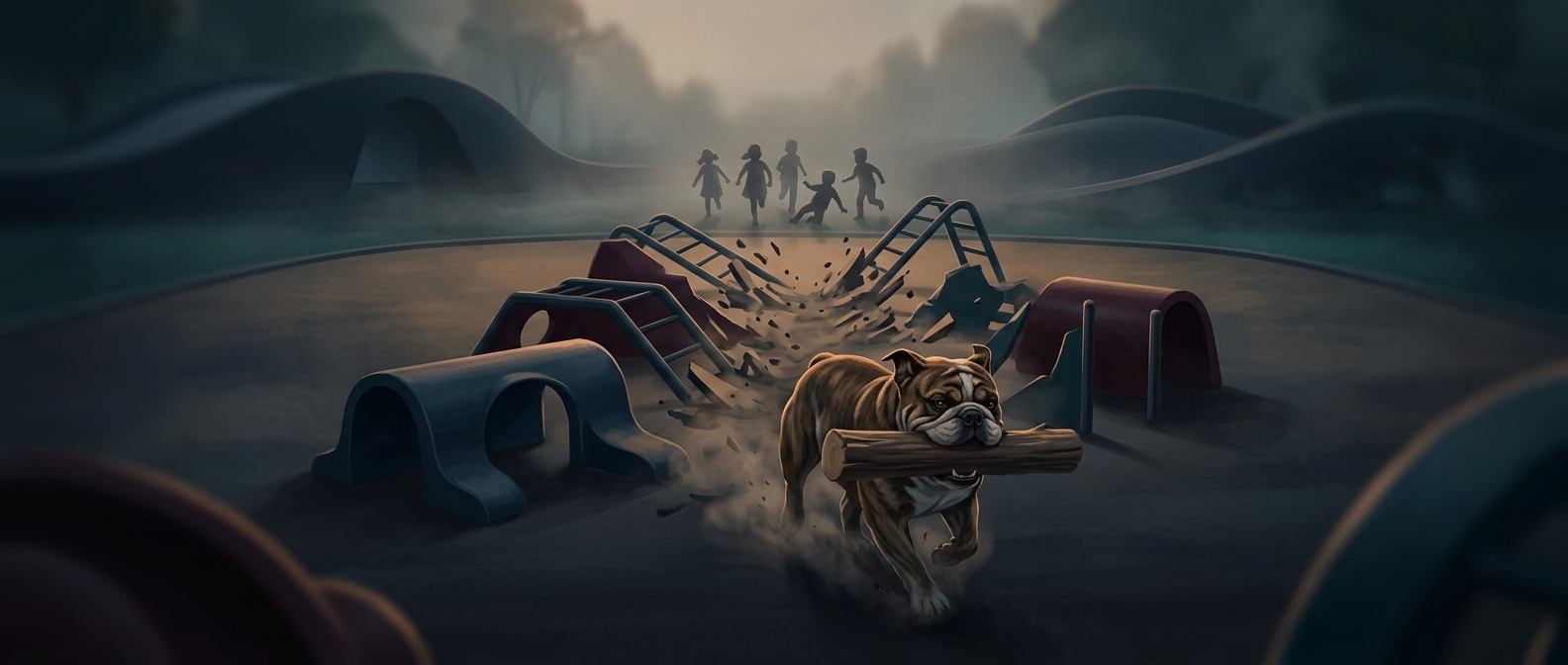
British Bulldog is built around a changing imbalance. At the start, a runner may have a clear route across the playing area. Each player caught joins the defenders, so the next crossing faces a thicker, less predictable barrier. The game’s central challenge is not simply speed: runners must choose when and where to commit, while defenders try to close the gaps.
That growth makes the middle especially crowded. A runner who slows or changes direction can give defenders time to converge; several people arriving at once can end up tangled together. A pileup is therefore a consequence of the game’s structure: the side trying to cross keeps meeting a larger group concentrated in the same space.
The pileup is also the game’s tradeoff
The expanding defending side creates the drama, but it also raises the physical stakes. Once bodies cluster, a fall can involve people who were not part of the initial tackle, and hands or fingers can be caught beneath others. Muddy clothes are an obvious nuisance; the pressure and confusion in a pileup are the more serious concern.
Rules and supervision can change how forcefully players are allowed to stop one another, so not every version plays the same way. But the underlying tension remains: the mechanism that makes each crossing more difficult also makes crowded contact more likely. As the defenders grow, the open route narrows—and a game of getting through can become a scramble to stay upright.