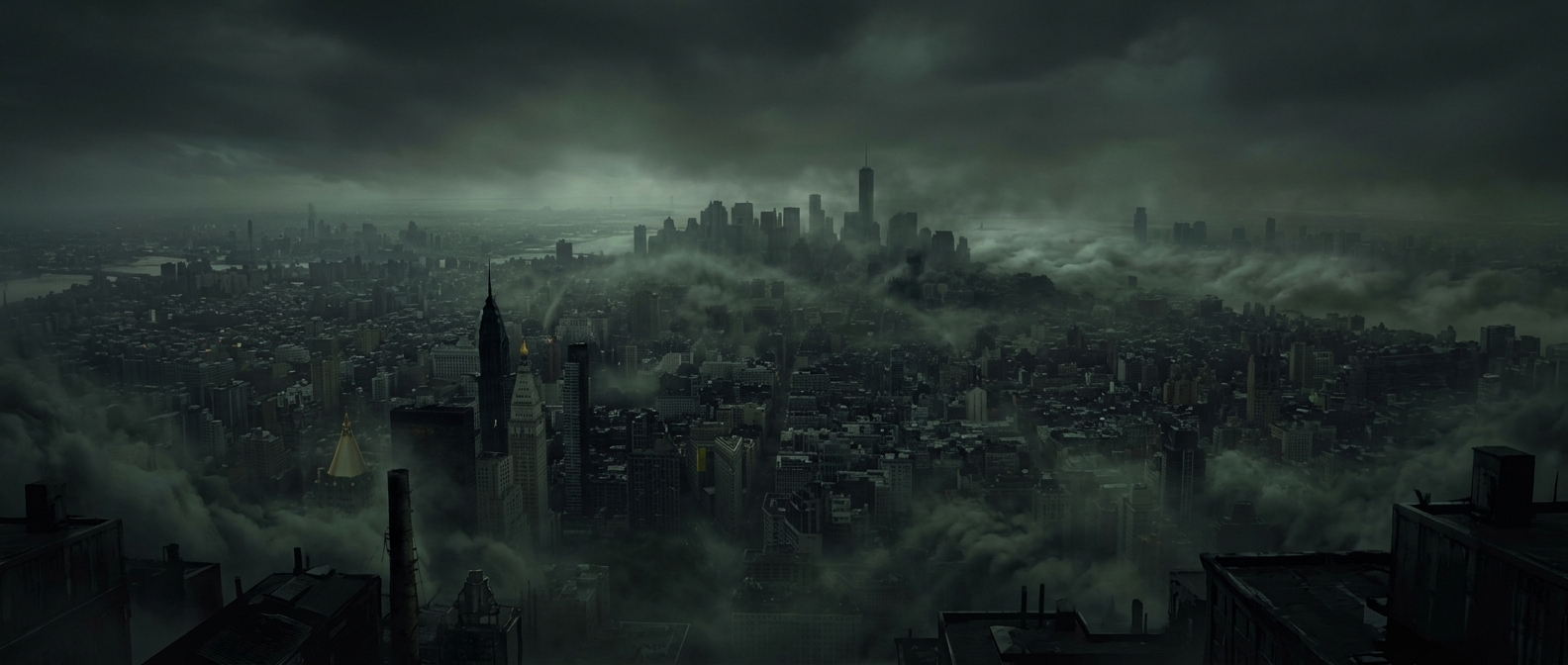
How London’s winter air became trapped
In December 1952, London’s familiar coal smoke accumulated under an unusually still weather system. A temperature inversion helped make the buildup dangerous: instead of getting colder with height, the air above the city was warmer than the air near the ground. That warm layer acted like a lid, suppressing the upward movement that would normally disperse pollution.
Coal burned in homes, factories and power stations released soot and sulfur dioxide. In the damp air, the soot thickened the fog, while sulfur pollution added to the harm residents breathed in. The result was not simply poor visibility. Fine particles and irritating gases filled the air at street level, where people had little chance to avoid them.
When ordinary movement became dangerous
The fog lingered for several days. Drivers could not see well enough to travel safely, and public transport was disrupted; even ambulances struggled to move through the streets. People indoors were not fully protected, because smoke entered buildings and the polluted air seeped inside. The crisis exposed a weakness in a city built around coal: when weather stopped the air from clearing, everyday fuel use could become a public emergency.
From crisis to cleaner-air rules
The smog helped turn air pollution from a familiar nuisance into a matter of public health and government responsibility. Britain’s Clean Air Act of 1956 encouraged smoke-control areas and a shift away from coal burned in homes. It did not make London’s air clean overnight, but it changed what cities could require of residents and industry. The episode’s lasting lesson was stark: pollution does not have to arrive as a dramatic industrial accident. Under the wrong conditions, the smoke produced by ordinary daily life can accumulate until a whole city is breathing it.