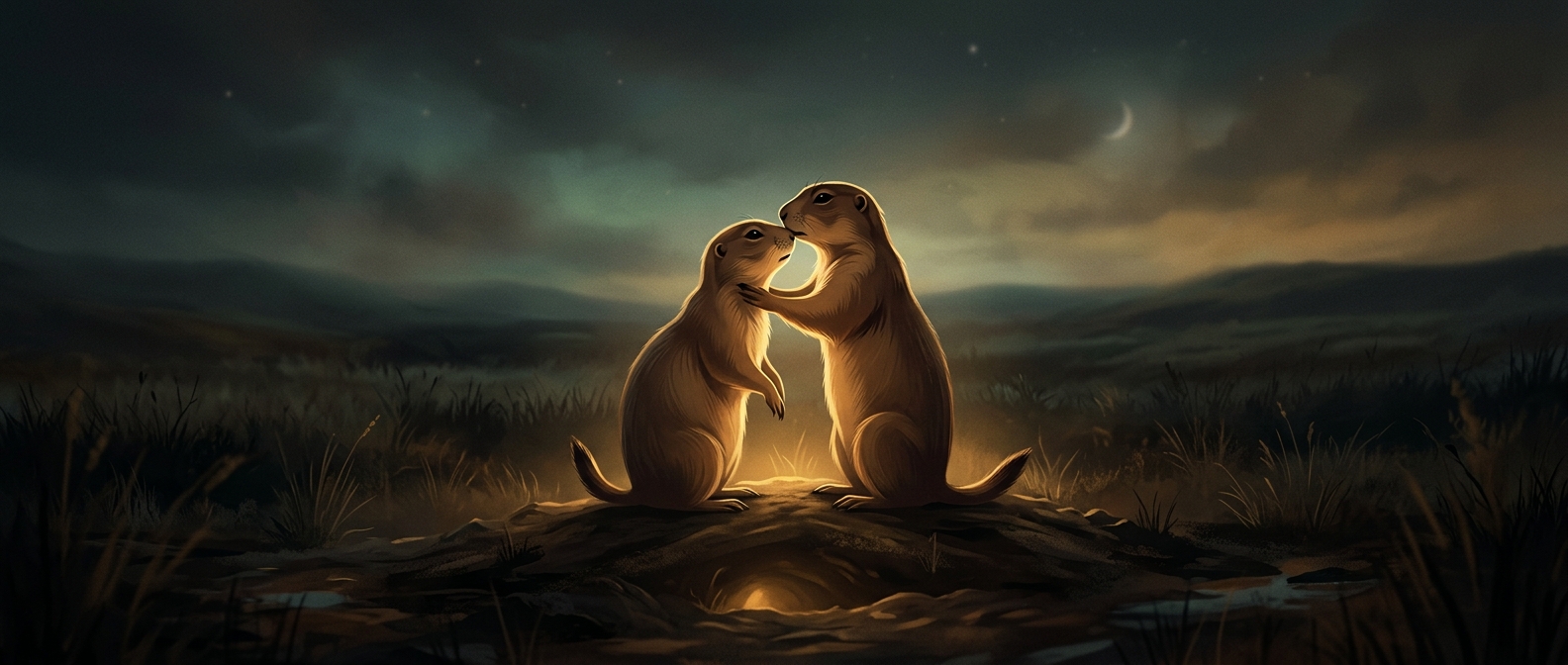
A greeting at the edge of a group
A prairie dog town can look like one enormous community, but it is made up of smaller social groups. Those boundaries matter: an animal approaching a neighbor may be treated differently from one approaching a member of its own group. The brief mouth-to-mouth contact people call a “kiss” is part of how prairie dogs sort out that difference.
Recognition changes what happens next
The contact is not a human-style expression of affection. It gives the animals a close-range opportunity to assess one another, and the response can shift immediately from tolerance to aggression. When the animals recognize each other as groupmates, the encounter is more likely to remain a greeting; when they do not, it may escalate into a confrontation.
That makes the gesture useful in a crowded colony, where simply seeing another prairie dog is not enough to tell whether it belongs nearby. A small, fast interaction can help determine whether an encounter stays social or becomes a defense of group boundaries. The surprising part is how much can hinge on a moment of contact: what looks like a kiss is also a decision point.