Why a Camera Can Invent Ripples
A camera does not record every point in a scene. Its sensor measures light at a finite grid of locations, then software reconstructs an image from those samples. If a pattern’s stripes are finer than the sensor can distinguish, the grid cannot represent their true spacing reliably. The resulting image may show a slower, larger-scale pattern that was never on the fabric. This sampling error is called aliasing; moiré is one visible form of it.
The Pattern Comes From a Mismatch
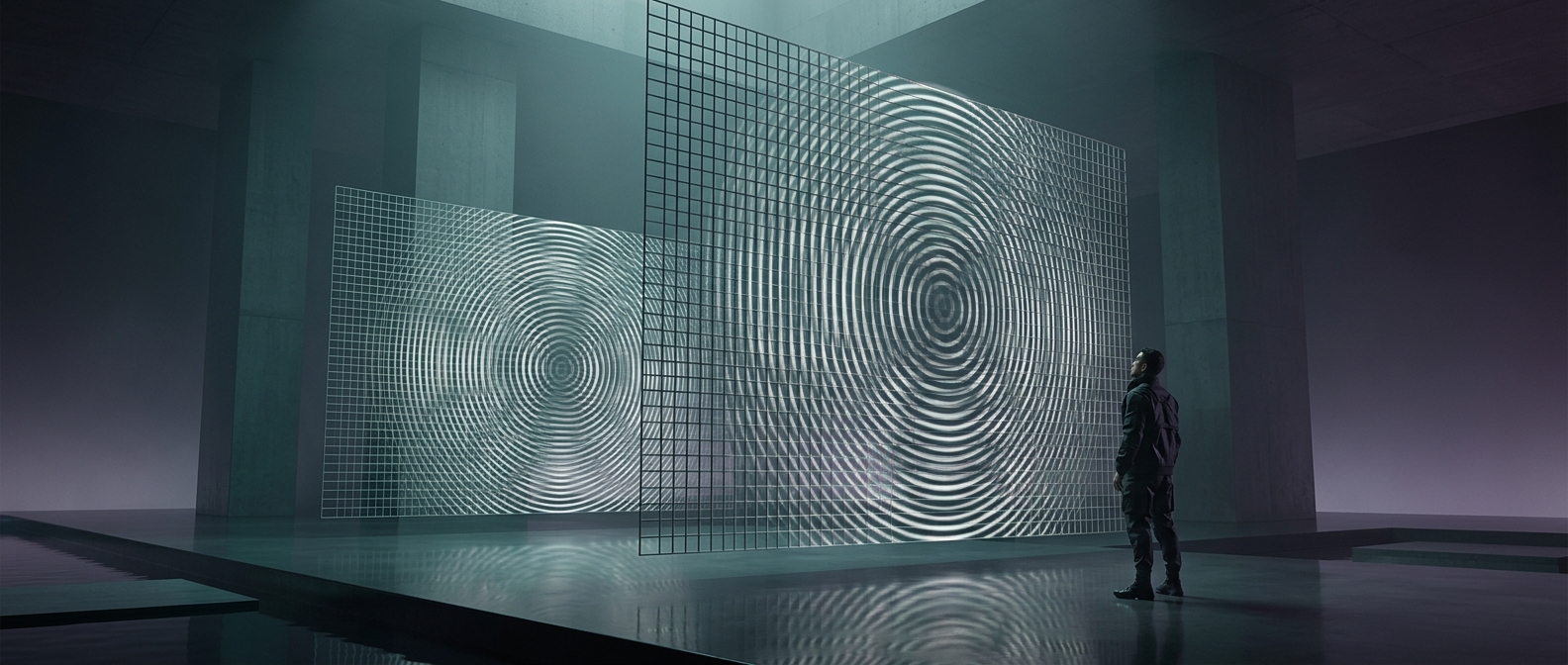
Imagine the shirt’s stripes as one repeating rhythm and the sensor pixels as another. Where the two rhythms line up, the recorded brightness changes little; where they drift out of alignment, it changes more. Across the image, those changing alignments can form broad bands, waves, or patches of false color. The apparent ripples are not physical texture—they are a beat-like pattern created by the interaction of two regular structures.
The effect can change dramatically with a small shift in camera position or angle. That shift alters how the stripes fall across the pixel grid, so a ripple may move, change shape, or disappear even though the shirt itself has not changed.
Why Fixing It Is a Tradeoff
A camera can reduce the problem before it reaches the final image. Some designs use an optical low-pass filter, which slightly softens fine detail so the sensor is less likely to misread it. But softening also sacrifices crispness. Without that filter, software may detect and suppress moiré afterward, though it can be difficult to remove the false pattern without blurring genuine fabric texture.
For a photographer, changing the framing or angle can shift the grid relationship enough to help. The tradeoff is a reminder that a digital image is not a perfect copy of every detail: when a scene contains more fine structure than its sensor can resolve, the camera may replace the missing information with a pattern of its own.