How an image can contain itself
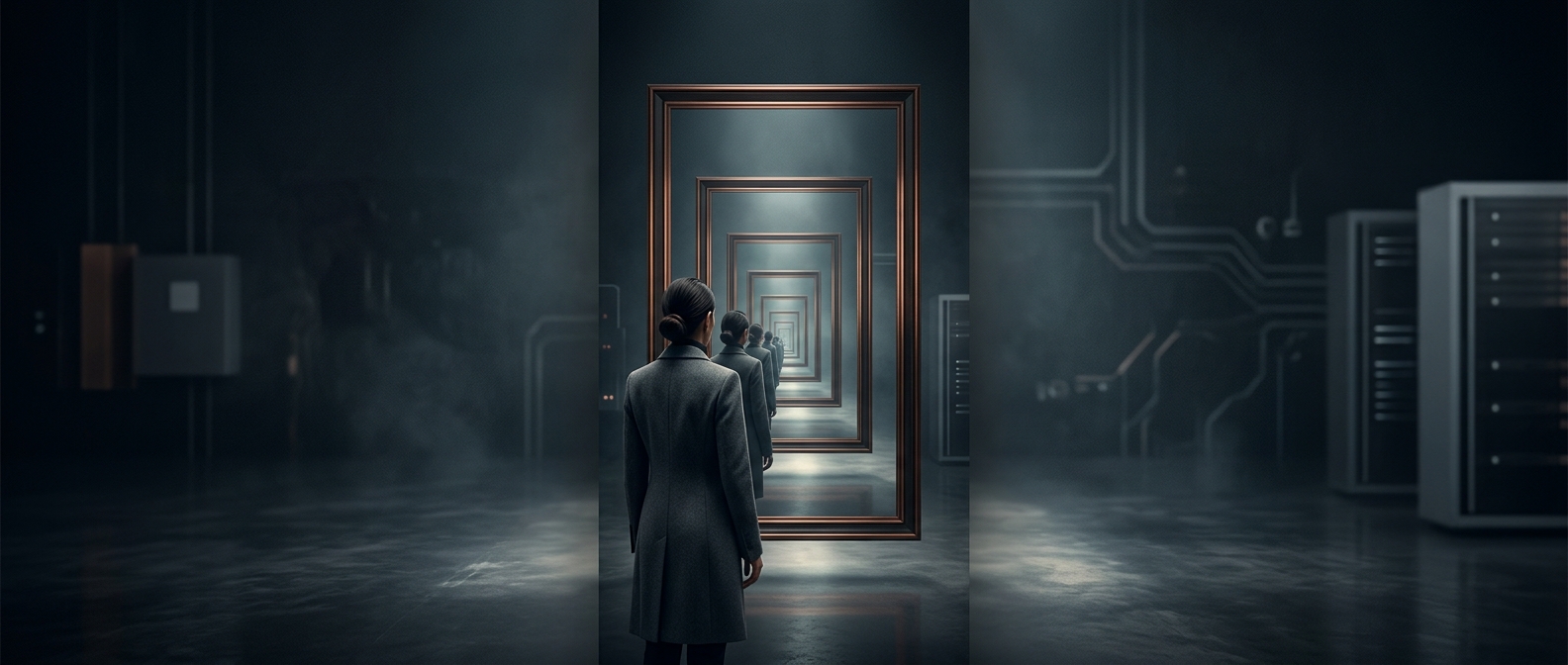
A Droste effect begins when a picture includes a smaller copy of that same picture. If the smaller copy also contains the picture, the pattern repeats: each version frames another, tinier version, creating the impression that the image continues inward without end.
The trick is to make each copy line up with the scene it depicts. In a simple design, an editor can place a scaled-down version inside a chosen area, then repeat the process. More elaborate images use perspective or curved surfaces so the repeated picture appears printed on a package, reflected in a mirror, or embedded in a scene. The recursion—the repeated application of the same image-making step—is what produces the loop.
Why the loop eventually disappears
The repetition can be imagined as infinite, but a digital image has only so many pixels. With every step inward, the copy gets smaller. Eventually, its features occupy less than a pixel or blur together, so the next version can no longer be clearly represented. The loop ends on screen not because the pattern has a natural final frame, but because the display runs out of detail.
The effect makes a self-reference visible: an image points back to itself, while each return is smaller and harder to see. That is why a tiny central patch can suggest an endless tunnel even though the file contains only a finite amount of information.