Why a paddle leaves a blue trail
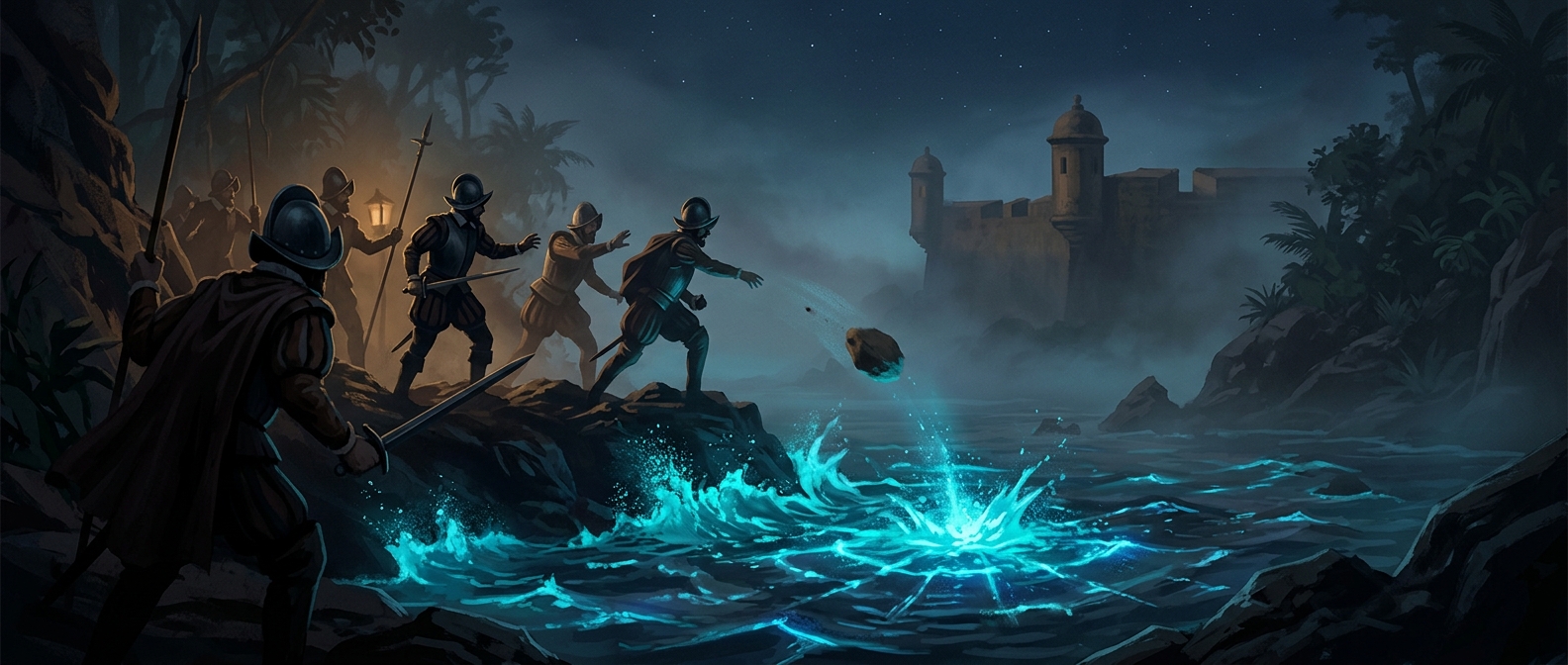
The light in Mosquito Bay comes from Pyrodinium bahamense, a single-celled organism that lives in the water. When a paddle cuts through the bay, it creates a sudden change in pressure and motion around the cells. That disturbance can trigger a chemical reaction inside them, producing a brief blue flash. The exact defensive role of the light is not fully settled, but one leading explanation is that a flash may startle a small predator—or attract a larger animal that could eat it.
The glow is therefore not a lamp switched on beneath the kayak. It is a multitude of tiny flashes wherever the water is disturbed. A paddle stroke can outline the blade and send sparks through its wake; droplets falling back into the bay can glitter too. The water between strokes may look dark.
What makes this bay unusually vivid
A bright display depends on having many of the organisms in the water at once. Mosquito Bay’s sheltered setting helps sustain a dense population: its narrow opening limits exchange with the open sea, while the surrounding mangroves contribute organic material to the coastal environment. The bay is not a sealed container, and its conditions can change, but its shape and habitat help create the setting for striking concentrations of glowing plankton.
The darkness matters as well. On a moonless night, there is less competing light, so each flash stands out more clearly. That changes what a visitor can see, not what makes the organisms produce light: the paddle supplies the disturbance; the dark sky makes the response easier to notice.
A living display, not a fixed attraction
Because the effect depends on living cells and local conditions, it can vary from night to night. The experience is also unusually physical: the light follows the kayak’s movement, appearing in the wake rather than as a steady glow across the whole bay. What looks like a luminous route through the water is really countless brief reactions, renewed with every stroke.