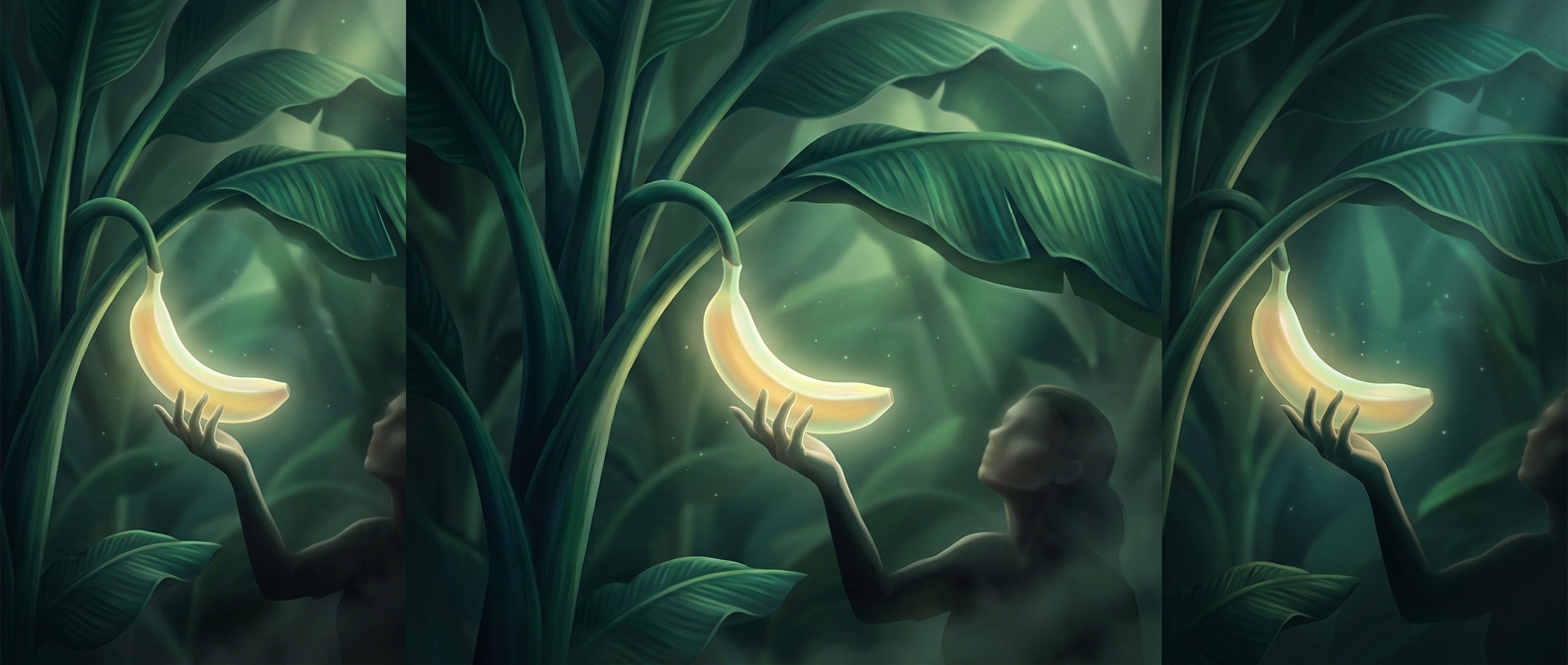
The “trunk” is a stack of living leaves
A banana plant builds its upright support differently from a tree. Each new leaf grows from the plant’s compact underground stem, then its broad lower portion—called a leaf sheath—wraps around the sheaths already above it. Layer upon layer forms a firm column that can hold the leaves high in the light, even though it contains no wood.
The real stem stays mostly below ground. When the plant is ready to flower, it sends a stalk upward through the center of that column and out among the leaves. The familiar bunch develops along this flowering stalk.
Why a botanical berry can have a peel
The flowers are arranged in clusters, and each developing banana comes from an individual flower. As its ovary—the part that contains the ovules—swells, its wall becomes the soft flesh and peel. That structure fits the botanical definition of a berry; the word does not require a small, round fruit or a thin skin.
Many familiar cultivated bananas have no hard, mature seeds. They are produced from plants that make fruit without normal seed development, and growers usually raise new plants from shoots sprouting near the base. So the fruit’s berry structure is there even when the seed-filled center people may expect from a berry is not.
The plant’s leafy column and its fruit follow two different rules: one is assembled from overlapping leaves, while the other develops from a flower. A bunch can therefore hang from what looks like a tree trunk, even though no woody trunk is involved.