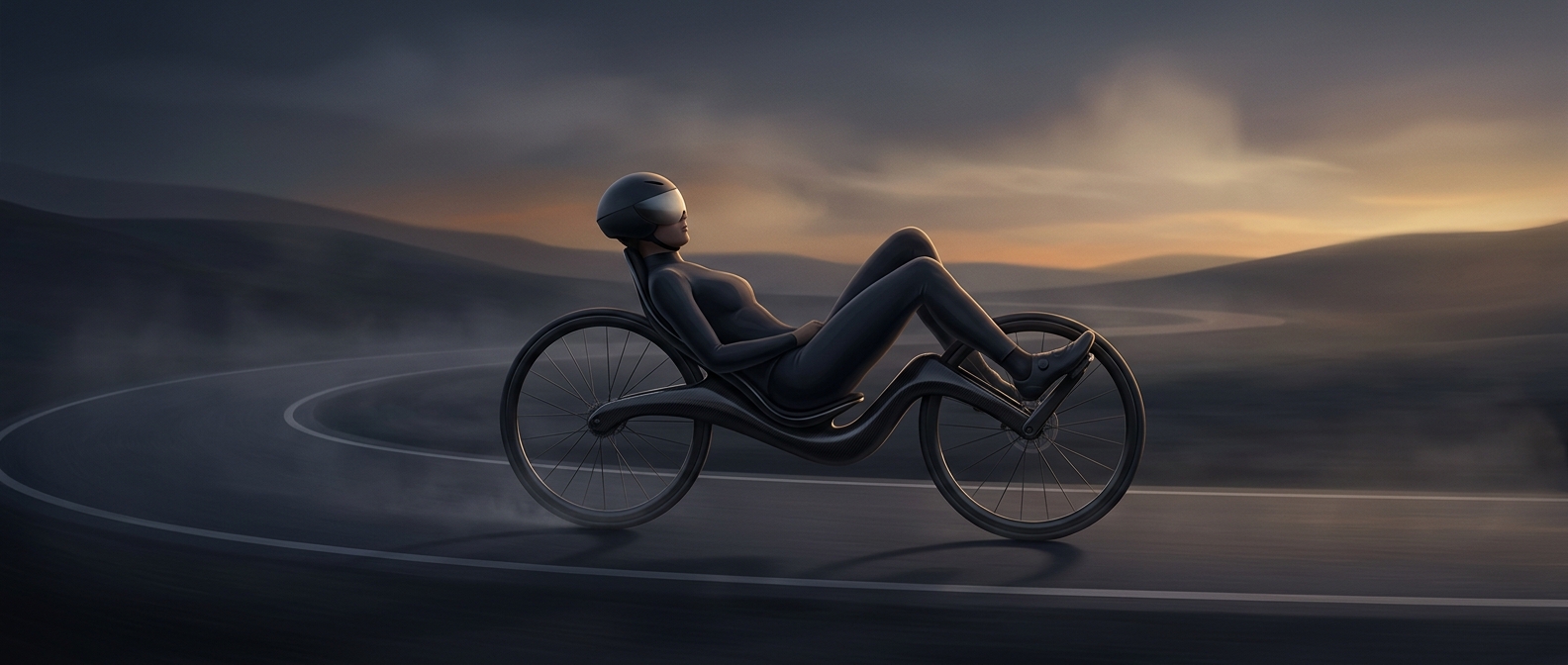
Why a recumbent can keep gaining speed
At cycling speed, the biggest force holding a rider back is often air resistance. A conventional rider bends over the handlebars, but still presents a broad torso and arms to the wind. On a recumbent, the seat supports the rider’s back while the pedals sit out in front. That lets the body lie more nearly horizontal, reducing the area pushing into the air.
The payoff grows with speed: air drag rises roughly with the square of speed, so overcoming it takes much more power as a bike goes faster. A smaller aerodynamic profile can therefore make a substantial difference on flat roads and descents, where wind resistance dominates. It does not make every recumbent faster in every situation; climbing, acceleration, and the particular bike and rider still matter.
The speed advantage changes the sightline
The same geometry that lowers the rider’s profile also lowers the rider’s head. In traffic, a driver may have a harder time seeing a recumbent over a parked car, through gaps between vehicles, or among visual clutter near an intersection. And a rider sitting low may have a more restricted view of what is happening ahead, especially when another vehicle blocks the line of sight.
That creates a practical tradeoff: aerodynamic efficiency comes partly from placing the rider closer to the road, while being noticed depends on standing out against the surrounding traffic. Bright clothing, lights, and a tall safety flag can help make the bike more conspicuous, though none can guarantee that a driver has seen it. The bike’s low shape can save effort in the wind, but it also makes visibility something the rider must plan for.