How an X-chromosome gene can influence hair loss
Hair follicles respond to androgens, hormones that include testosterone and its more potent derivative, dihydrotestosterone (DHT). The androgen receptor is a protein that lets cells detect these hormones. Variations in the gene that makes this receptor can affect how follicles respond to androgen signals.
In people prone to male-pattern hair loss, DHT can gradually shrink susceptible follicles. Each new hair grows finer and shorter, and eventually the follicle may produce little visible hair. The process tends to affect the temples and crown while other parts of the scalp remain less affected.
Why the maternal side is a clue, not a forecast
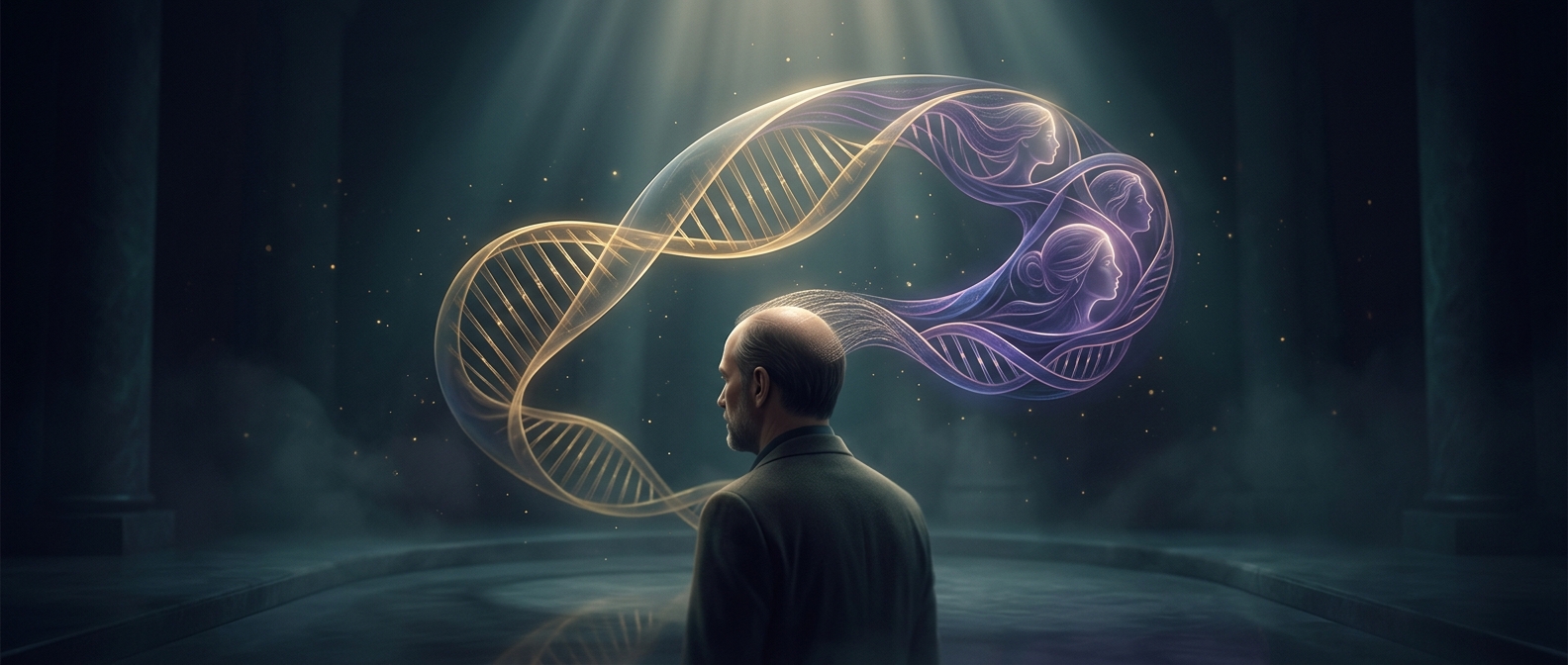
The androgen-receptor gene is on the X chromosome. A son gets his X chromosome from his mother and his Y chromosome from his father, so he inherits this particular gene through his maternal line. That makes patterns among male relatives on his mother’s side potentially informative.
But the receptor gene is only part of the picture. Hair-loss risk reflects many genetic influences, including genes inherited from either parent, as well as age and the way a person’s follicles respond to hormones. Two men in the same family can therefore have different patterns or degrees of hair loss. A maternal relative’s hairline offers a clue about one inherited influence—not a reliable prediction of what will happen to any one person.