How South London made room for a new sound
In the late 1990s and early 2000s, producers around Croydon were reshaping the skippy rhythms of UK garage. They stripped away much of its busy percussion and bright vocal samples, leaving long stretches of space for a deep, wavering bass line. The result was dubstep: less a sudden invention than a local scene gradually settling on a different way to make a dance floor move.
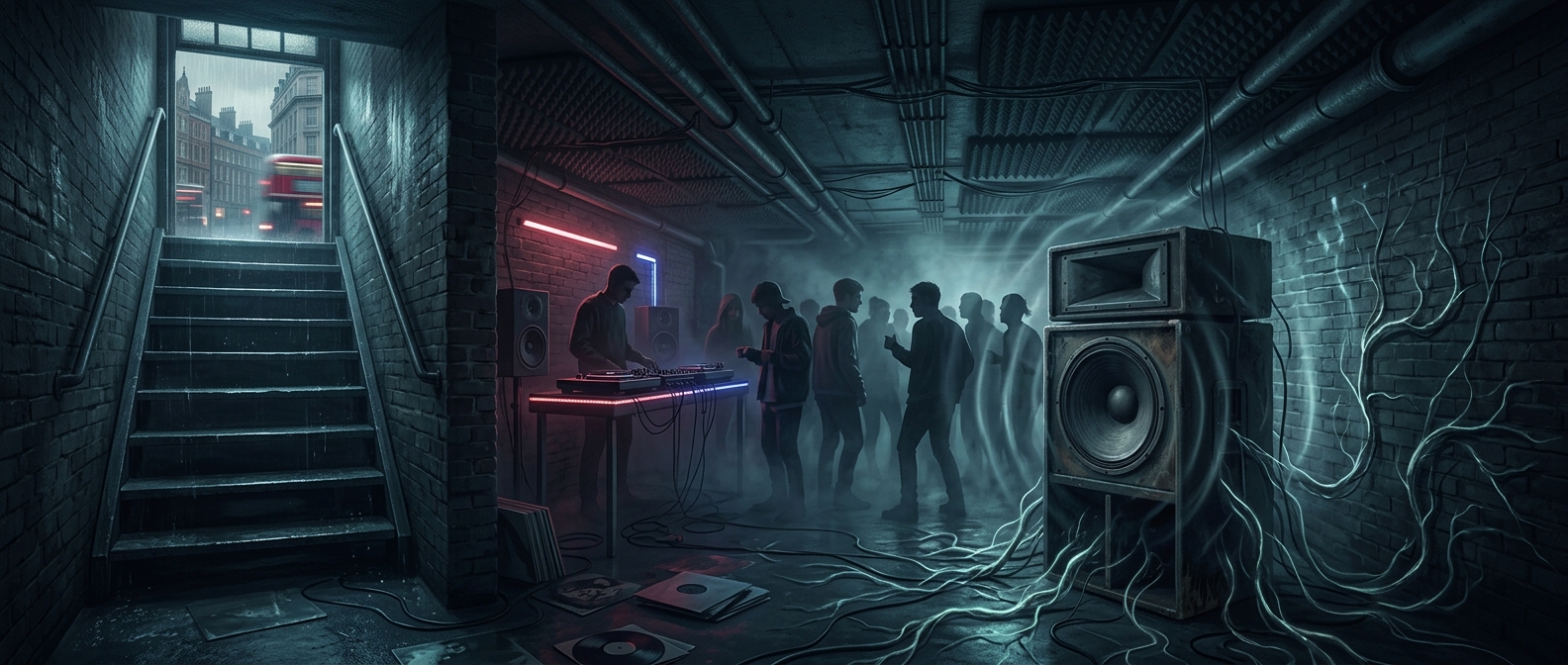
That sparseness mattered in small rooms. With fewer sounds competing, a bass note could feel like the main event—and the gaps around it could build as much tension as the beat. Producers made tracks for powerful sound systems, where very low frequencies could be felt in the body, not just heard. “Sub-bass” means those exceptionally low notes, often more physical than melodic.
A scene built on testing tracks in public
Early dubstep circulated through club nights, specialist record shops, and pirate radio. DJs played new records and dubplates—short-run, often exclusive copies—then learned from how the crowd responded. A track that seemed stark at home might become gripping in a room when its bass arrived after a long pause. That feedback loop encouraged producers to experiment with restraint, rhythm, and texture rather than filling every moment.
As the sound reached larger audiences, its bass-heavy character became easy to recognize in pop and advertising. But the commercial version grew from a more intimate design problem: how to make a small room feel charged with only a few sounds. The original tension is still there in a good dubstep track—the sense that the next bass hit has been made bigger by everything the music left out.