How Plaque Turns Into Tartar
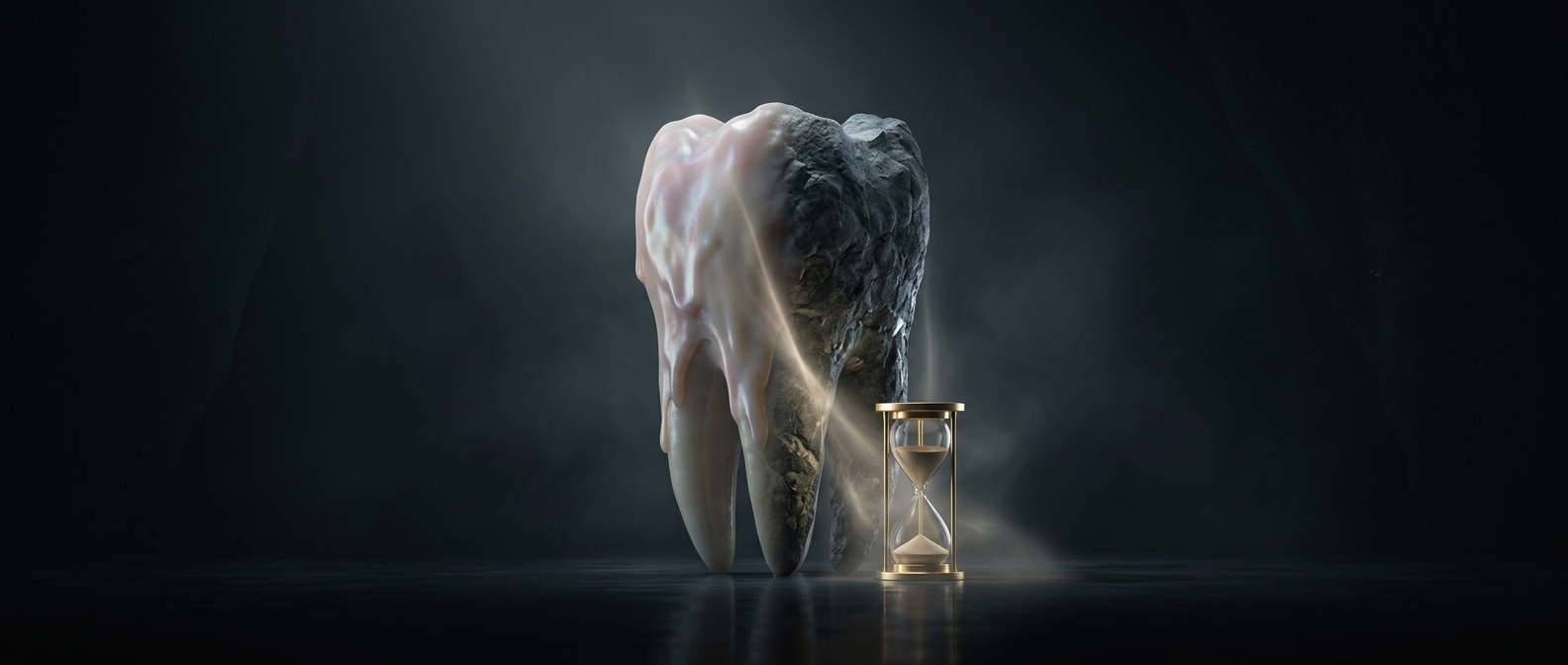
After you eat, bacteria in the mouth mix with saliva and food debris to form plaque: a soft, sticky film that clings to teeth, especially near the gumline and in hard-to-reach spots. Saliva carries minerals, including calcium and phosphate. Over time, those minerals settle into plaque and make it calcify—turning the once-soft film into a hard deposit called tartar, or dental calculus.
The change can happen quickly, but not at the same pace for everyone. Plaque that remains on a tooth gives saliva more time to deposit minerals. Crowded teeth, rough surfaces, and areas that are easy to miss while brushing can therefore become common places for tartar to develop.
Why Brushing Stops Working
A toothbrush can disrupt and remove soft plaque because the film has not yet hardened. Once minerals lock it into a crust, ordinary brushing and flossing cannot scrape it off safely or effectively. Trying to chip it away with a sharp object can injure the gums or damage tooth surfaces.
Tartar also creates a rough surface where more plaque can collect. When it builds up near the gums, it can make the gumline harder to clean and contribute to irritation and inflammation. The practical point is that preventing plaque from lingering matters: brushing and cleaning between teeth regularly remove the soft film before it has time to mineralize.
What a Dental Cleaning Changes
A dental professional uses specialized instruments to loosen and remove tartar without relying on a toothbrush. That cleaning resets the surface, but plaque begins forming again soon afterward. The difference between a deposit that can be managed at home and one that needs professional removal is not that tartar is a different substance from plaque; it is that mineralization has changed its texture and attachment.