From a useful cloth to a visible royal accessory
A small square of cloth solved an ordinary problem: it gave its owner a more convenient way to wipe his nose than using a sleeve. In the era before disposable tissues, a cloth could be carried and reused, so its usefulness depended on keeping it close at hand.
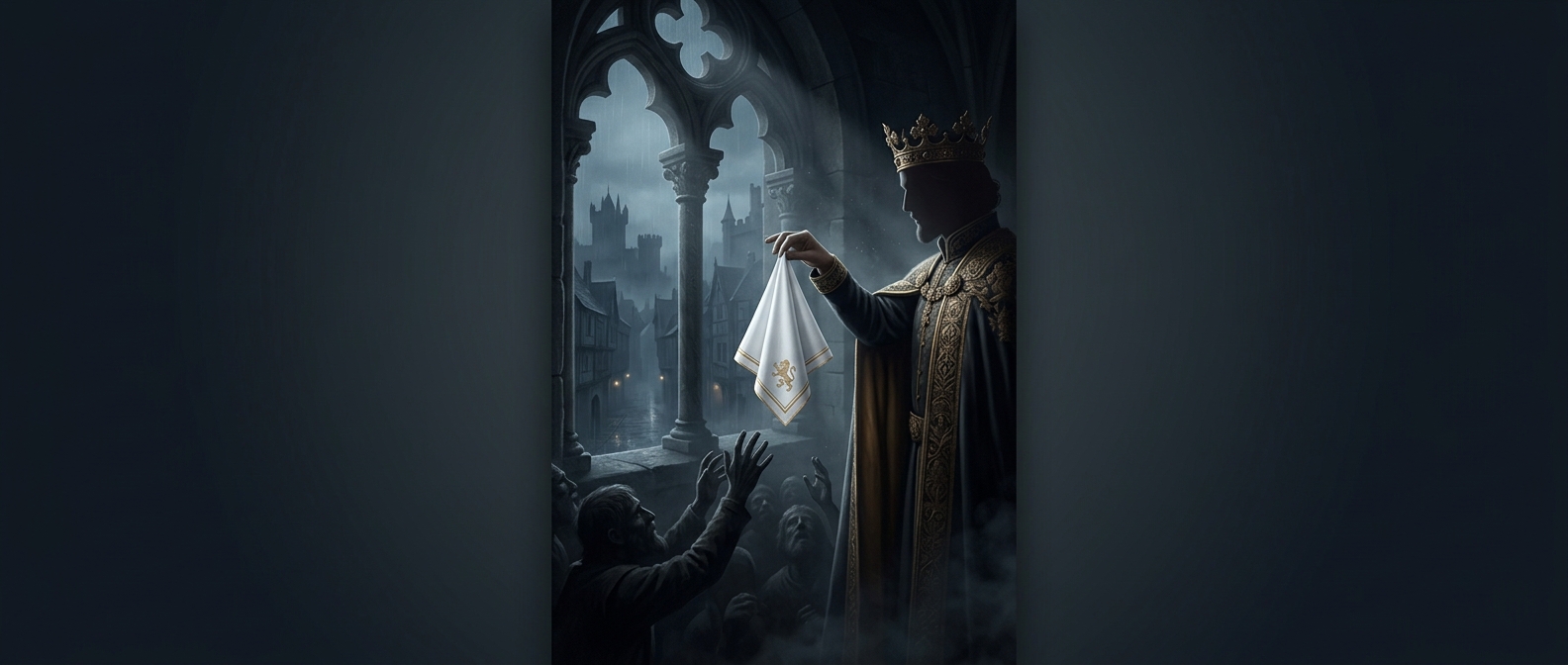
The story credits Richard II with asking tailors to make these squares. Having them made for a king also changed how the item could be understood: not just as something for personal hygiene, but as an accessory prepared as part of dress.
When practicality became formality
Once a practical object was incorporated into royal clothing, it could be displayed and made to look deliberate. That shift matters: formal dress often turns everyday necessities into signs of polish and status. The cloth did not stop being useful; its place in an outfit gave that usefulness a more ceremonious setting.
The memorable change is from an improvised wipe to something tailored and worn as part of royal appearance—a reminder that even formal fashions can begin with a very ordinary need.