How a Flush Can Put Droplets in the Air
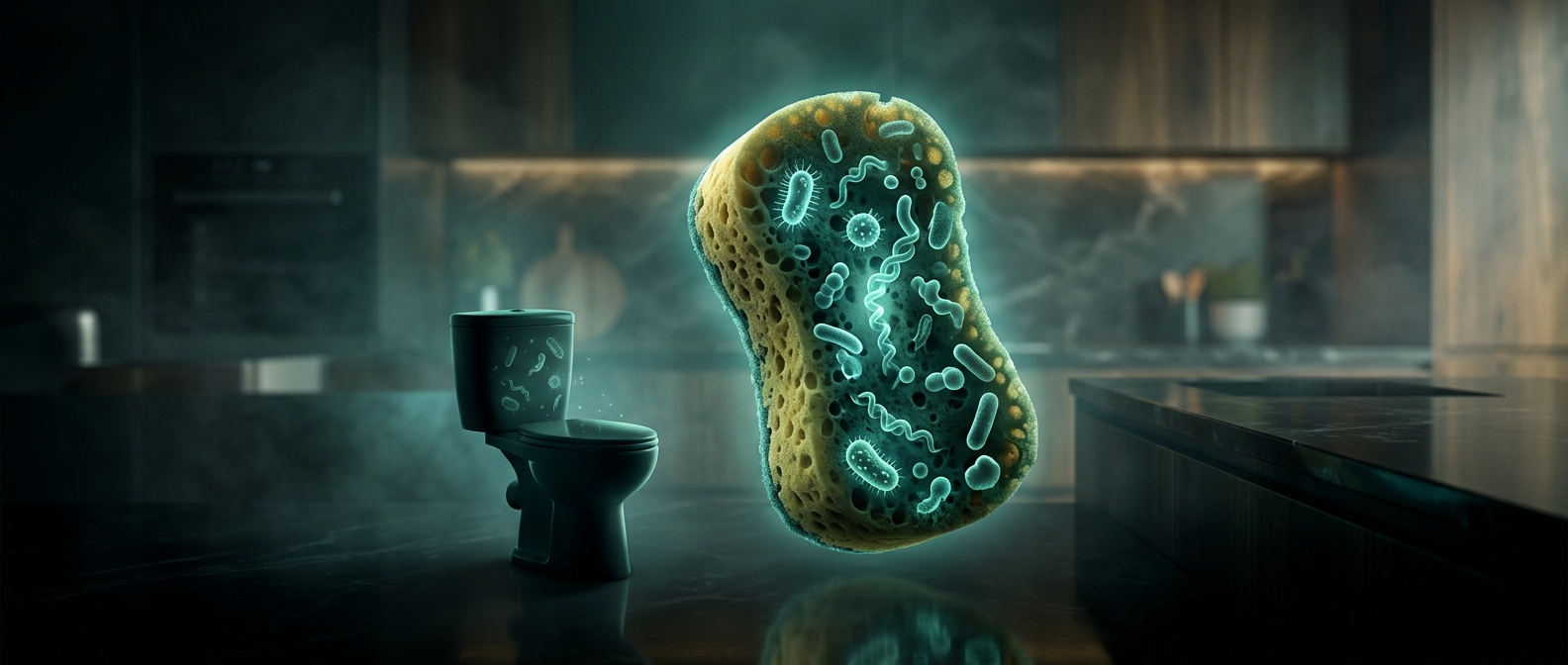
When a toilet flushes, moving water breaks up and can propel tiny droplets into the surrounding air. The mixture is often called a toilet plume. Some droplets fall quickly; smaller ones can linger or travel with air currents before settling on nearby surfaces. If the lid is open, there is no barrier to limit their spread, though a closed lid does not seal a toilet airtight.
Why a Hand Dryer Can Redistribute Them
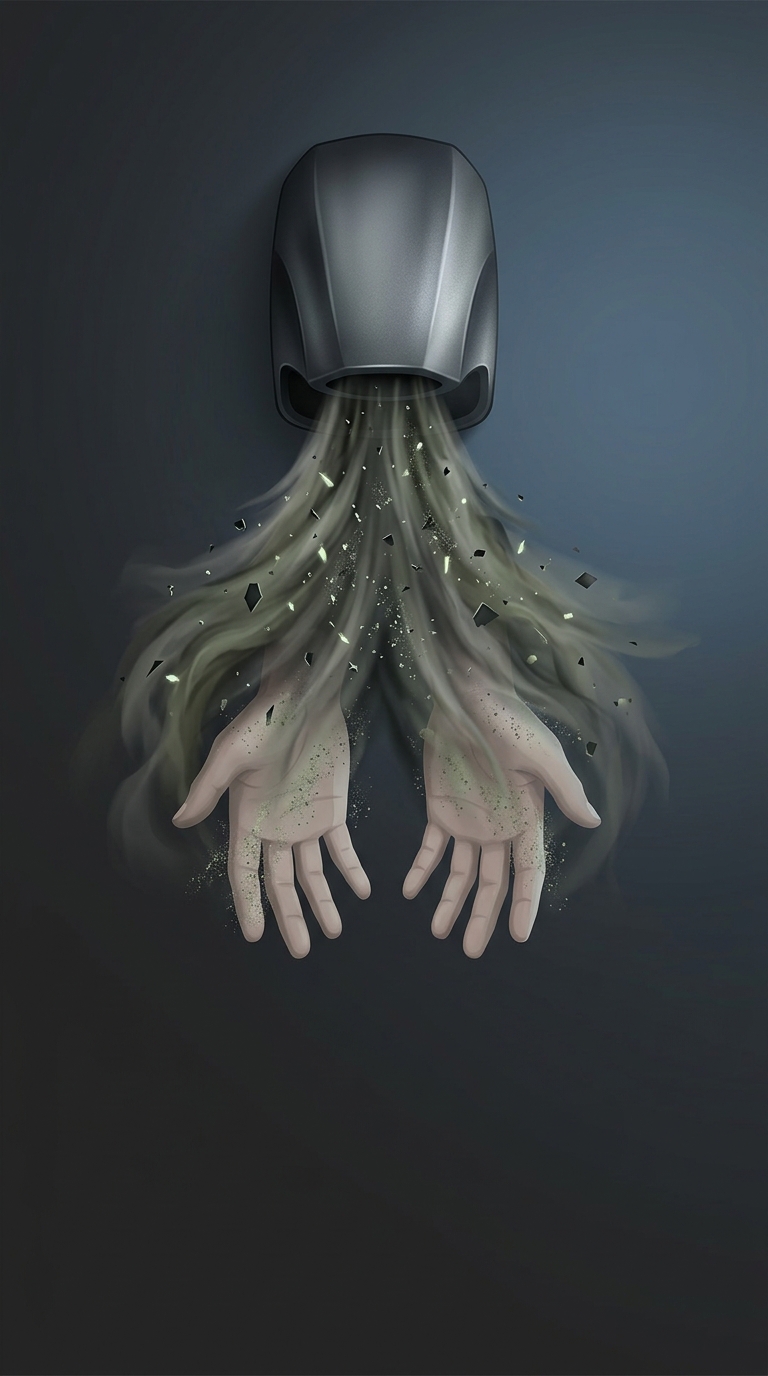
A dryer with an air intake pulls in air from its surroundings, then sends that air past a heating element or through a fast-moving stream. If toilet-plume particles have reached the intake, the airflow can carry some back out and deposit them on hands or nearby surfaces. The dryer is not creating contamination from nothing; it can move particles already present in the room.
How much reaches a person depends on the restroom’s layout, ventilation, distance from the toilet, dryer design, and how recently a toilet was flushed. A particle detected near a dryer also does not automatically mean it contains a disease-causing organism, or that enough was transferred to cause illness. Detection, exposure, and infection are different steps.
What This Means After Washing
Soap and running water remove many microbes from hands, but drying is still part of the process: hands that remain wet can transfer microbes more readily than dry ones. In a shared restroom, the air and nearby surfaces can add another route for particles to reach clean hands. The practical takeaway is modest but useful: use a dryer as directed, avoid touching your face before leaving, and remember that restroom hygiene depends on more than what happens at the sink.