Why Soap and Water Can Do What Sanitizer Cannot
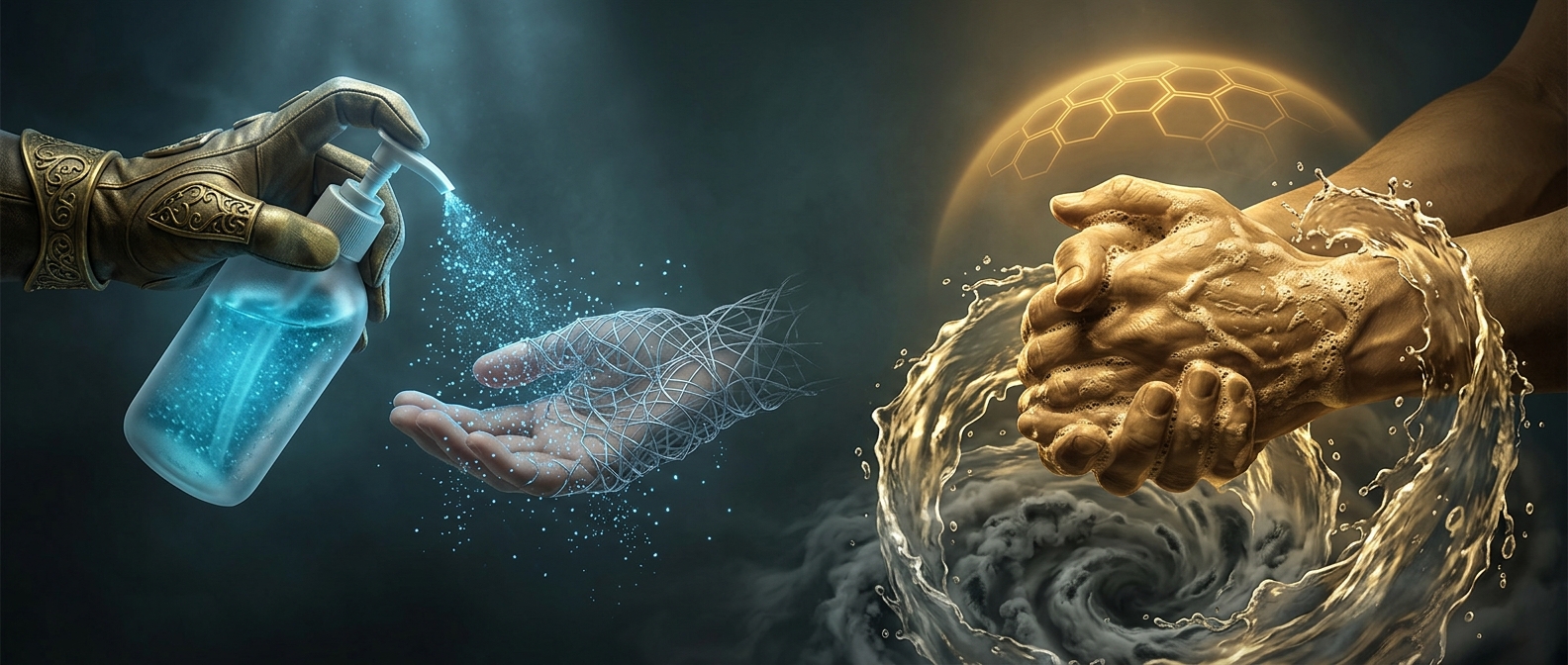
Hand sanitizer mainly works by exposing many microbes to alcohol, which damages essential parts of their cells or outer coats. But it does not make material disappear from your skin. Dirt, grease, food residue, and microbes caught in that grime can remain on your hands even after the alcohol has dried.
Soap changes the cleanup process. Its molecules have one end that mixes with water and another that attaches to oils and grease. As you rub your hands, soap helps loosen oily residue and the microbes embedded in it; rinsing then carries that mixture down the drain. Washing is both germ control and physical removal.
Why Some Germs Are Harder to Inactivate
Alcohol-based sanitizer works well against many common germs when used in enough quantity and allowed to dry, but it is not equally effective against every pathogen. Norovirus, a common cause of vomiting and diarrhea, is among the germs that can be less susceptible to alcohol. Soap-and-water washing helps remove it from hands rather than relying only on chemical inactivation.
That distinction matters after using the toilet, changing a diaper, or cleaning up vomit or diarrhea—situations where hands may carry both pathogens and organic material. If hands are visibly dirty or greasy, sanitizer also has trouble reaching the skin evenly.
The Practical Difference
Sanitizer is useful when a sink is unavailable, but it is not a universal substitute for washing. Soap, friction, and running water work together: rubbing loosens what is on the skin, and rinsing takes it away. When hands are soiled or norovirus may be involved, that physical cleanup is the part a quick application of sanitizer cannot reliably provide.