How soap loosens what water cannot
Many microbes cling to skin alongside the oils, sweat, and grime that naturally coat it. Water alone can rinse away some loose material, but it does a poorer job lifting oily residue—and the microbes caught in it.
Soap molecules help because each has a water-attracting end and an oil-attracting end. As you lather, the oil-attracting ends associate with grease on your skin, while the water-attracting ends remain in the lather. Rubbing helps break up and lift that material; rinsing then carries it away. For ordinary handwashing, soap mainly removes microbes rather than killing them.
Why the rubbing matters
A quick splash may wet the hands without reaching the places where residue tends to linger: fingertips, around the nails, between fingers, and the backs of the hands. Lathering and rubbing spread soap across these surfaces and give it time to loosen grime. The rinse is the final step that sends the loosened material down the drain.
That is why handwashing is a small sequence, not just contact with a faucet: wet, lather, scrub all surfaces, rinse, and dry. Public-health advice commonly recommends scrubbing for about 20 seconds—long enough to cover the whole hand instead of brushing only the fingertips through the water.
A simple barrier between people
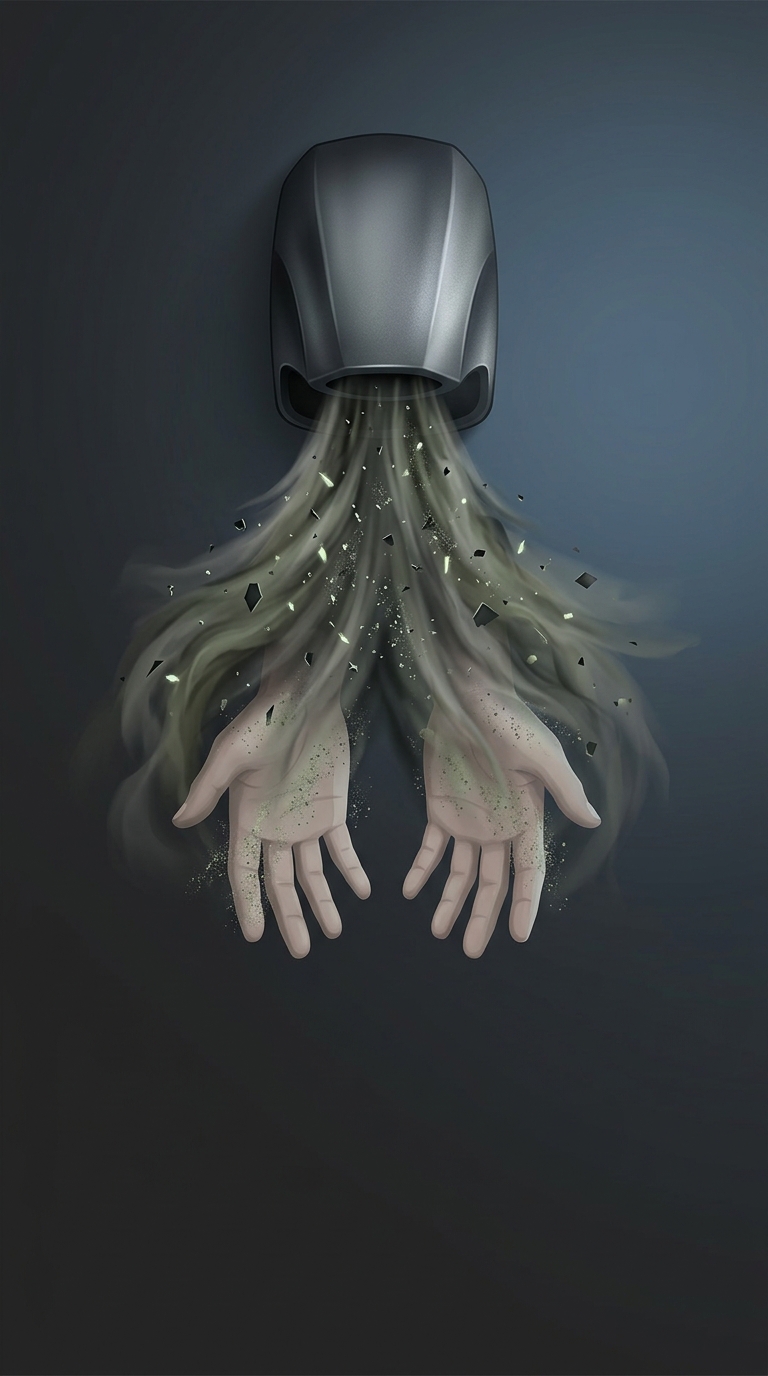
Hands constantly move between shared surfaces and the face, food, and other people. Removing microbes before those transfers can interrupt routes by which infections spread, especially when contamination is picked up during ordinary tasks such as using a restroom or handling food. Washing cannot make hands sterile, and it does not prevent every infection, but it reduces what hands carry from one contact to the next.
The crucial detail is easy to miss: soap does not need to destroy every germ to help. It needs to loosen contamination from the skin, and a thorough rinse needs to carry it away.