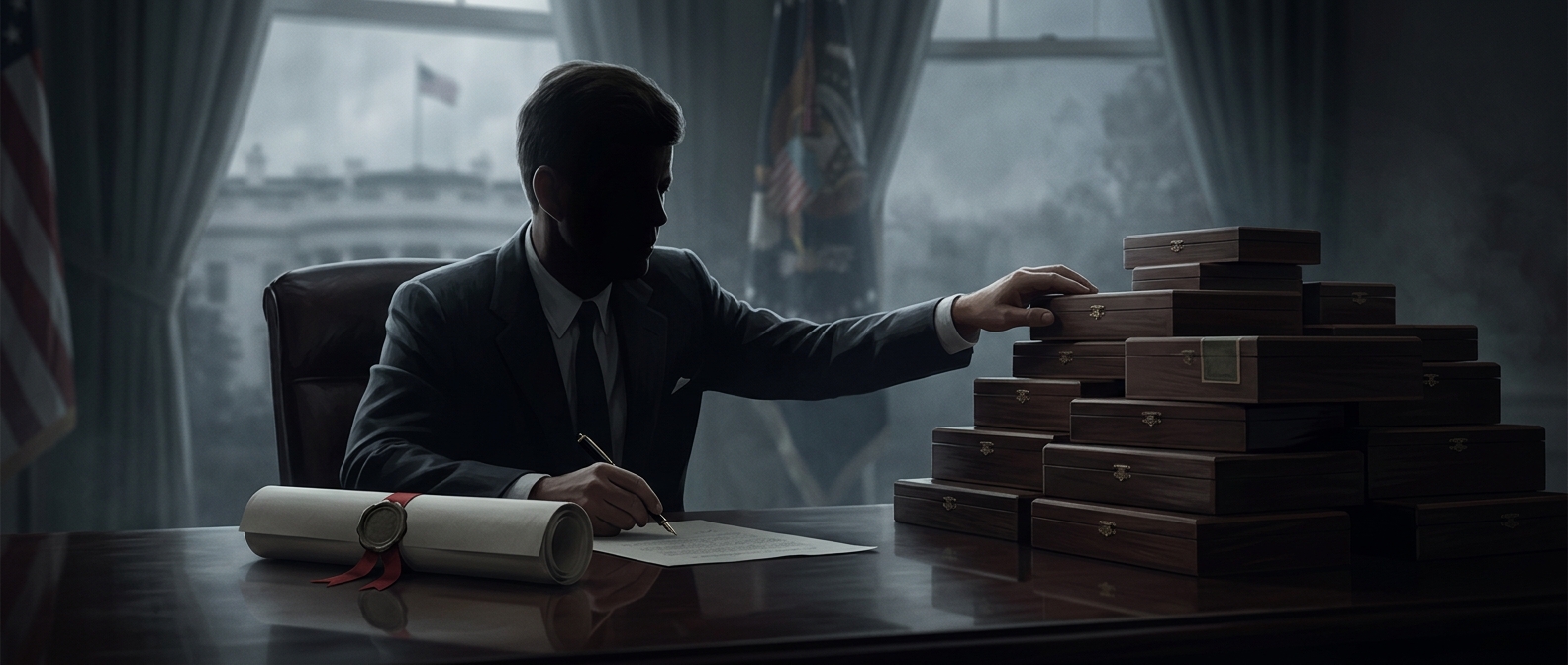
A Last-Minute Order Before the Cuba Ban
The 1,200 cigars were more than a personal stock-up: they were bought just before a policy change made Cuban cigars illegal to import into the United States. The story is usually told as a small, human detail alongside a much larger Cold War decision.
The cigars were H. Upmann petit coronas, a short, slim format. Kennedy’s press secretary, Pierre Salinger, was tasked with finding as many as he could in Washington. The order came before Kennedy signed the measure establishing the U.S. embargo on Cuban goods; the import ban took effect days later.
Why Cigars Were Caught Up in the Embargo
After Fidel Castro’s revolution, Cuba’s government took control of many U.S.-owned businesses and property, and the island moved closer to the Soviet Union. Washington responded with escalating economic restrictions. The 1962 embargo barred imports from Cuba, so the rule applied to cigars as well as other Cuban products—not because cigars were uniquely targeted, but because they were part of Cuban trade.
That distinction explains the timing. Once the import prohibition took effect, a Cuban cigar could no longer be legally brought into the country through ordinary commerce. Buying the cigars beforehand turned a broad foreign-policy measure into a deadline with an unusually tangible edge: Kennedy could still get a favorite product, but only before the rules changed.
The episode is memorable because the scale of the policy and the scale of the purchase sit side by side: a ban affecting trade between nations, and one hurried effort to secure 1,200 cigars before it began.