How a party game acquired a loaded name
The game’s familiar setup—one person whispers a message to the next, until the last player says it aloud—turns ordinary slips of memory and hearing into a group spectacle. In Britain, it was long known as “Chinese Whispers.” The name did more than describe the whispering: it drew on a stereotype that communication from a distant, unfamiliar culture was strange or unreliable.
That framing made the joke depend on an imagined foreignness, even though the game’s real engine is universal. A phrase gets harder to preserve when it passes from person to person in a low voice, without anyone being able to check the original.
Why the message changes
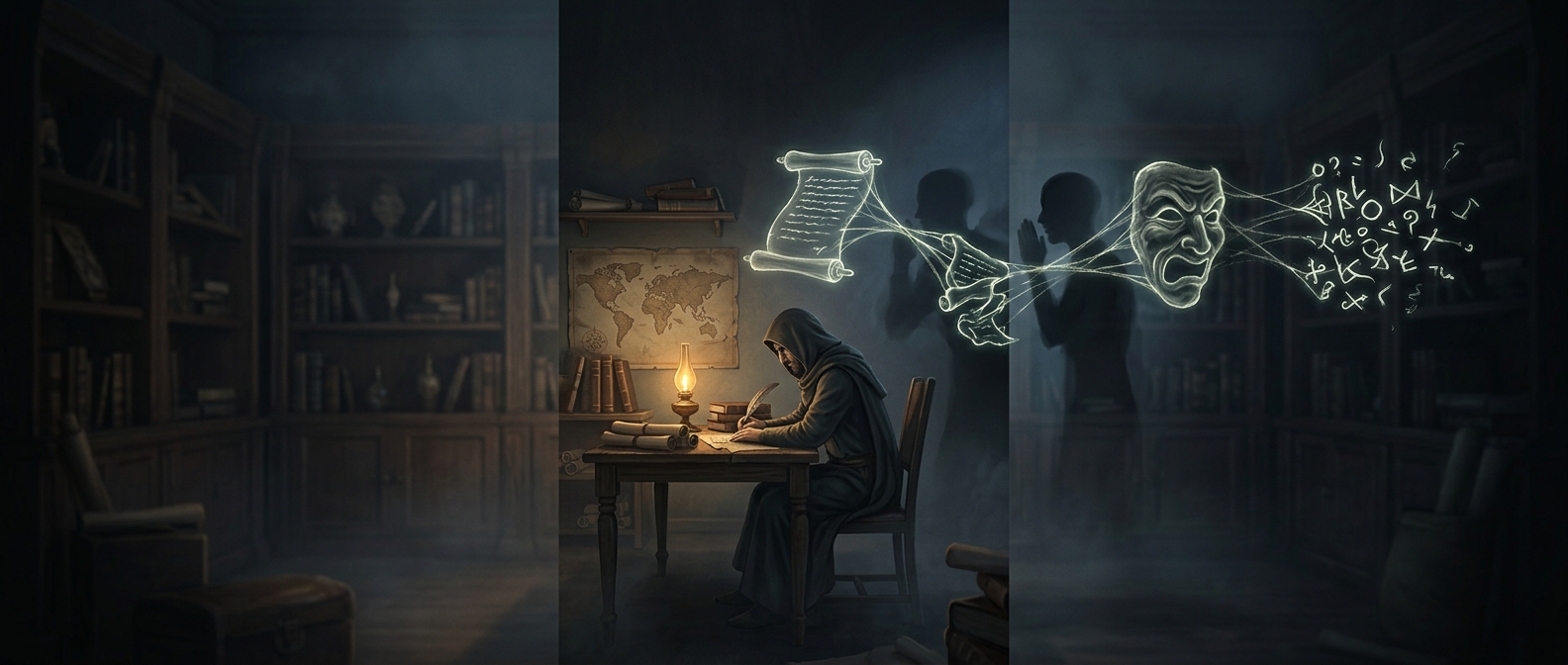
Each player must hear, remember, and reproduce the message. A muffled word may be mistaken for a familiar one; an awkward phrase may be unconsciously smoothed into something that makes more sense. The next player then treats that altered version as the original. Small changes can accumulate, especially when players rely on memory rather than repeating sounds exactly.
The game therefore needs no language barrier or cultural misunderstanding to work. Its humor comes from how easily people reconstruct an unclear message—and how confidently the final version can differ from the first.
A name that shifts the joke
“Telephone game” keeps the focus on the chain of transmission rather than on a caricature of outsiders. Names vary by region, but changing the label also makes the game’s actual mechanism clearer: the message is transformed by ordinary human perception, not by any particular group’s way of speaking. By the end, the funniest distortion may be the one nobody remembers making.