How a Torch Act Makes Risk Look Close
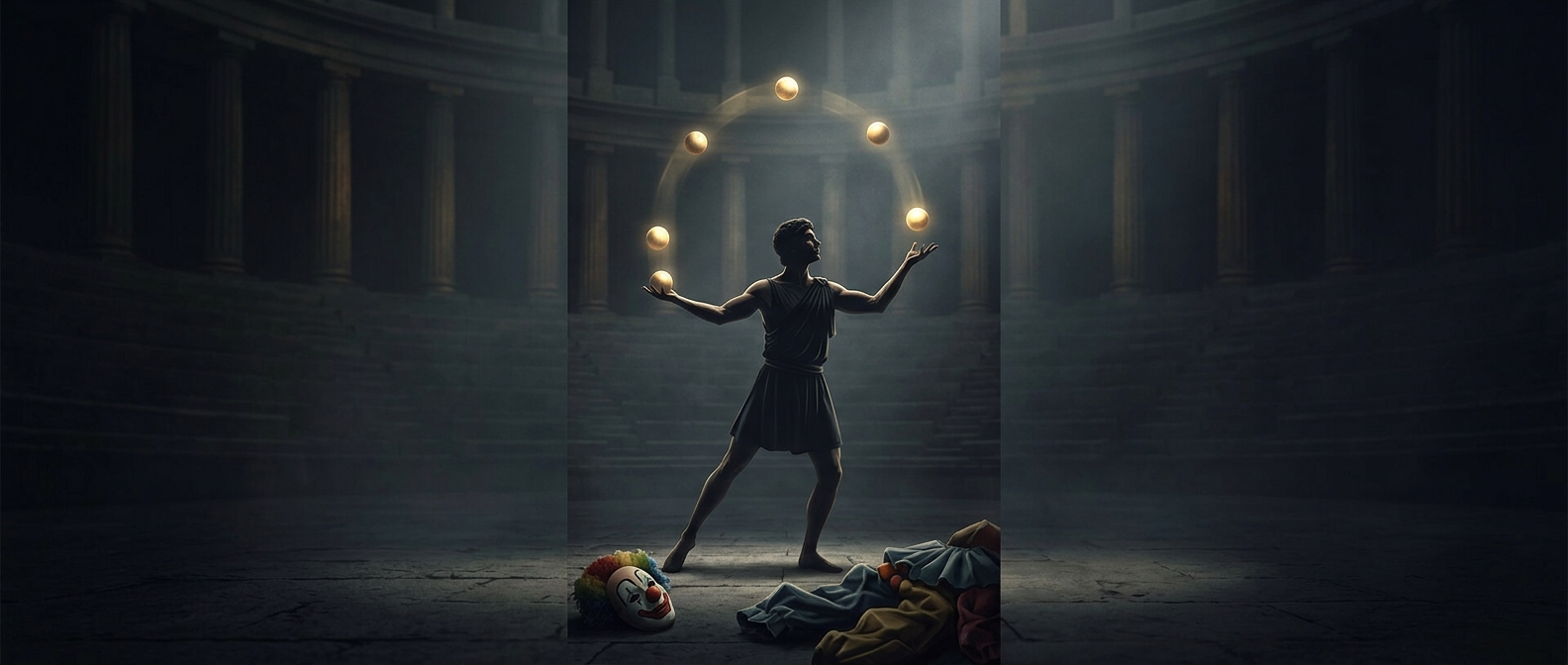
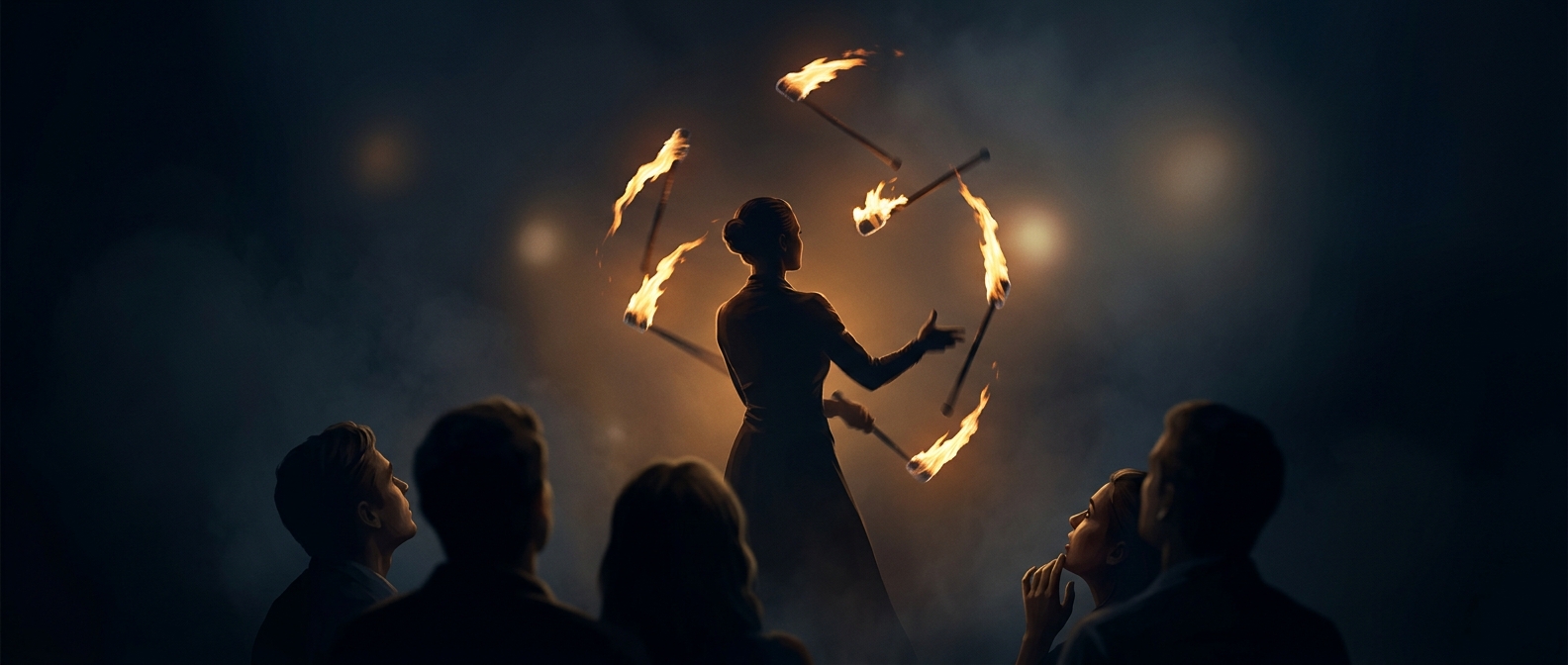
A flaming prop changes how an audience reads every toss. A dropped ball might seem like a mistake; a torch suggests burns, so even a routine catch can feel precarious. The performer is managing both the objects and that impression of danger.
Control Behind the Near Miss
Juggling depends on timing: each object follows a predictable arc, and the performer catches it where the next movement can begin. With fire, the act also has to account for the flame and the handling of the prop. Choreography and repetition help keep tosses, catches, and transitions deliberate rather than improvised.
That control is not the same as having no risk. Fire can injure someone if mishandled, so professional acts rely on preparation and safety procedures as well as skill. The audience usually sees the visible flame and the catch, not the practice and precautions that make the sequence repeatable.
Why the Audience Waits for a Drop
The suspense comes from a gap between what viewers fear and what the performer appears able to control. Each toss offers a brief moment when the torch is out of the juggler’s hands; the catch resolves that uncertainty, then the next toss renews it. A close-looking pass can intensify the feeling without requiring an actual loss of control.
That is the act’s central bargain: the performer supplies precision, while the audience experiences the possibility of failure. The gasp belongs to the spectators; the torch still has to land exactly where the routine demands.