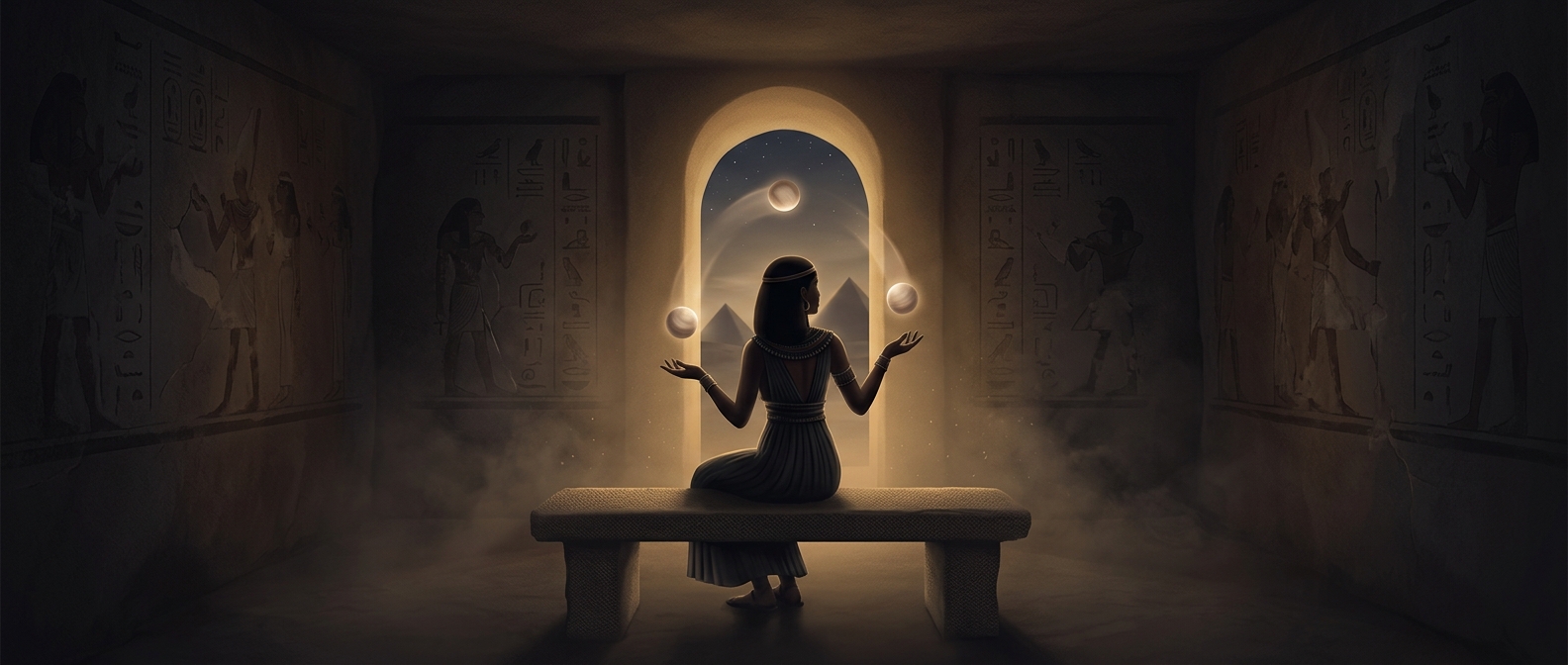
A moving trick preserved in stone
In the Beni Hasan tomb paintings, the balls appear in different positions around the performers’ hands and bodies. That arrangement makes the action legible: a ball has been thrown and is coming down as another goes up. The scene is often identified as juggling, though a painted snapshot cannot show exactly how the performers moved or how many balls each handled.
Keeping several objects moving takes timing as well as dexterity. Each throw must arrive where a hand can catch it while the next ball is already in motion. The image therefore records more than a collection of objects; it preserves a recognizable performance skill.
Why show entertainment in a tomb?
The paintings belong to decorated tombs, not to a surviving stage or public program. Egyptian tomb art could depict people, work, and activities associated with life, placing familiar scenes within a setting intended to endure beyond death. A lively performance among such images suggests that entertainment, like other human activities, was worth representing.
The figures are women, making the scene a small but striking record of who could be shown performing this skill. The painted balls offer no sound or motion, yet their carefully spaced positions still let a viewer reconstruct the central trick: one object rising as another returns to the hand.