The battery is part of the forklift’s balancing system
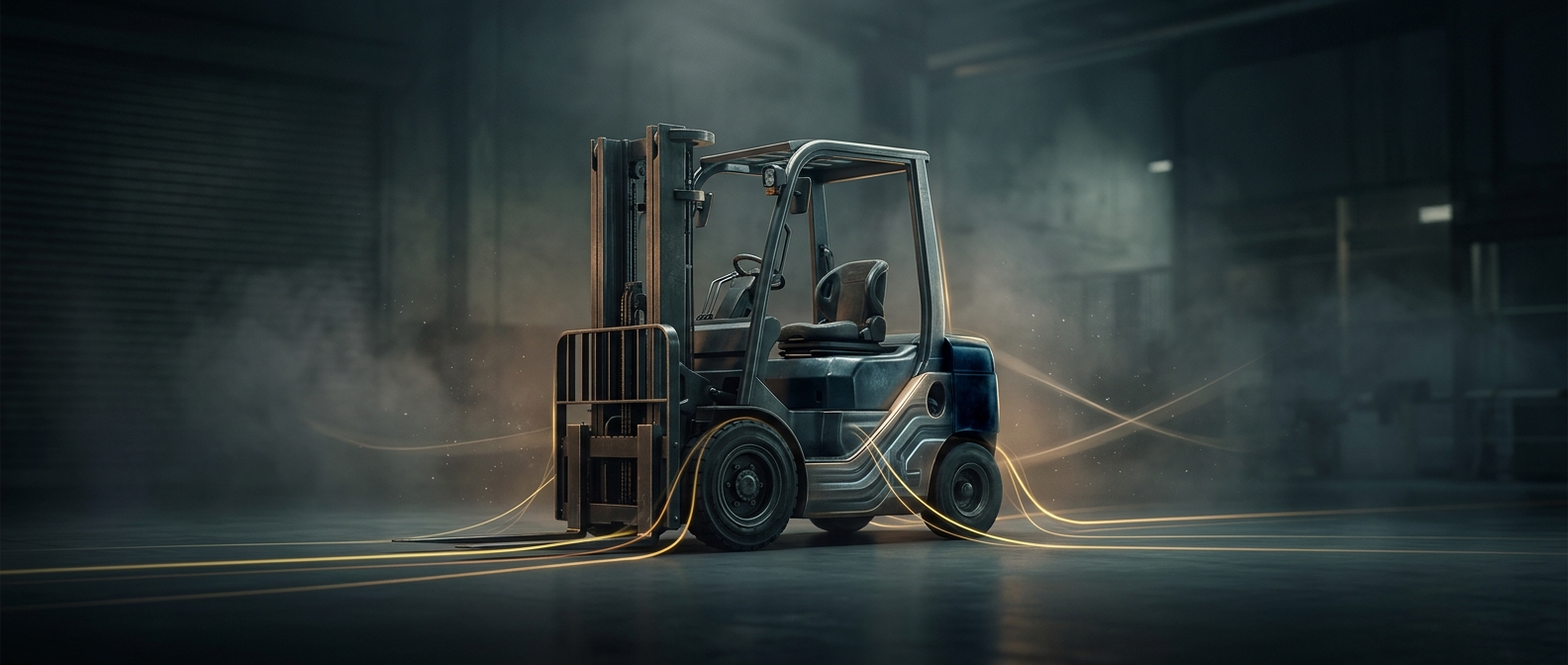
A forklift works like a seesaw. The front axle acts as a pivot: a raised load pushes down on the forks in front of it, while the machine’s weight behind the axle resists that forward pull. The battery is a large, dense block placed in the rear of an electric forklift, so its mass helps balance the load without requiring a separate counterweight.
That placement also keeps the weight low in the chassis. A low center of gravity—the point where the machine’s weight effectively balances—helps the forklift remain stable as it moves and lifts. But stability is not guaranteed by the battery alone. The load’s weight and how far it sits from the forks both affect the turning force, so a pallet held farther forward can challenge the balance more than the same pallet held close to the mast.
Why the battery’s size matters
Lead-acid batteries are heavy partly because they contain dense lead components and liquid electrolyte. In an electric forklift, that substantial mass serves two jobs: it stores energy for the motor and provides ballast at the rear. The battery is therefore not just carried by the forklift; the forklift is designed around its weight.
That creates a practical constraint during servicing. Replacing the battery with one that is too light can change the machine’s balance, even if it fits and powers the forklift. The battery’s weight and placement are part of the equipment’s stability design, which is why a seemingly ordinary power-pack swap can affect how safely the machine handles a load.