Why a familiar hospital can have two locations in your mind
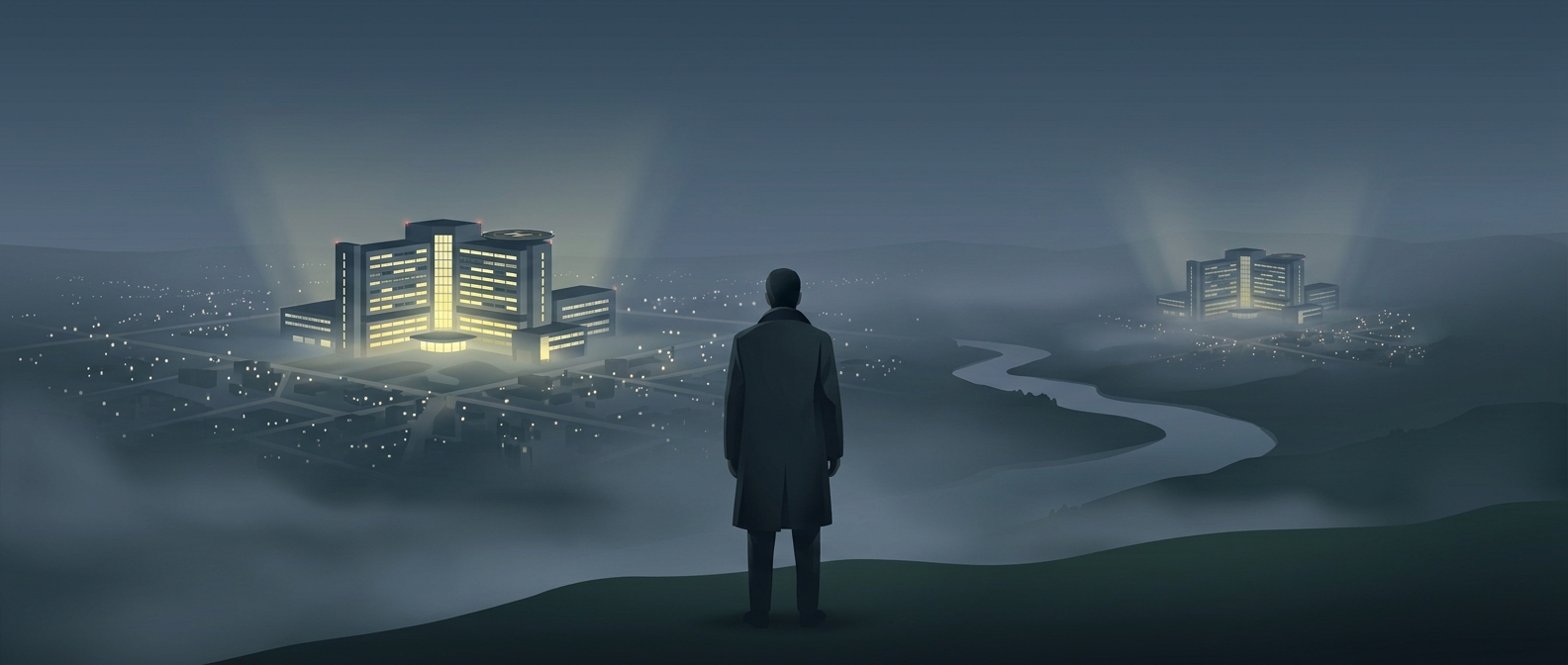
A place is not stored in memory as a single pin on a map. Your sense of “the hospital” is built from experiences: the route you used to take, the entrance you recognized, and the reason you went there. When the hospital relocates, those old associations do not disappear just because its address changes.
The new building starts acquiring its own associations through visits and directions. Meanwhile, the old location remains linked to earlier events. Because both sets of memories refer to the same institution, either address can come to mind when you think of the hospital.
Familiarity and recent experience pull in different directions
Repeated trips make the former route easy to recall. A recent appointment, by contrast, strengthens the new route. Which location feels right can depend on the situation: remembering a past visit may bring back the old address, while planning today’s trip calls up the new one.
This is not necessarily confusion about where the hospital is now. It is a mismatch between a place’s current location and the location attached to older memories. The mind can preserve both, especially while the new route is still becoming familiar.
The old map changes through use
Each trip to the new building gives the updated route another chance to become automatic. But the old location can remain meaningful because it still points to real experiences, even after the hospital has left. A person may therefore remember the former site accurately and still know where to go now.
That is why a relocation can briefly make a simple direction feel oddly uncertain: “the hospital” may first evoke the road traveled for years, before recent experience brings the new address into focus.