The Xbox’s size was a real-world design problem
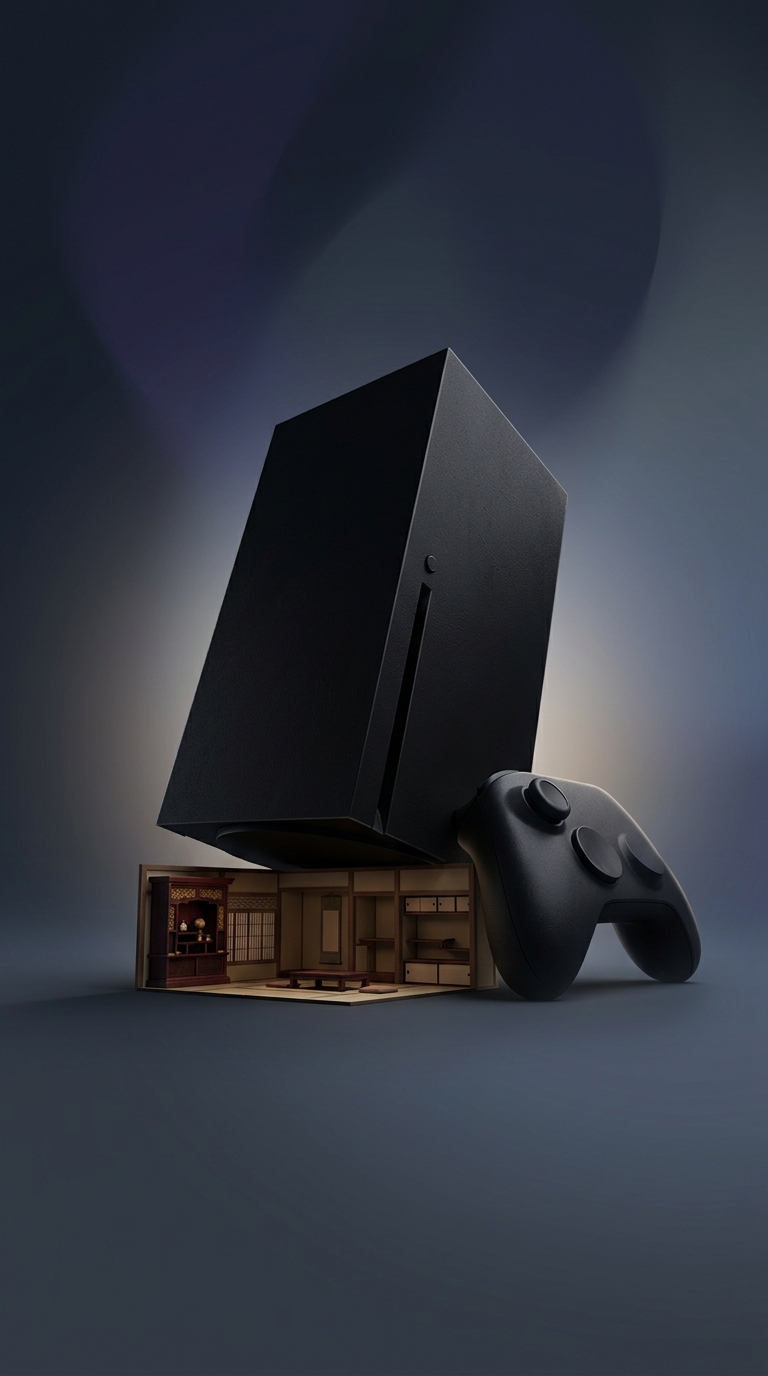
The original Xbox was built around substantial hardware: a hard drive, a DVD drive, and the cooling and power components needed to run them. That made it much larger than the compact consoles many players were used to placing beside a television. In Japan, where living rooms and entertainment furniture often left less room for bulky equipment, the console’s footprint could be a practical disadvantage—not just an aesthetic quirk.
A console that is hard to fit is also harder to sell as an easy addition to the home. It competes for shelf space with other devices, and its size can make the whole setup feel less convenient. That mismatch was one obstacle to the Xbox gaining traction in Japan, though it was not the only factor shaping its reception.
The controller needed a redesign, too
The original controller, nicknamed the Duke, had a broad, heavy shape that many players found unwieldy. Its layout reflected Microsoft’s early approach to console controls, but a controller has to fit hands as well as accommodate buttons and analog sticks. For players with smaller hands, the Duke could make reaching across the face of the controller uncomfortable.
Microsoft responded with the Controller S, a smaller model first released in Japan. It kept the Xbox’s basic control scheme while changing the size and placement of the controls to make them easier to reach. The contrast made the lesson visible: hardware designed around a particular set of assumptions can feel awkward in homes—and hands—that differ from the ones its designers had in mind.
The Xbox’s Japanese challenge was partly a matter of fit: the console took up scarce shelf space, while its first controller took up too much room in players’ hands.