The opening is in the snake’s recovery
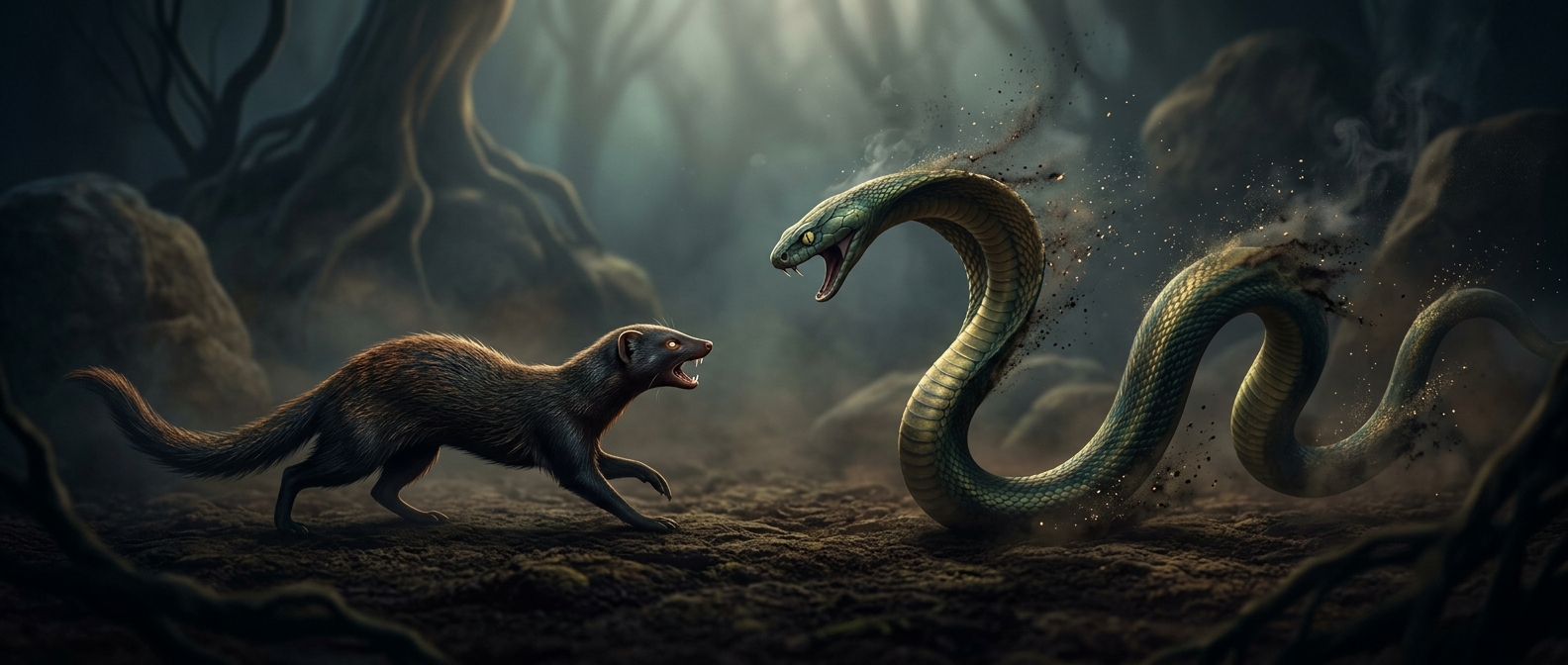
A mongoose does not need to be faster than a snake at every instant. It needs to avoid the brief, dangerous lunge. As the snake thrusts, the mongoose can shift out of the strike’s path; once the attack misses, the snake must draw back and reorient before it can lunge again. That pause gives the mongoose a chance to rush in and bite.
The encounter is therefore a contest of timing, not a simple test of strength. A mongoose that attacks too early risks entering the strike’s path. One that waits until the snake has begun recovering may get close while the snake’s head is moving away.
Resistance helps, but does not make the animal immune
Some mongoose species have partial resistance to certain snake venoms. Venom affects the body by disrupting vital functions, and resistance can reduce its impact. But it is not universal protection: different snakes carry different venoms, and a bite can still be fatal.
That makes avoiding the strike essential even for a mongoose with some resistance. The animal’s best defense is not to absorb a bite, but to keep the snake from landing one in the first place.
Why the fight can look reckless
A mongoose may appear to charge a deadly snake, but the behavior depends on a narrow opening created by the snake’s own attack. If the mongoose misjudges the movement, or the snake strikes again before it can get clear, the advantage disappears. The dramatic rush is not fearlessness; it is a risky attempt to act during the moment when the snake is least ready to strike.