A climb that carried a cultural cost
Uluru is not simply a landmark to Anangu, the Aboriginal people whose Country includes the rock and who are its Traditional Owners. It is a living cultural place, connected to Anangu law, knowledge, and responsibilities. In that understanding, climbing Uluru was not just a visitor’s choice of route: it meant people walking across a place Anangu had repeatedly asked visitors to leave undisturbed.
That distinction helps explain why the closure was not framed as a safety measure alone. Falls and medical emergencies made the climb hazardous, but treating danger as the whole issue would have missed the central point: Anangu had been asking for the climb to stop for decades.
From request to lasting rule
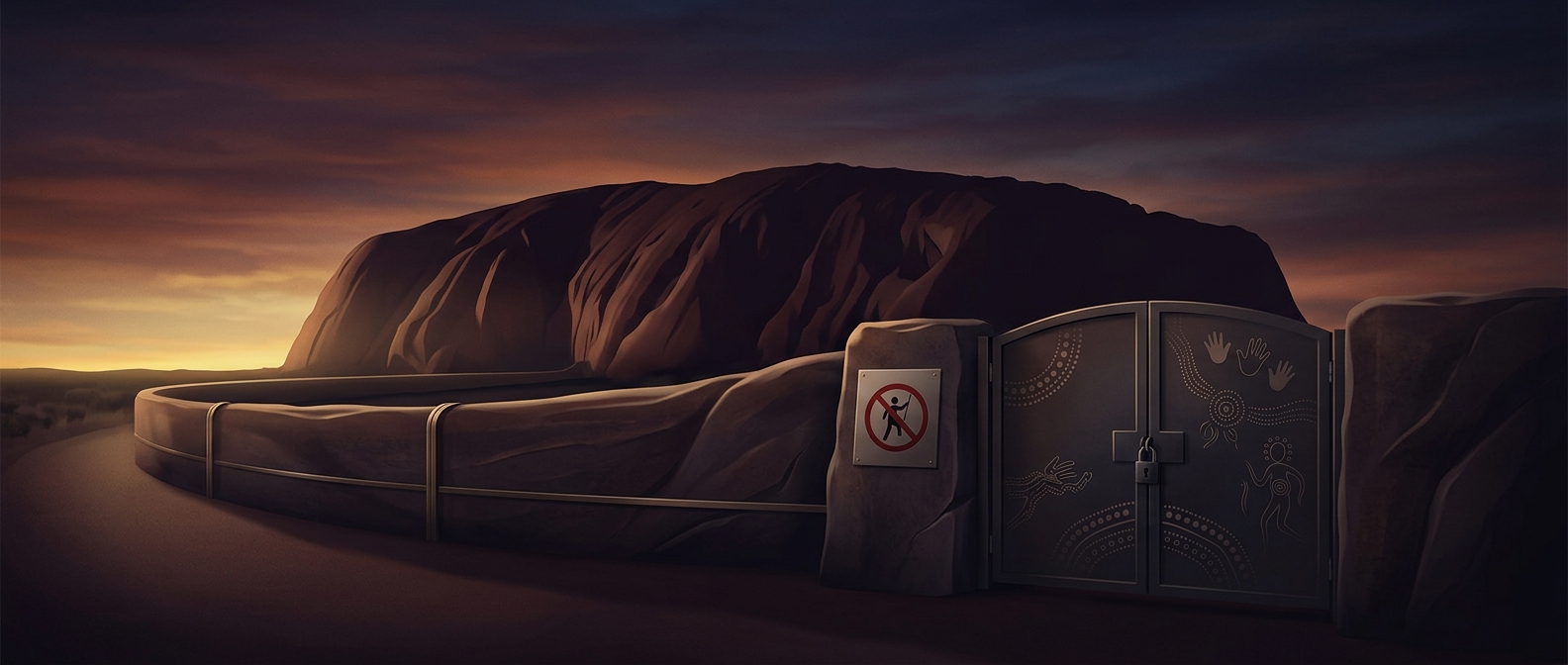
The climb closed in 2019 after a decision-making process that placed Anangu wishes at the center. The change shifted the question from whether individual visitors could manage the ascent to whether the ascent should remain available at all. A difficult route can be made safer in some ways; that does not resolve a conflict over whether people should be invited to enter a sacred place in the first place.
The closure therefore changed what visiting Uluru means. Visitors can still experience the rock from around its base, but no longer by climbing it. The lasting consequence is not just fewer accidents: it is that the Traditional Owners’ request now shapes the boundary of public access.