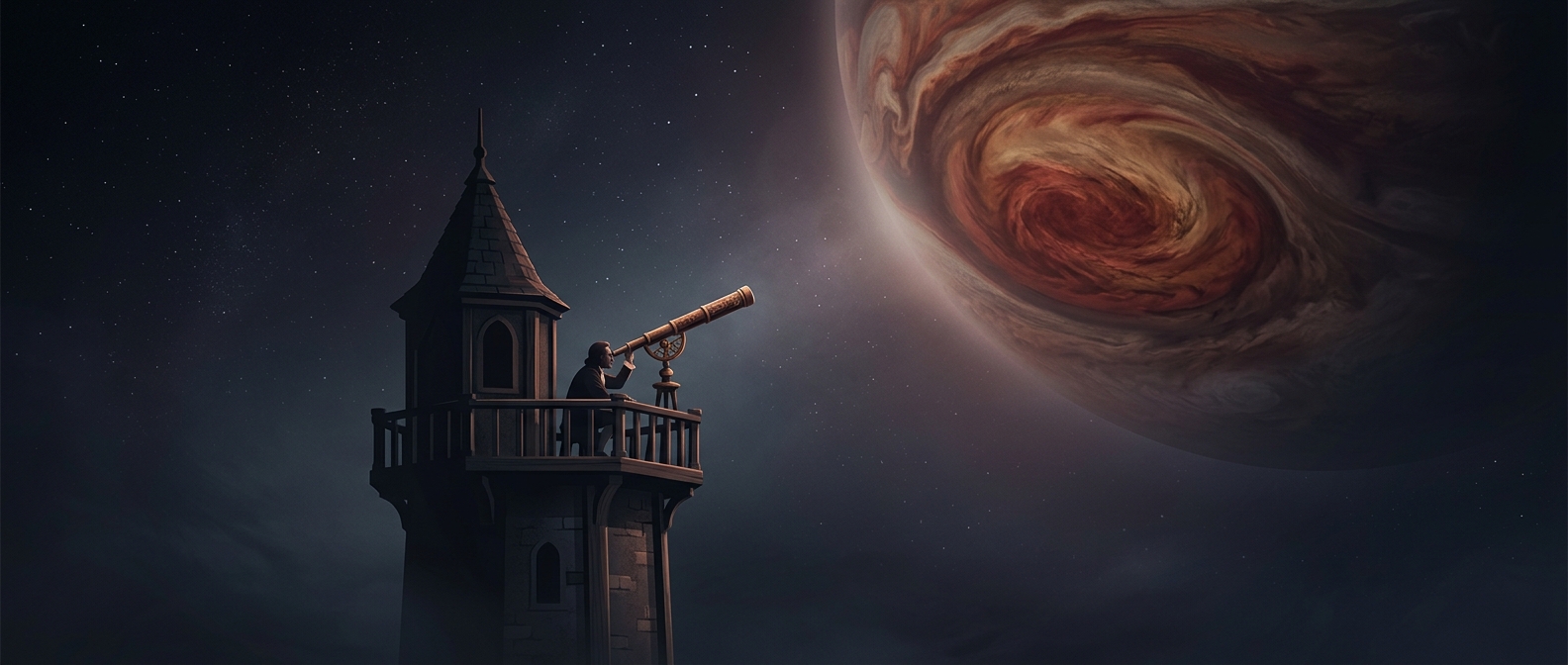
A Spot Seen Through a Telescope
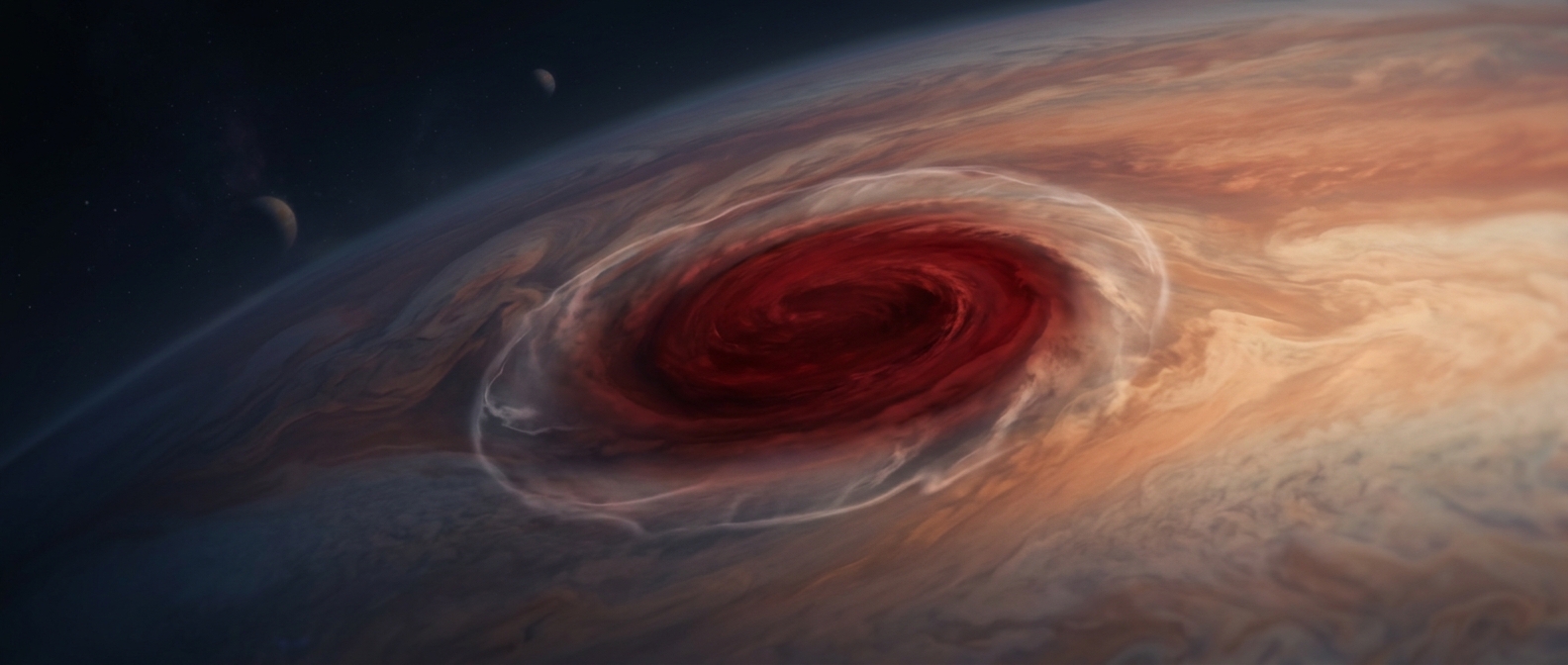
In the 17th century, Robert Hooke reported seeing a spot on Jupiter. The observation is intriguing because a much larger, long-lived storm—the Great Red Spot—is known from later records. But astronomers cannot establish that Hooke saw that very same storm. The gap in observations leaves open whether the spots were one enduring feature or separate storms.
That uncertainty is part of the story: Jupiter’s atmosphere changes, while the planet’s immense distance and early telescopes made it difficult to track individual clouds continuously.
Why a Jovian Storm Can Persist
Jupiter has no solid surface for a storm to move across. Its visible bands and spots are patterns in deep layers of gas, shaped by powerful winds and the planet’s rapid rotation. The Great Red Spot is a giant rotating storm, not a mark on a surface.
Storms can draw energy from heat rising from Jupiter’s interior and from surrounding atmospheric flows. On Earth, storms often lose strength when they encounter land or run out of favorable conditions. Jupiter’s cloud systems have no continents to interrupt them, though they can still change, merge, or fade.
A Long Record, With a Gap
Observations made centuries apart can suggest remarkable persistence without proving an unbroken identity. If Hooke’s spot and the later storm were the same feature, it endured across generations of observers. If not, the comparison still points to a striking fact: Jupiter can produce enormous storms that last far longer than a human lifetime.