Gravity changes travel; the existing field does not “switch off” at a distance
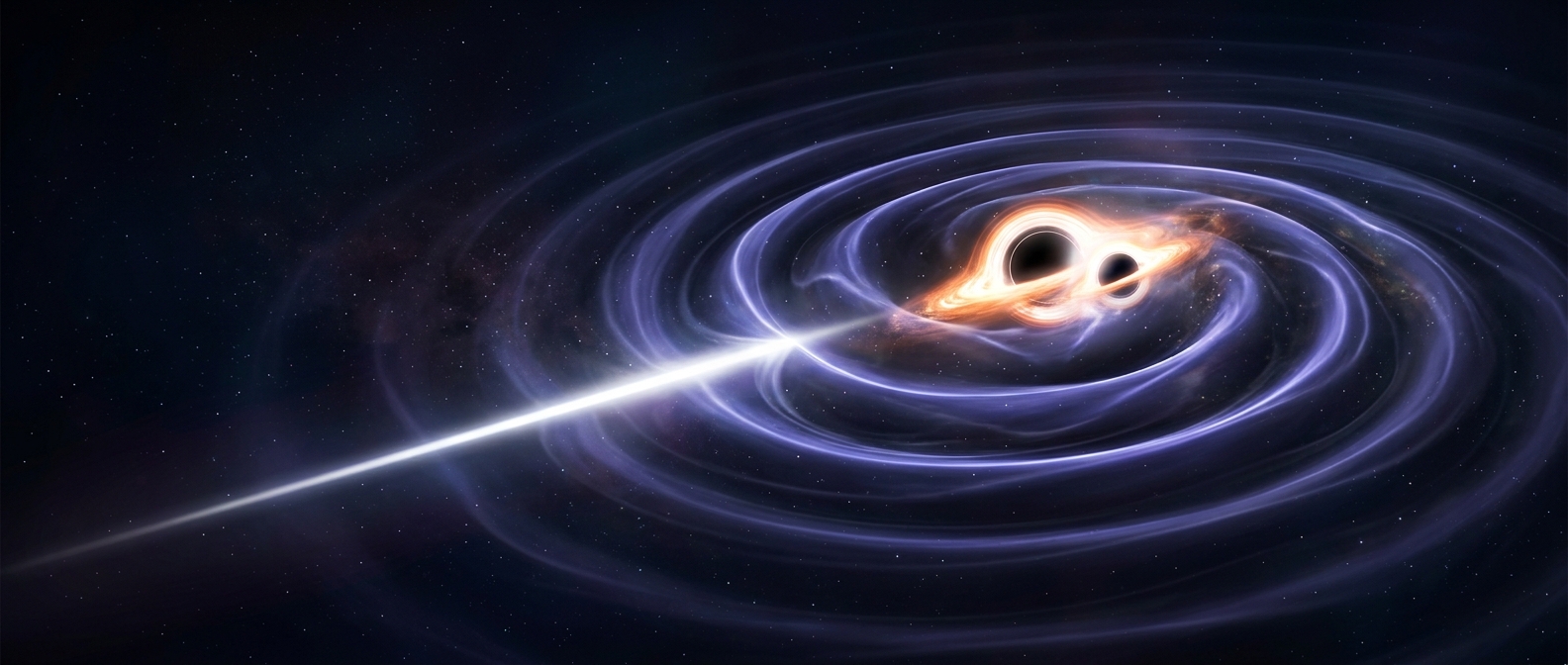
In Einstein’s theory of general relativity, gravity is tied to the shape of spacetime—the four-dimensional framework of space and time. Matter shapes that geometry, and objects move through it. When matter shifts, the resulting change in the gravitational field cannot spread instantly; it propagates at light speed. That traveling disturbance is related to what scientists call a gravitational wave: a ripple in spacetime produced by accelerating masses.
This distinction matters. Earth is not continually receiving a fresh signal from the Sun telling it where the Sun is right now. It moves through the gravitational field already present around it. If the Sun’s position or mass distribution changed, the altered field would reach Earth only after crossing the intervening space.
Why planets do not orbit a visibly outdated Sun
A tempting picture is that gravity always points toward where the Sun was eight minutes ago, as if Earth were chasing a delayed target. That is not how the full relativistic description works. The gravitational field includes effects associated with the source’s motion, not merely a simple pull aimed at its past position. Those effects prevent the planets’ orbits from behaving like a basic delayed tug-of-war.
The finite travel speed is especially important when gravity changes rapidly or strongly, as in systems of orbiting compact objects that can generate detectable gravitational waves. In the Solar System, the field changes slowly, so the distinction is subtle in everyday life. But it reveals a deep rule of nature: gravity can influence distant objects only through information that has had time to get there. The universe has no instant gravitational update.