Why Strange Matter Could Spread
Ordinary atomic nuclei are built mostly from up and down quarks, bound together inside protons and neutrons. Strange matter is a hypothetical state in which matter also contains strange quarks. A small, stable clump of it is sometimes called a strangelet.
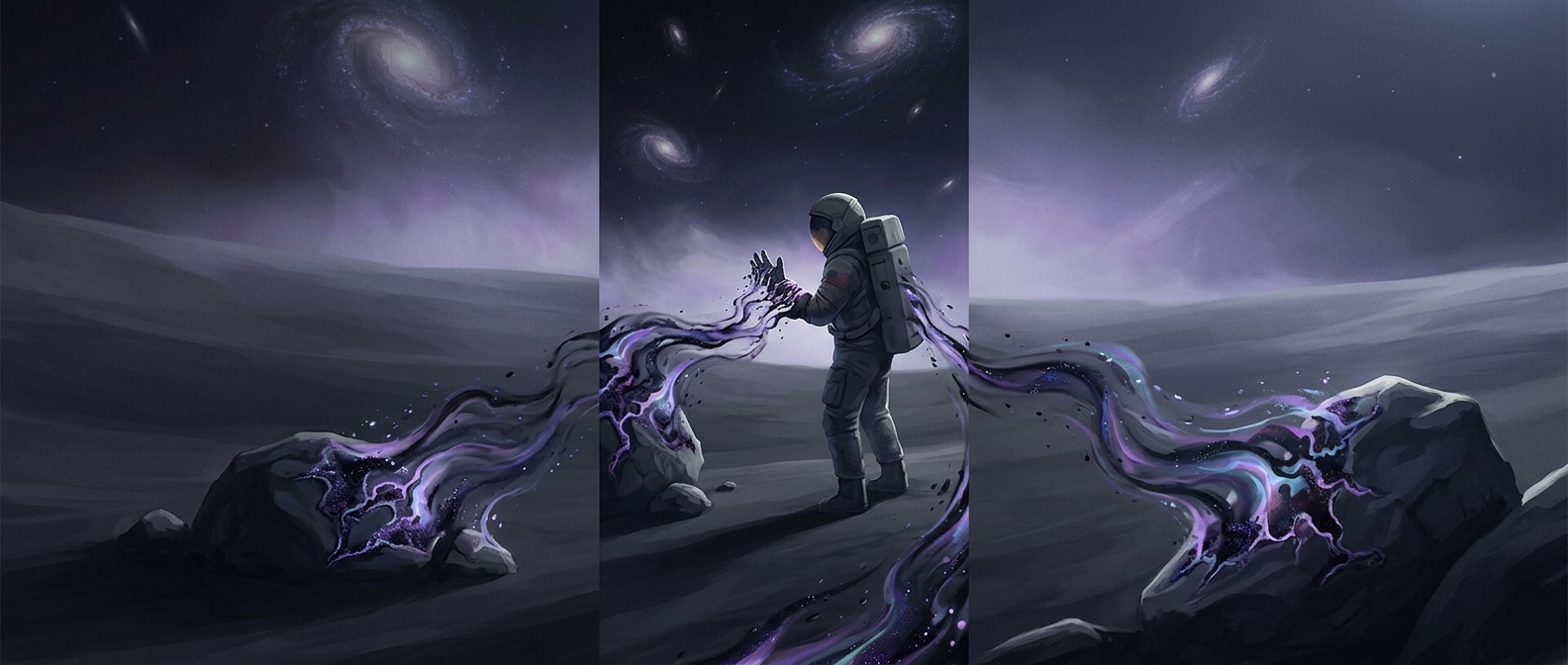
The proposed “infection” is not a living process. It is a possible change in the arrangement of quarks. If strange matter were more stable than ordinary nuclear matter under the right conditions, a nucleus that met a strangelet might be converted: its quarks could reorganize into the lower-energy state, adding to the strangelet. That new material could, in principle, convert more nuclei in turn.
The Stability شرط
The idea hinges on a difficult question: could strange matter remain bound and stable? Strange quarks are heavier than up and down quarks, so making them requires energy. But in an immense collection of quarks, the balance of forces and available energy may differ from the balance inside a single proton or neutron. Some theoretical calculations therefore allow for stable strange matter, while others do not.
Even if a stable strangelet were possible, it would need to survive long enough and encounter ordinary matter in a way that allows conversion. The hypothesized chain reaction depends on those conditions, not merely on strange quarks existing briefly in high-energy collisions.
Why the Possibility Gets Attention
A growing strangelet would imply a profound change in matter, so physicists consider whether such objects could be produced or encountered and whether they would pose a hazard. But the scenario begins with an unconfirmed object and an unproven conversion mechanism. No strangelet has been found, and there is no evidence that matter is being transformed this way.
The striking implication is conditional: if a stable, converting strangelet existed, contact could make it grow by turning nearby nuclei into the same unusual state.