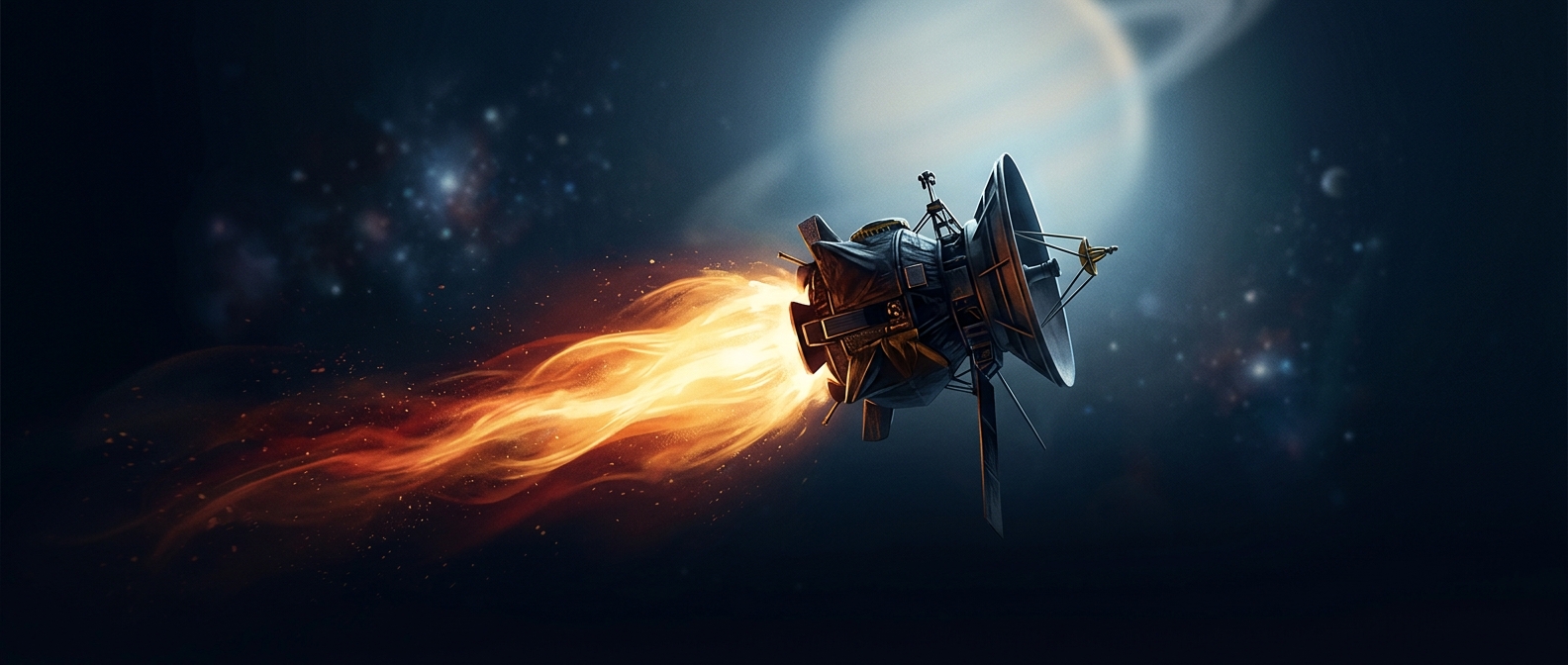
How escaping heat can push a spacecraft
A spacecraft does not need to fire an engine to experience recoil. Any object that emits energy in one direction is pushed slightly the other way. Light carries momentum, so heat leaving a probe as infrared radiation can act like an extremely weak, continuous thruster.
The effect depends on where the heat goes. If the probe radiates it evenly in every direction, the pushes largely cancel. But heat from onboard equipment or a power source may be emitted unevenly. A dish antenna can also absorb some of that radiation and send it back outward, changing its direction. That redirected energy carries momentum, giving the spacecraft a small push opposite the outgoing radiation.
A tiny force, accumulated over time
The recoil is far weaker than an engine burn. Its importance comes from persistence: while the probe continues producing and radiating heat, the force can keep acting. Over long periods, even a minute acceleration can add up to a measurable change in the spacecraft’s path.
That makes thermal recoil a useful reminder in spacecraft navigation: a probe’s trajectory is shaped not only by deliberate engine firings, but also by the way it sheds energy. The heat that keeps its instruments operating can quietly alter where the spacecraft is headed.