Why wings alone would not make Pegasus airborne
A horse-sized animal would need more than a pair of wings: it would need enough upward force to support its weight, plus enough forward speed for the wings to keep producing that force. In ordinary flight, wings deflect air downward; the resulting pressure difference helps push the body upward. The heavier the animal, the harder the wings must work.
The trouble begins at takeoff
A bird can launch by leaping and beating its wings, but a horse’s large body would make that first burst especially demanding. Its wings would have to accelerate both the animal and themselves, then keep beating hard enough to prevent a stall—a loss of lift that occurs when airflow over the wings no longer supports the load. Simply giving a horse broad wings does not solve the problem if its muscles cannot power them or its body cannot reach flying speed.
Mythical flight follows a different logic
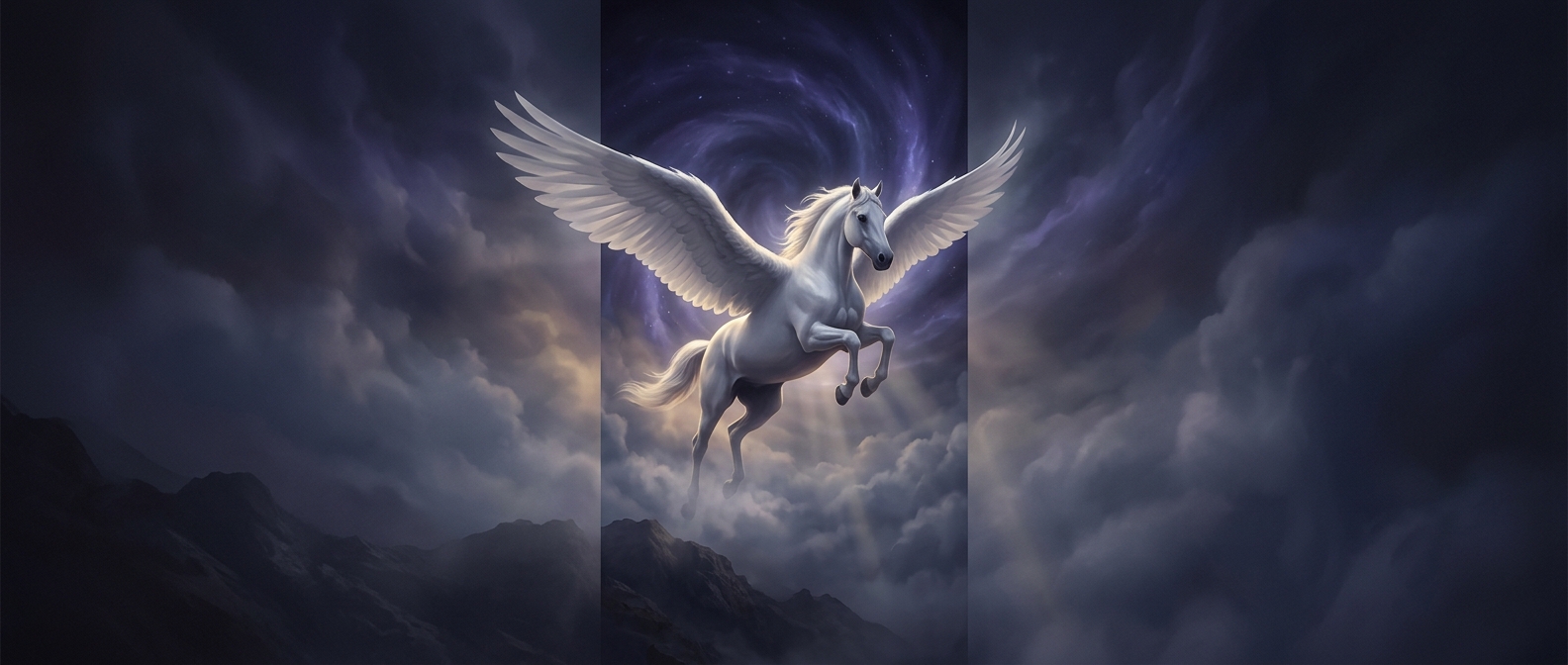
Pegasus belongs to myth, not zoology. The stories use flight to make the horse extraordinary; they do not provide an engineering design for achieving it. A plausible flying animal on that scale would require major changes to its proportions and anatomy, such as a lighter body, powerful flight muscles, and wings sized and shaped to match its weight. Those changes would also make it less like a familiar horse.
That gap is part of the image’s appeal: Pegasus looks unmistakably like a horse, even though the physics of flight would demand something far more specialized.