How a Sugar Glider Turns Height Into Distance
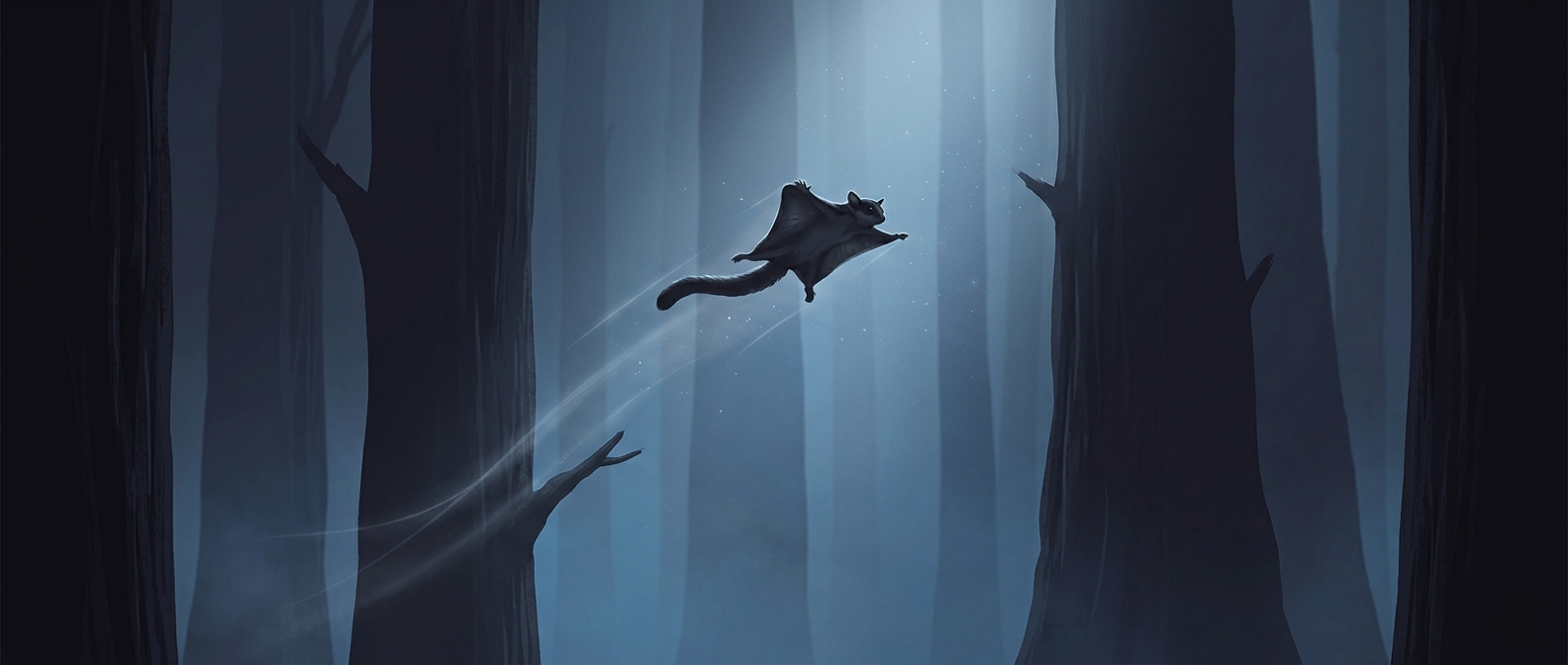
A glide begins with a drop: as the animal leaves a branch, gravity pulls it downward and forward. Air moving past the stretched membrane between its limbs produces lift, an upward force that slows its descent. The membrane—called a patagium—acts like a flexible wing, not a motor. The glider still loses height, but it can travel much farther horizontally than it would in a simple fall.
Steering With a Flexible Wing
The glider can alter its course by changing the position of its limbs. A shift in posture changes the membrane’s shape and how air presses against it, helping direct the glide. Its long tail can also help with balance and steering, especially as it approaches a landing.
These adjustments matter because a glide is a moving path, not a fixed jump. The animal must aim for a trunk or branch while managing its speed and descent. Reaching a higher launch point gives it more height to spend on the trip; once that height is gone, the glide ends.
A Shortcut Through the Canopy
For a small animal living among trees, gliding offers a way to cross gaps without descending to the ground and climbing back up. It is a tradeoff: the glider cannot hover or climb through the air, but it can convert a branch’s height into a controlled route to another tree. That makes the membrane useful not just for staying aloft, but for choosing where to land.