A name that records the experiment
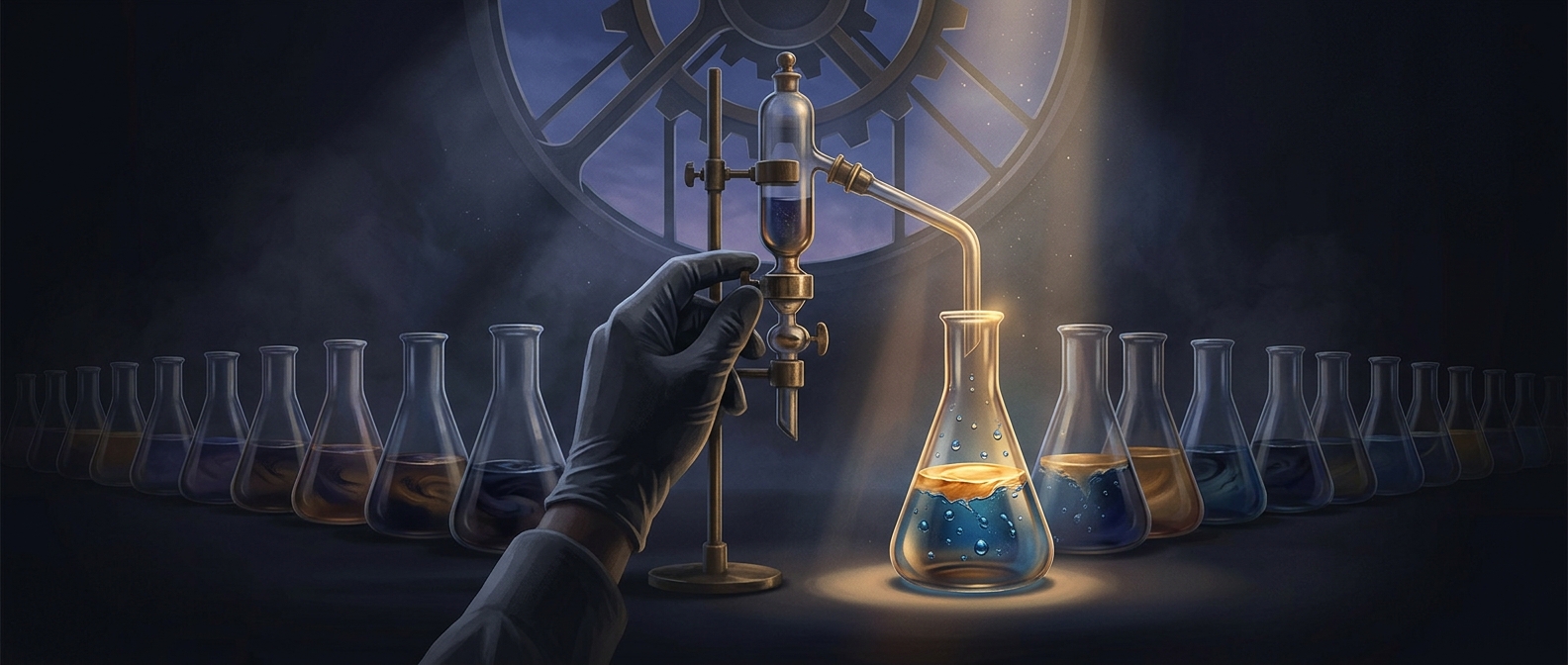
“WD” stands for water displacement: the job the product was meant to do. The number is not a chemical ingredient, strength rating, or model number. It records the successful attempt in a sequence of formulation trials—39 versions came before the one that worked.
That makes WD-40’s name a tiny piece of research history. Instead of being replaced by a polished brand phrase, the lab’s shorthand kept the development process visible: the goal, followed by the trial that met it.
How displacing water helps metal
Water left on metal can help corrosion take hold. A water-displacing product works by getting between the surface and moisture, helping push water away; its remaining film can then shield the metal from fresh dampness. In practical terms, the aim is not to make water vanish from the world, but to keep it from lingering where it can cause trouble.
That original purpose also explains why the name can be misleading today. People use WD-40 for many tasks, but “WD” points to the problem its creators were trying to solve—not a promise that every use is the same. The “40” is the memorable part of the development story: a formula name that still counts the attempts behind it.