Why pencil graphite sticks to an eraser
Pencil “lead” is actually graphite, a soft form of carbon mixed with clay. As you write, the pencil leaves tiny graphite particles lodged among the raised fibers of the paper. They sit on the surface rather than chemically bonding to it, which is why they can be removed by friction.
How rubbing turns marks into crumbs
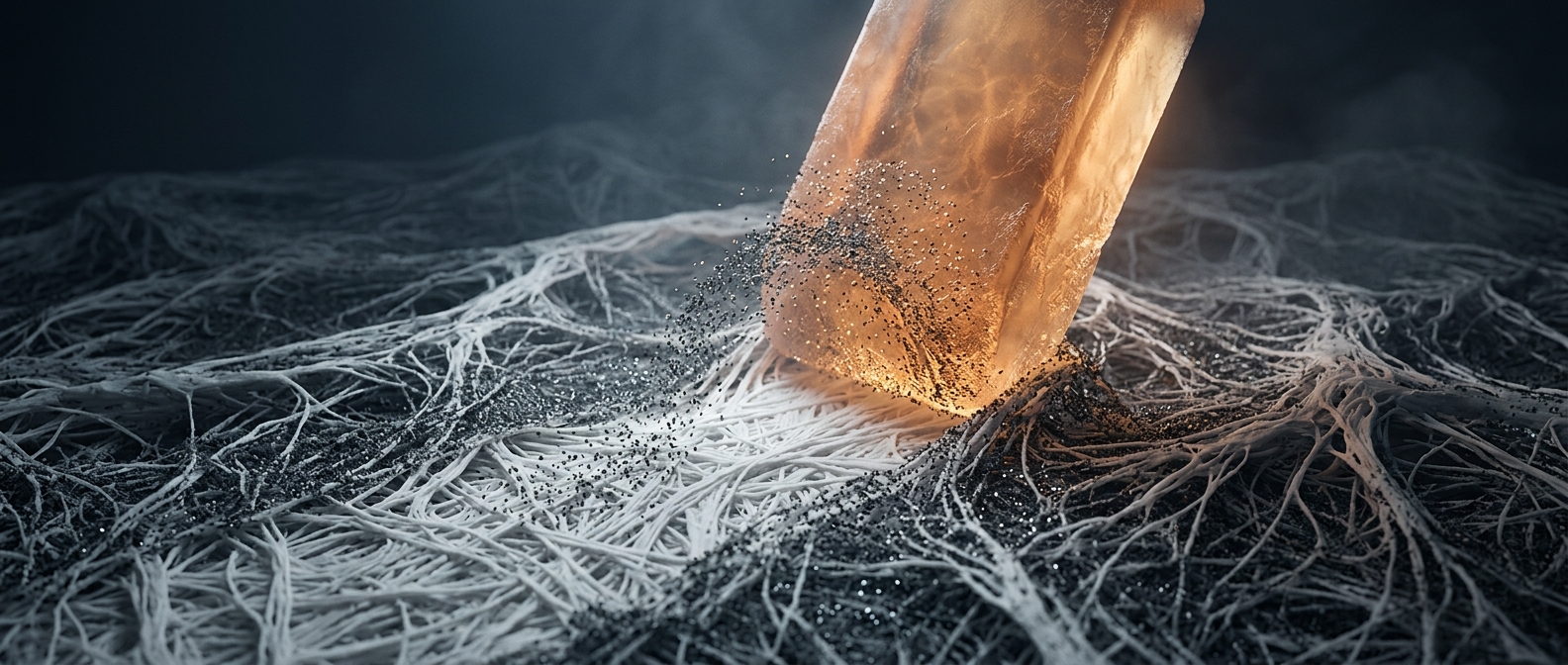
An eraser is soft enough to press against the paper’s uneven surface. As it moves, its material catches and pulls away graphite particles. At the same time, friction scrapes off small bits of the eraser itself. Those worn pieces bind with the graphite and roll or bunch into crumbs that can be brushed away.
The process is a tradeoff: an eraser removes the mark by sacrificing a little of its own material. A harder eraser may wear differently, while a softer one can pick up particles readily but may also leave more residue. In either case, the graphite is carried off with the debris rather than simply disappearing.
Why the paper can still look marked
Graphite can press deeper between paper fibers, and aggressive rubbing can roughen or damage those fibers. That leaves some particles behind—or changes the paper’s surface enough to make a faint mark persist. A clean erasure depends on lifting the graphite without grinding it farther into the page, which is why light, controlled strokes usually work better than pressing hard.