Why the ingredients are kept apart
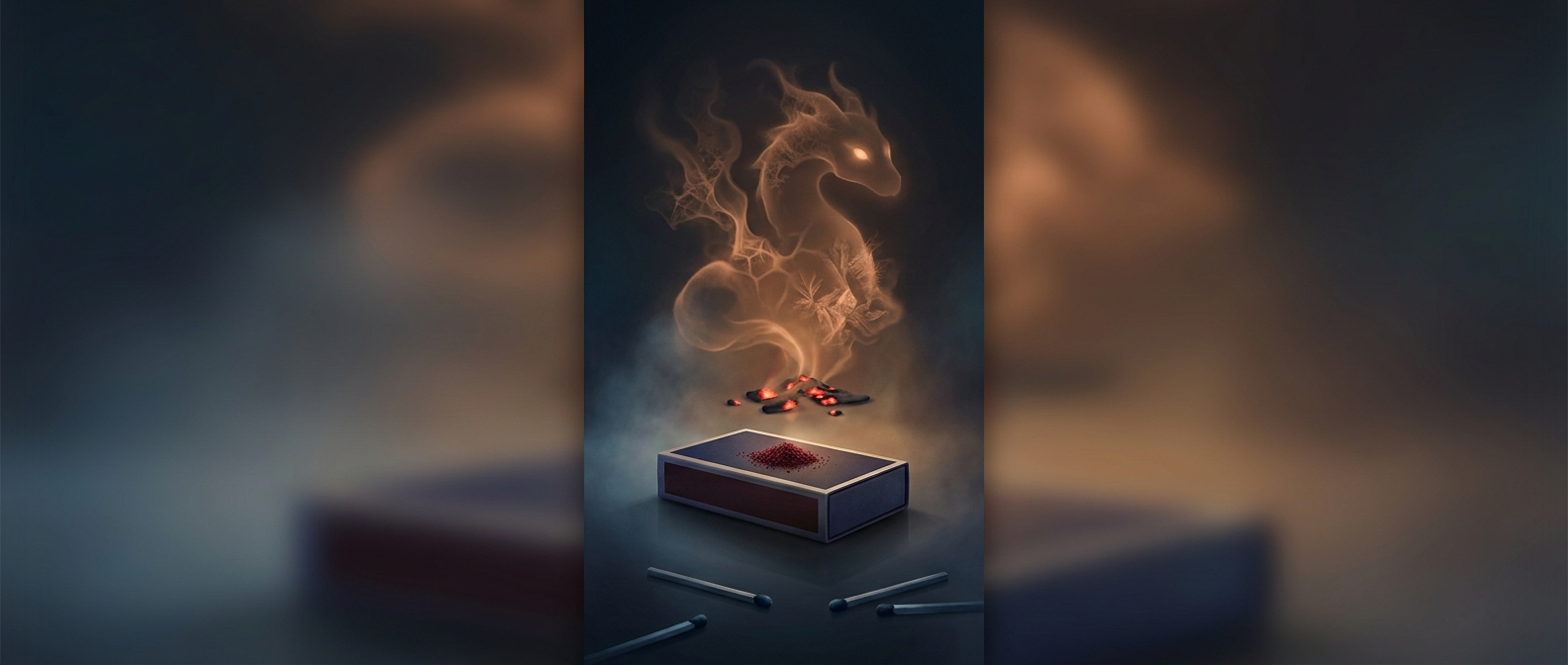
A safety match is designed so that its most reactive ingredients do not sit together in the match head. The head contains an oxidizer—a chemical that helps a fire get oxygen—and combustible materials. Red phosphorus is placed on the rough striking strip instead. While the box is stored, this separation makes accidental ignition much less likely.
What a strike sets in motion
Dragging the match across the strip creates friction and heat. At the contact point, a small amount of red phosphorus reacts with the oxidizer in the match head. That initial reaction produces enough heat to ignite the head’s fuel; the burning head then lights the wooden stem.
The rough surface matters, too: it helps generate heat and brings the separated ingredients into contact. The match is not simply catching fire because phosphorus rubs against the box. It is a small, staged reaction in which the striking strip starts a flame that the head can sustain.
“More stable” is not “harmless”
Red phosphorus is less reactive than white phosphorus, a different form of the element that can ignite readily in air. In ordinary use, the phosphorus on a matchbox is part of a contained, purpose-built striking surface—not a freely exposed supply of highly reactive material. But stability is relative: conditions such as intense heat or mishandling can still make chemicals hazardous. The safety match’s key protection is not that its ingredients are harmless; it is that they are kept apart until a deliberate strike brings them together.