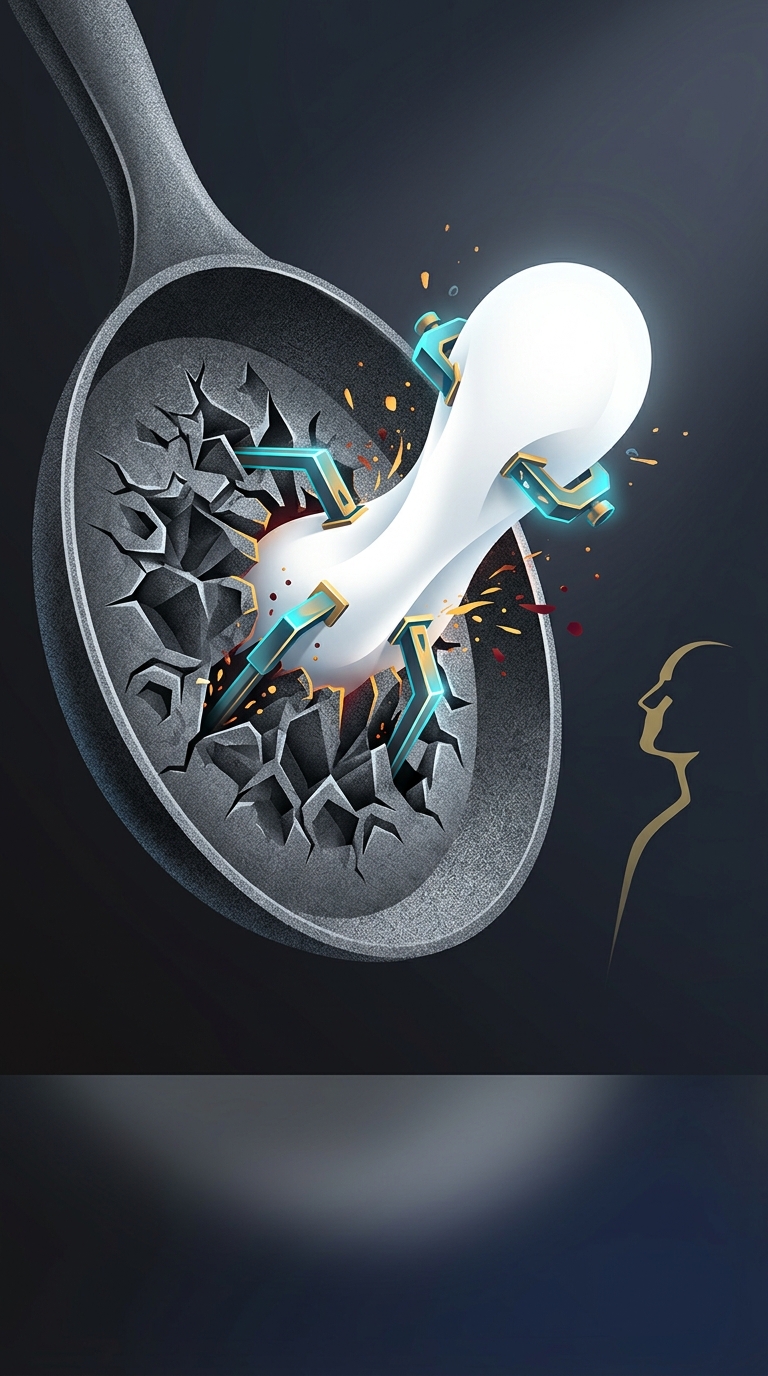
Why a Gallium Spoon Can Turn Liquid in Hot Tea
Gallium’s melting point is about 85.6°F (29.8°C), close to a warm summer day. A spoon made from solid gallium can therefore melt when warmed by tea that is hotter than that—not because the metal dissolves, but because heat gives its atoms enough energy to leave their orderly solid arrangement and move past one another as a liquid.
The change may look startlingly sudden. Metal conducts heat from the tea into the spoon, and once the gallium reaches its melting point, more incoming heat goes toward changing its state rather than raising its temperature. The spoon loses its shape and becomes a pool of liquid metal. How quickly that happens depends on the tea’s temperature and the spoon’s size; “instantly” is an exaggeration, not a special property of gallium.
A Metal That Expands as It Freezes
Gallium also behaves unusually when it cools below its melting point. Most metals contract as they solidify, but gallium’s atoms settle into a more open crystal structure—a repeating, orderly arrangement—with more space between them. The solid consequently takes up more room than the liquid.
If gallium freezes inside a rigid container, that expansion can press outward hard enough to crack it. The same unusual behavior explains why gallium must be stored with room for expansion rather than sealed in a completely full, inflexible vessel.
The apparent magic is really a narrow temperature threshold paired with a rare change in volume: a little warmth can erase gallium’s solid shape, while cooling it can make it push outward.