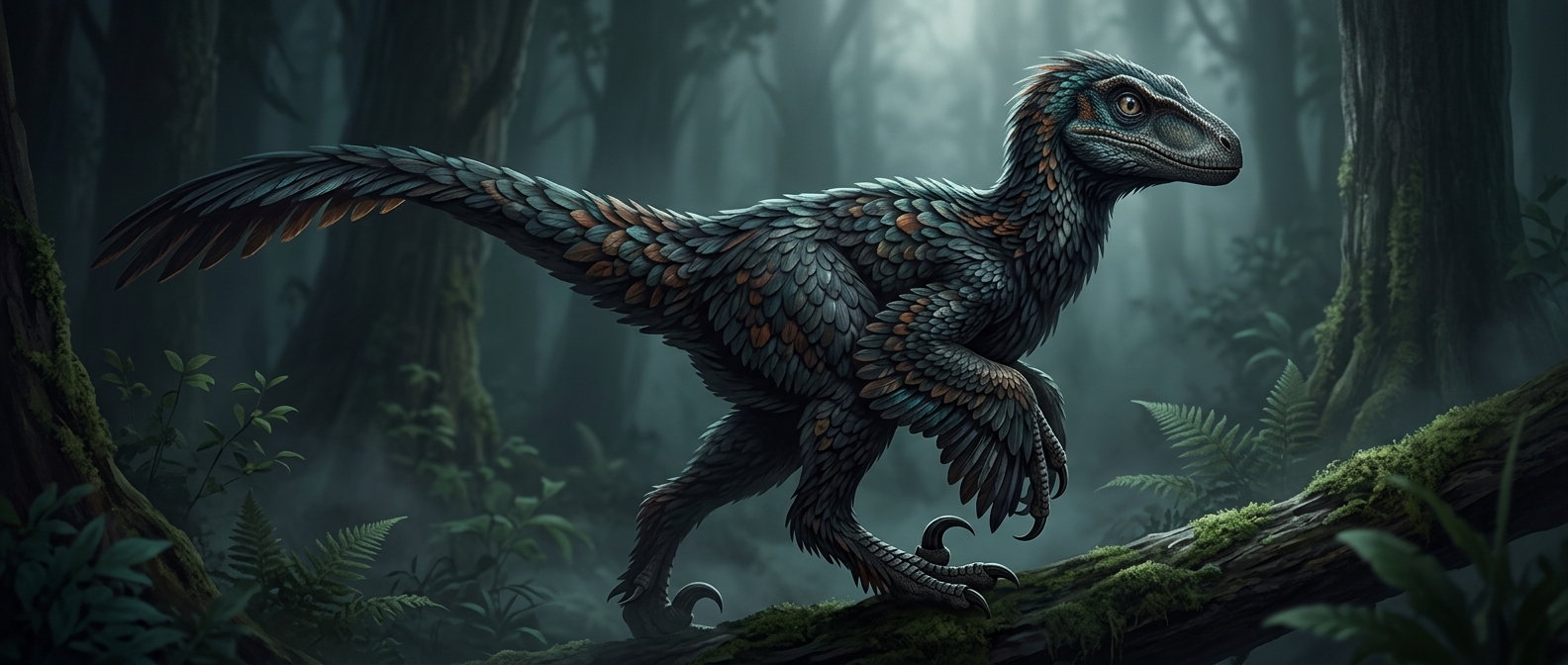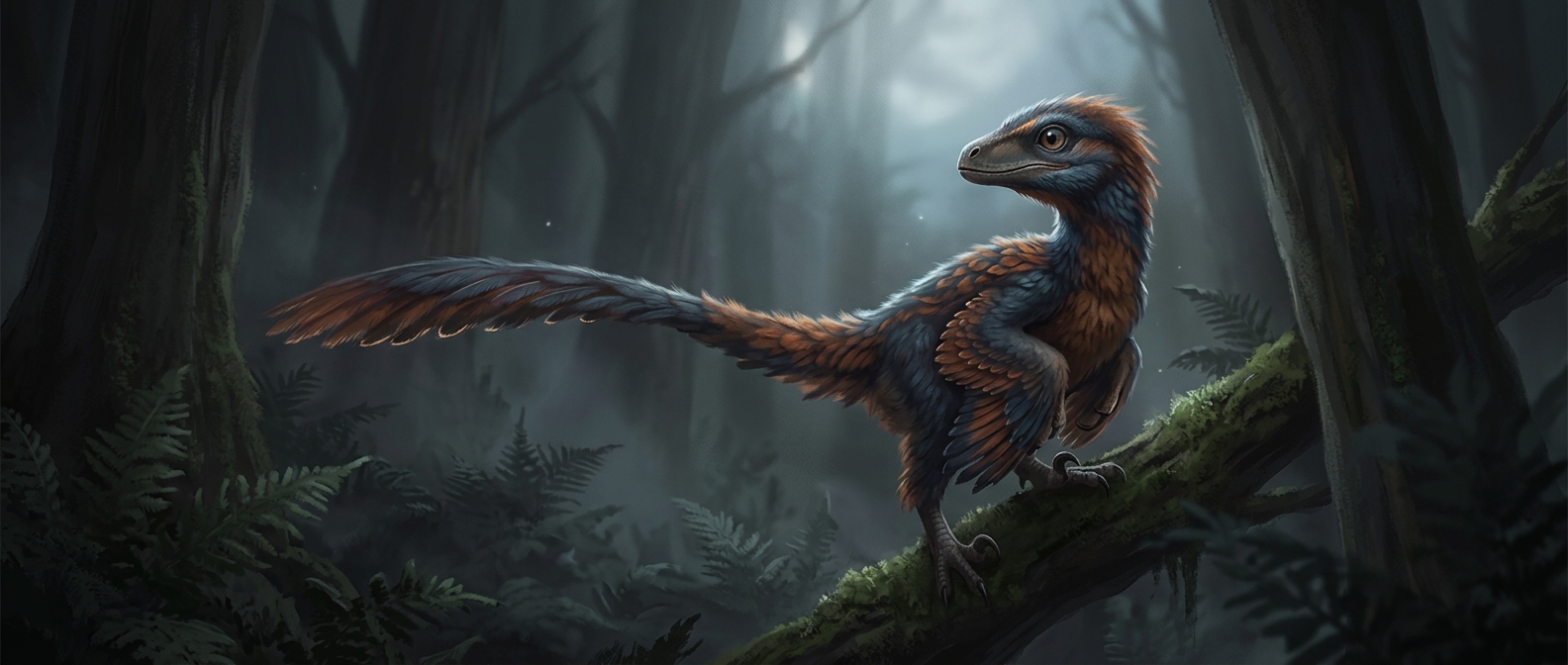
Feathers began as dinosaur coverings
A feather is not automatically a flight tool. Long before feathers could help an animal fly, simpler feathers could serve as insulation or as visible displays. Their presence on a dinosaur therefore tells us about its body covering, not necessarily how it moved.
Fossils reveal this distinction because some dinosaurs preserved traces of soft tissues alongside their bones. In several groups, those traces show filament-like coverings or more elaborate feathers on animals whose bodies were not built for powered flight. Feathers were part of a wider range of dinosaur features, rather than a package that appeared only with birds.
Early tyrannosaurs wore primitive feathers
Some early tyrannosaurs were covered in simple, hairlike feathers. These were not the broad, interlocking flight feathers familiar from a bird’s wing. Their likely roles included helping retain body heat, though feathers could also have made an animal look larger or more conspicuous.
That covering did not remain identical across every tyrannosaur. Fossil evidence indicates that some later, larger relatives had scaly skin over parts of the body. This variation suggests that feathers could be useful without being universal: insulation mattered differently for animals of different sizes and in different conditions, and coverings could change over evolutionary time.
Flight was a later use, not the starting point
Feathers could be modified gradually. A simple covering could gain structure and eventually become useful for gliding or controlled movement through the air; in the lineage leading to birds, feathers later became essential to powered flight. The same basic material could also continue to serve warmth or display.
So a feathered dinosaur is not evidence that the animal could fly. It is evidence that feathers evolved within dinosaurs before flight—and that a feature now associated with birds first had other jobs.