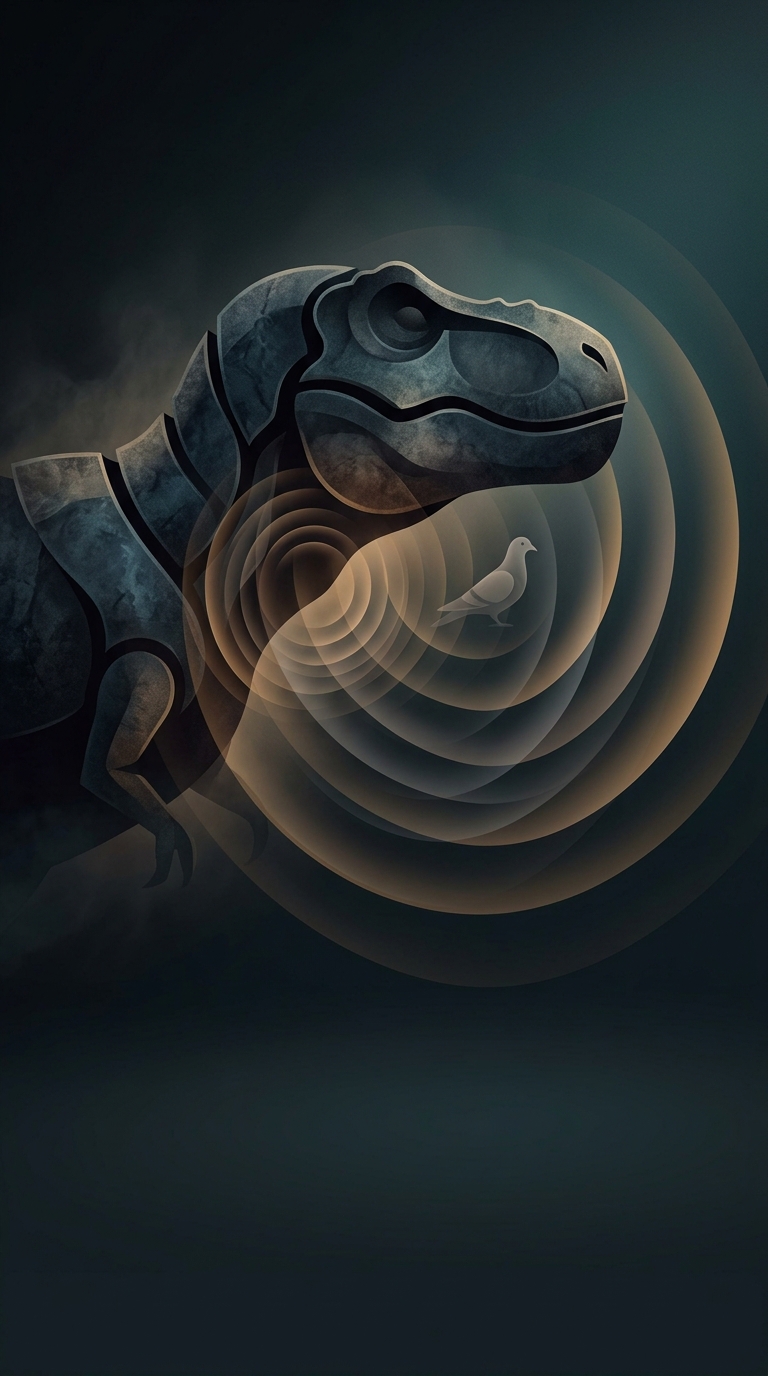
What a T. rex skeleton can—and cannot—tell us about sound
A fossil preserves bones far better than the soft parts that shape a voice. The skeleton may reveal the size and layout of the animal’s skull, but it does not preserve the vocal organs, throat tissues, or other structures needed to reconstruct an exact call. A roar, growl, or squawk cannot simply be read from a fossilized jaw.
Sound also depends on more than the parts that produce it. The shape of the vocal tract—the passage through which air and sound travel—can change a call’s pitch and resonance. Because those tissues are missing, researchers cannot calculate a T. rex’s voice with the certainty they might bring to a measurement of a fossil bone.
Living relatives offer clues, not a recording
To narrow the possibilities, scientists compare dinosaurs with living relatives, especially birds and crocodilians. Both groups descend from the broader dinosaur family tree, but they produce sound in markedly different ways. Their calls show that there is no single, obvious “dinosaur voice” to assign to T. rex.
That comparison helps researchers ask what kinds of sound-making systems might be plausible. It does not establish which system T. rex used or what a particular call sounded like. A modern animal can provide a useful biological model, but it is not a direct stand-in for an extinct species whose crucial soft tissues are gone.
Why a low rumble remains only a possibility
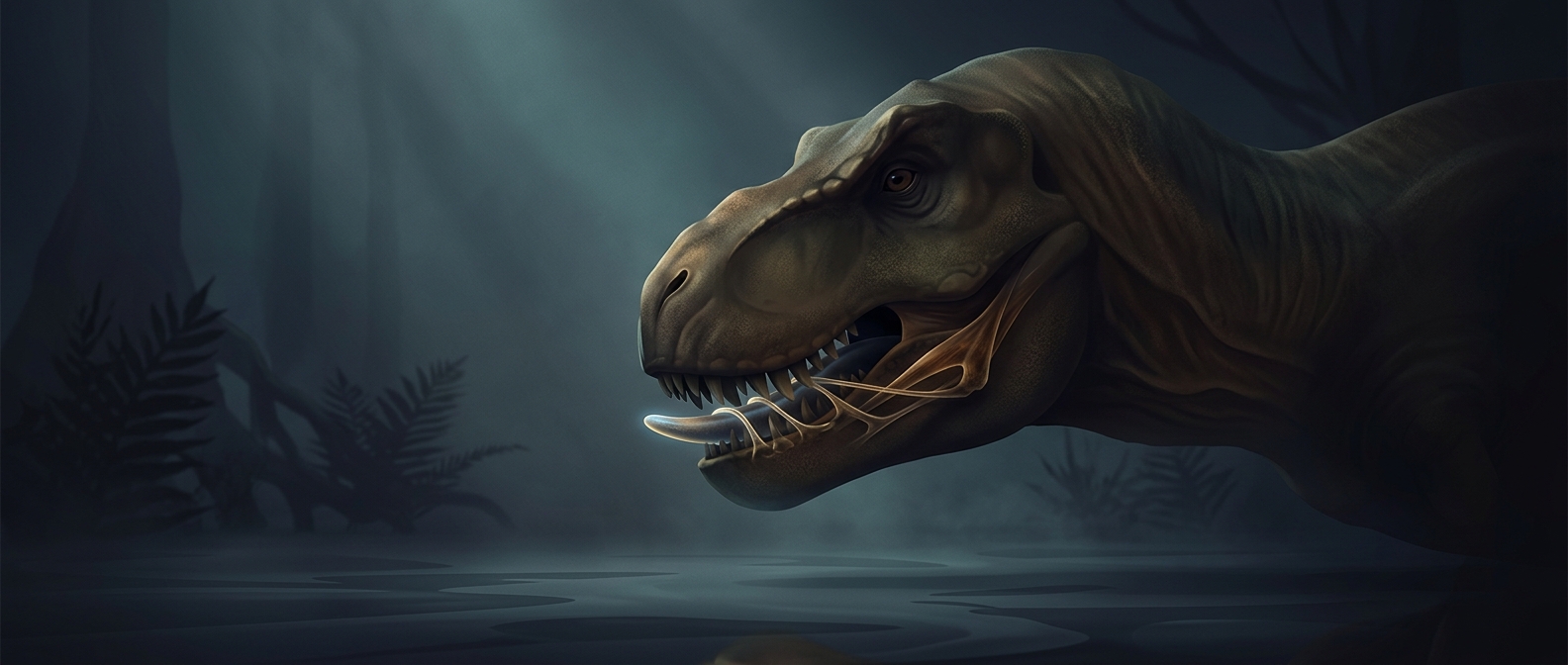
Some proposals favor low rumbles or closed-mouth calls rather than the open-mouthed roar familiar from movies. These are possibilities, not recovered sounds: the evidence does not preserve enough of the sound-producing anatomy to settle the question. Hollywood can supply a dramatic voice instantly; paleontology has to work with incomplete physical clues.
The gap is a reminder that a remarkably complete skeleton is not a complete portrait of an animal. T. rex’s bones can tell us a great deal about its body, but its prehistoric soundtrack remains unresolved.