A message that could become a weapon
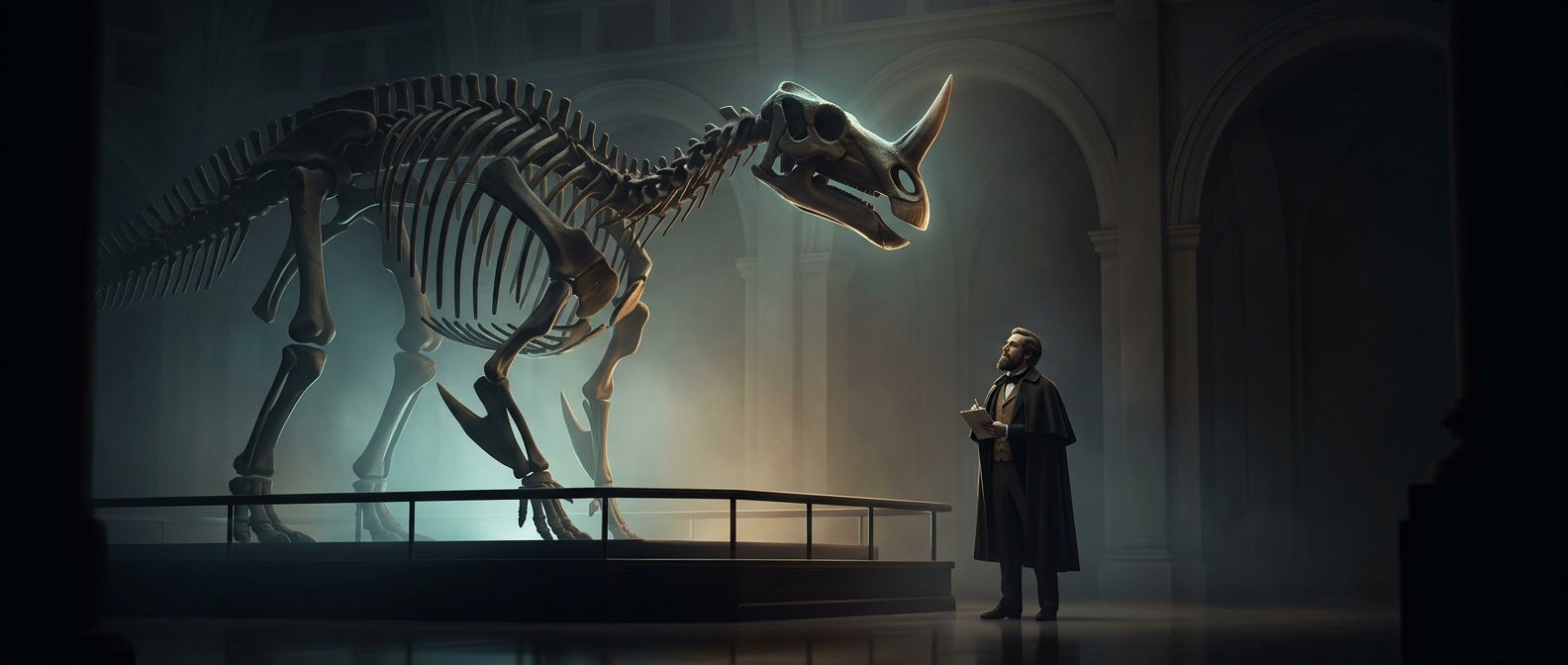
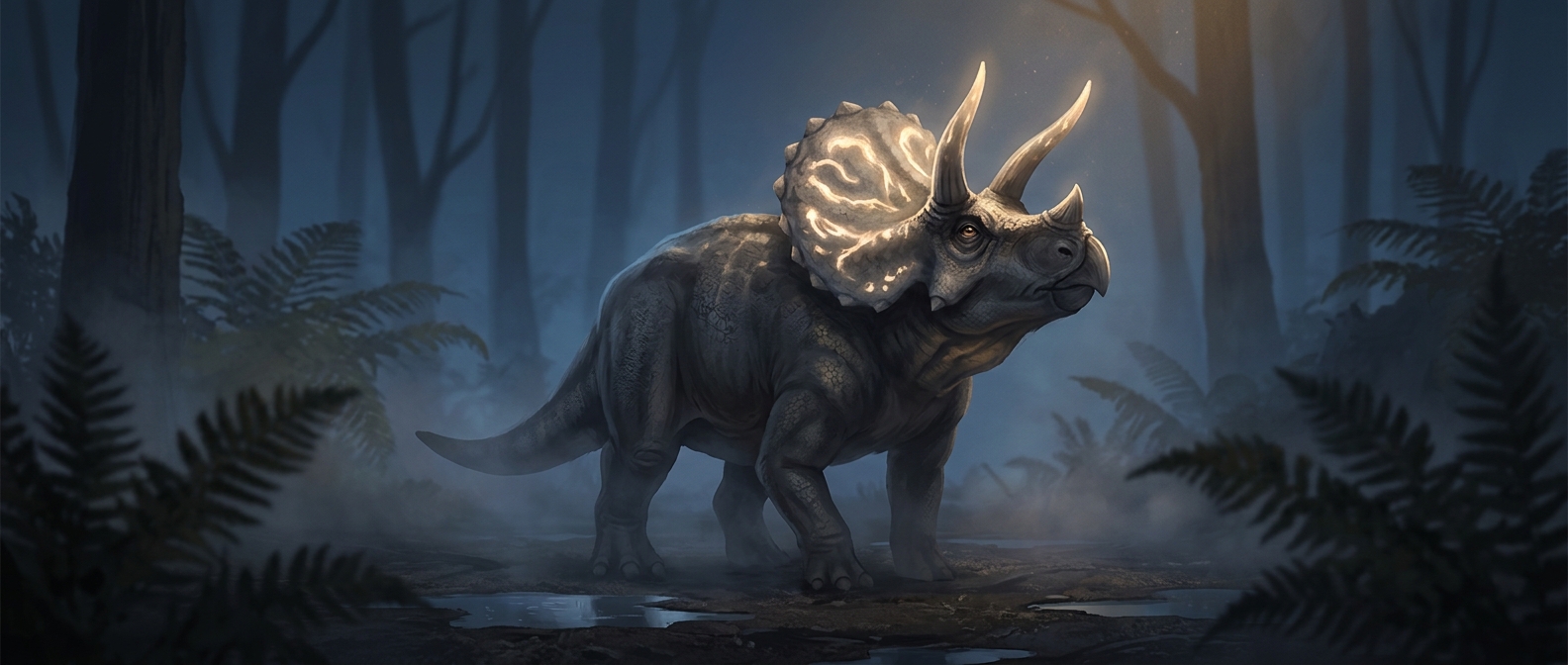
Triceratops’ horns were not necessarily built for a single purpose. They could have helped the dinosaur fend off predators or rivals, while also making its size and apparent strength visible from a distance. In animals alive today, structures used in contests can also serve as signals: an opponent may back down rather than risk a costly fight.
That overlap matters. A horn does not have to be either a weapon or a display. If a rival judged another animal by the size of its horns, the same structures that advertised strength could be brought into play when a confrontation escalated.
Reading the horns without overclaiming
The three horns—two above the eyes and a shorter one on the nose—projected from the skull, while a broad bony frill extended behind it. Together, these features made the head visually striking. Their shape makes defense and signaling plausible, but fossils cannot reveal exactly what an individual dinosaur was communicating or whether a particular horn was primarily for courtship, combat, or recognition.
A useful comparison is a warning display in a living animal: it can prevent a clash, yet remain effective if a clash happens. Triceratops’ horns may have worked in that same practical combination, with their value depending on the situation rather than on one exclusive job.
Why a display could be worth the cost
Growing and carrying large structures takes resources. A feature that both helped in a dangerous encounter and broadcasted strength could repay that investment in more than one way. The important point is not that every horn use is known, but that signaling and defense can reinforce each other: a conspicuous head might persuade a challenger to keep its distance, while leaving its owner equipped if the warning failed.