How a thumb became a nose horn
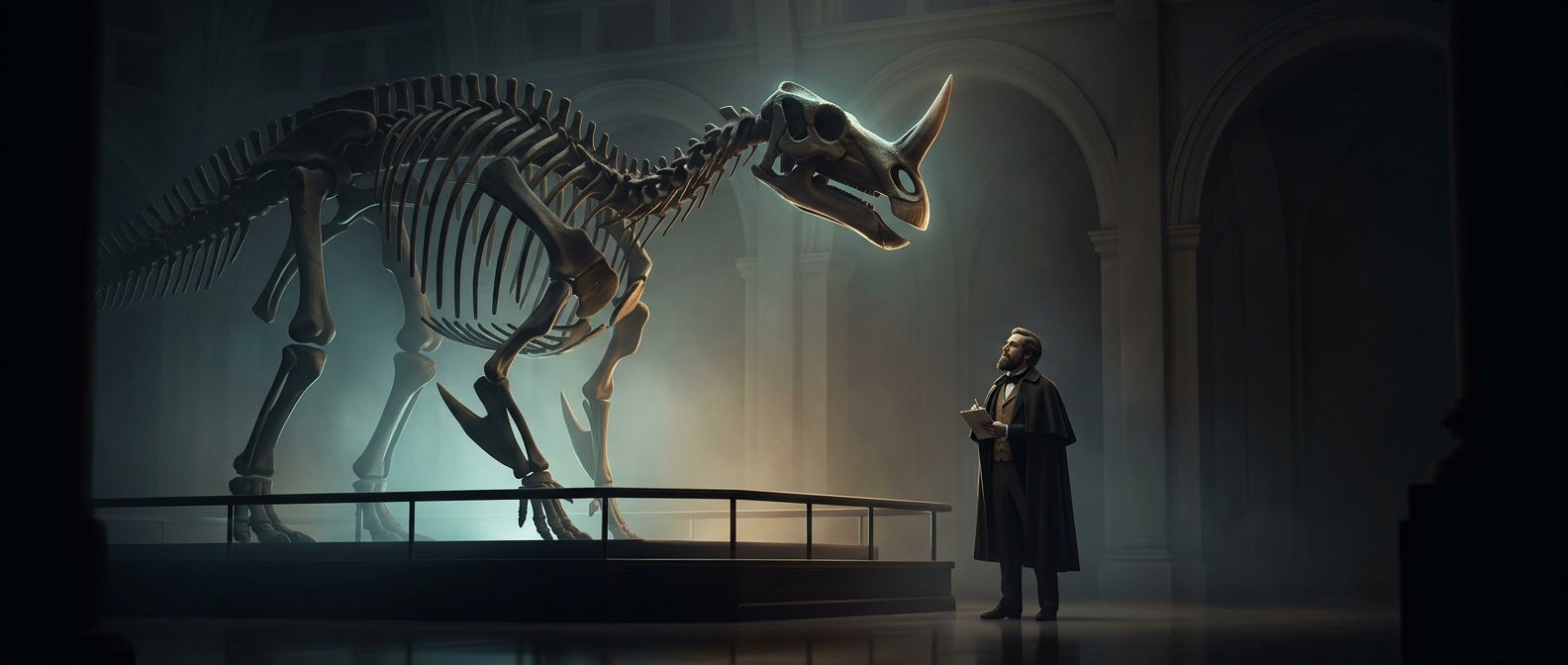
When Iguanodon was first reconstructed, its fossils did not arrive as a complete skeleton with every bone in place. Early finds included teeth and scattered bones, and a large, pointed bone was recognized without clear evidence of where it belonged. A horn-like spike seemed a plausible fit for the animal’s nose, so early images gave Iguanodon a striking, almost unicorn-like profile.
That reconstruction was an interpretation, not a view of an intact fossil. Without the bones arranged in their original positions, it was difficult to tell which part of the animal the spike came from.
More complete fossils changed the picture
The key was finding Iguanodon skeletons preserved with much more of their anatomy together. In 1878, a major discovery in a Belgian coal mine yielded numerous skeletons. Their arrangement gave paleontologists a far better chance to match individual bones to the right parts of the body.
In that clearer context, the spike belonged on the hand: it was a thumb bone, not a nasal horn. The change was more than a cosmetic correction. It showed how a fossil’s position and its connections to neighboring bones can matter as much as the shape of the bone itself.
A reconstruction can change with the evidence
The thumb spike’s exact role is not established by its dramatic appearance alone. What the fossils did establish was its location—and that was enough to redraw Iguanodon. A feature once used to give the dinosaur a horn on its face became an unusual weapon-like point on its hand, turning the old unicorn image into a very different kind of thumbs-up.