The real raptor was a smaller, feathered hunter
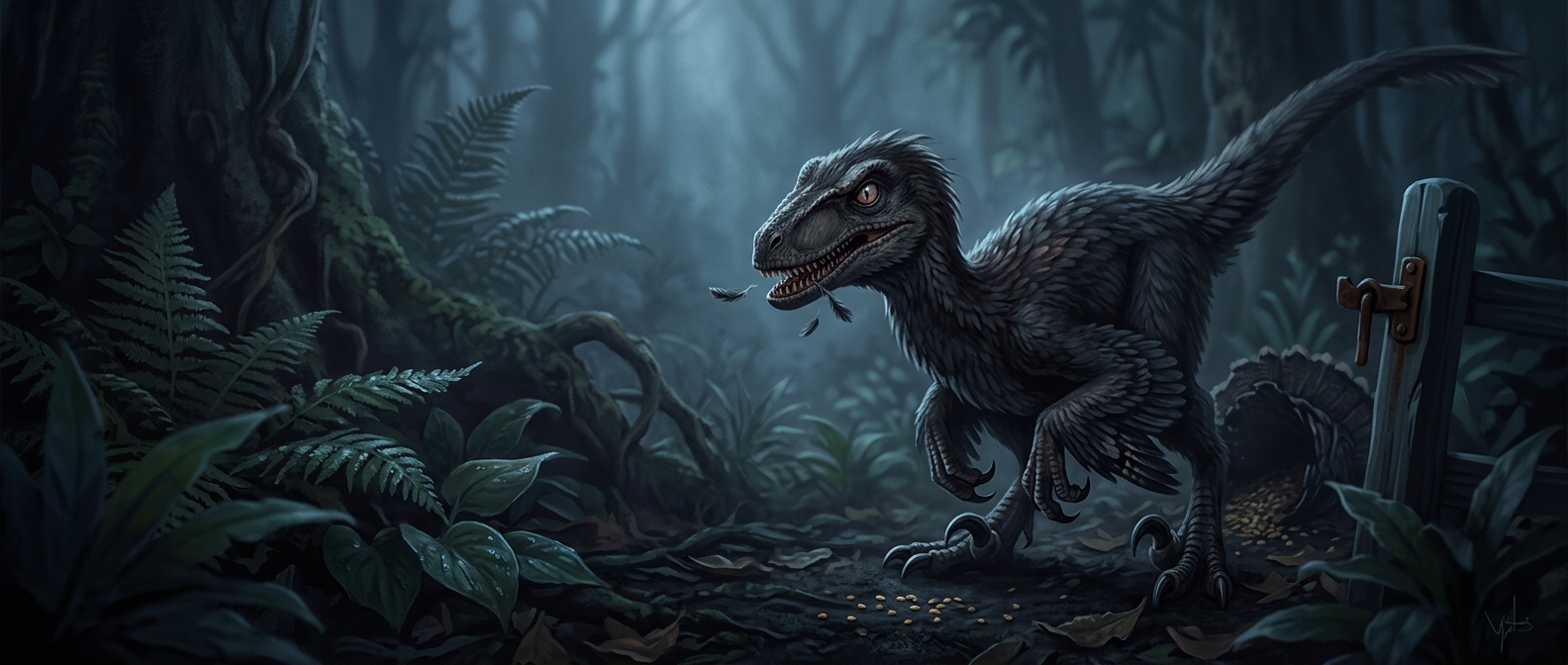
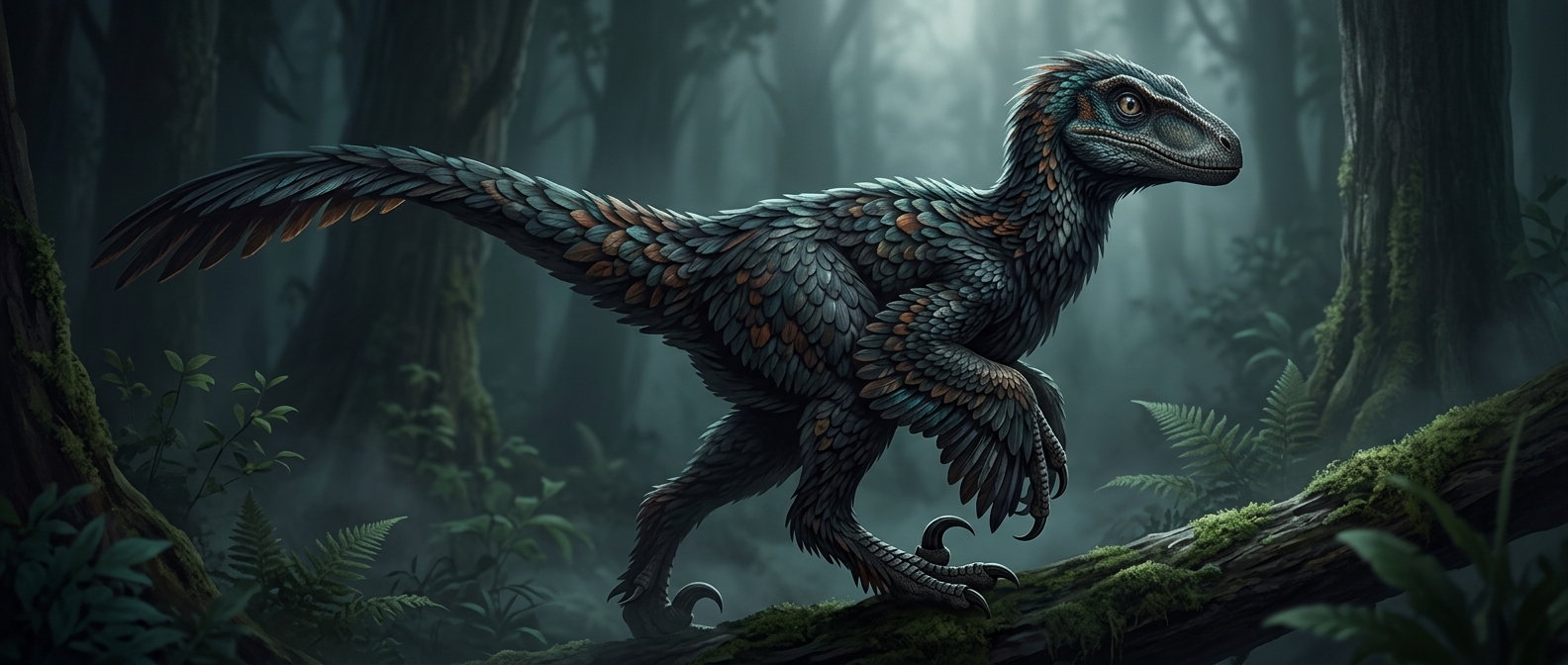
The movie image of a person-sized, scaly Velociraptor is a mash-up, not a close portrait of the fossil animal. Velociraptor was a relatively small predator—closer in overall scale to a large turkey than to the towering hunters on screen. Its long tail and narrow body could make it look larger in a dramatic pose, but it was not the giant people imagine from the films.
The feathers are not just artistic guesswork. Fossils preserve evidence of attachment points for feathers along the animal’s forearm. Those feathers probably did not form wings capable of flight; they are evidence that Velociraptor belonged to a feathered branch of dinosaurs, much as modern birds do.
How a bigger dinosaur became “Velociraptor”
The films’ imposing hunters resemble larger relatives, especially Deinonychus, more than the actual Velociraptor. The name “raptor” has become shorthand for a frightening, clawed dinosaur, but it covers animals with different sizes and builds. Popular fiction combined that larger scale with Velociraptor’s name and recognizable sickle-shaped toe claw.
That claw was a real feature, though its exact role is more complicated than the movies’ image of a blade used to slash prey. Velociraptor likely held or pinned animals with its feet, using its claws as part of a close-range hunting toolkit. The contrast is the memorable part: the real animal was still a formidable predator, just one whose birdlike feathers and turkey-scale body make it look less like a monster—and more like a dinosaur on the way to becoming a bird.