A Triceratops skull changed with age
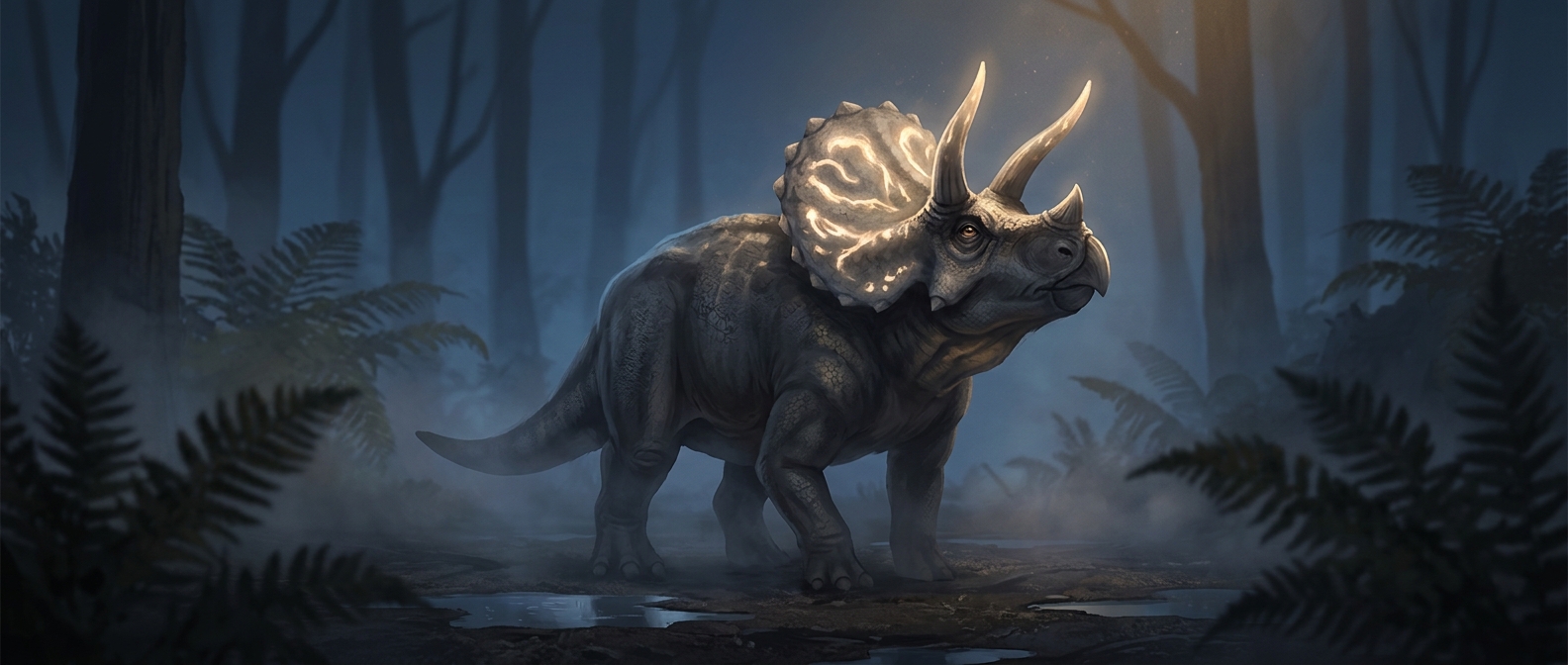
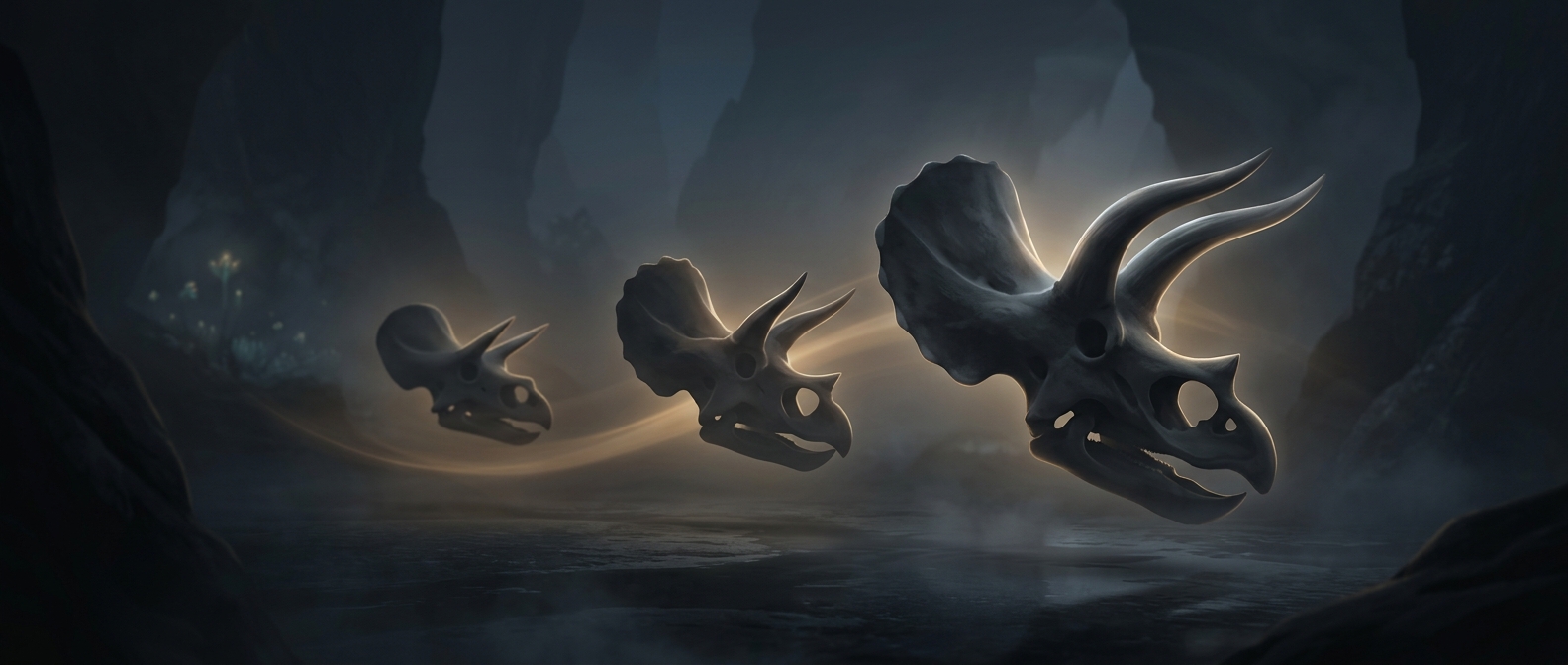
A young Triceratops did not simply look like a smaller adult. As the animal grew, its skull developed and remodeled, and its brow horns changed orientation: they began pointing more backward and curved forward in mature animals. The horns were part of the skull, so their changing shape reflected growth of the underlying bone—not a set of detachable features that stayed fixed throughout life.
Growth can mimic a difference in identity
Fossils preserve individuals at different stages of life. Set a juvenile skull beside an adult one, and the contrast in horn shape can make them look like different kinds of dinosaur. But a visible difference does not automatically mark a separate species: researchers also consider age-related clues, such as skull size and bone texture, when comparing specimens.
That does not mean every difference between Triceratops fossils is explained by age. It means comparisons need to account for growth before treating a distinctive skull as evidence of a different identity. A fossil skull records both what kind of animal it was and where it was in its life.