Why Stegosaurus seemed to have a second brain
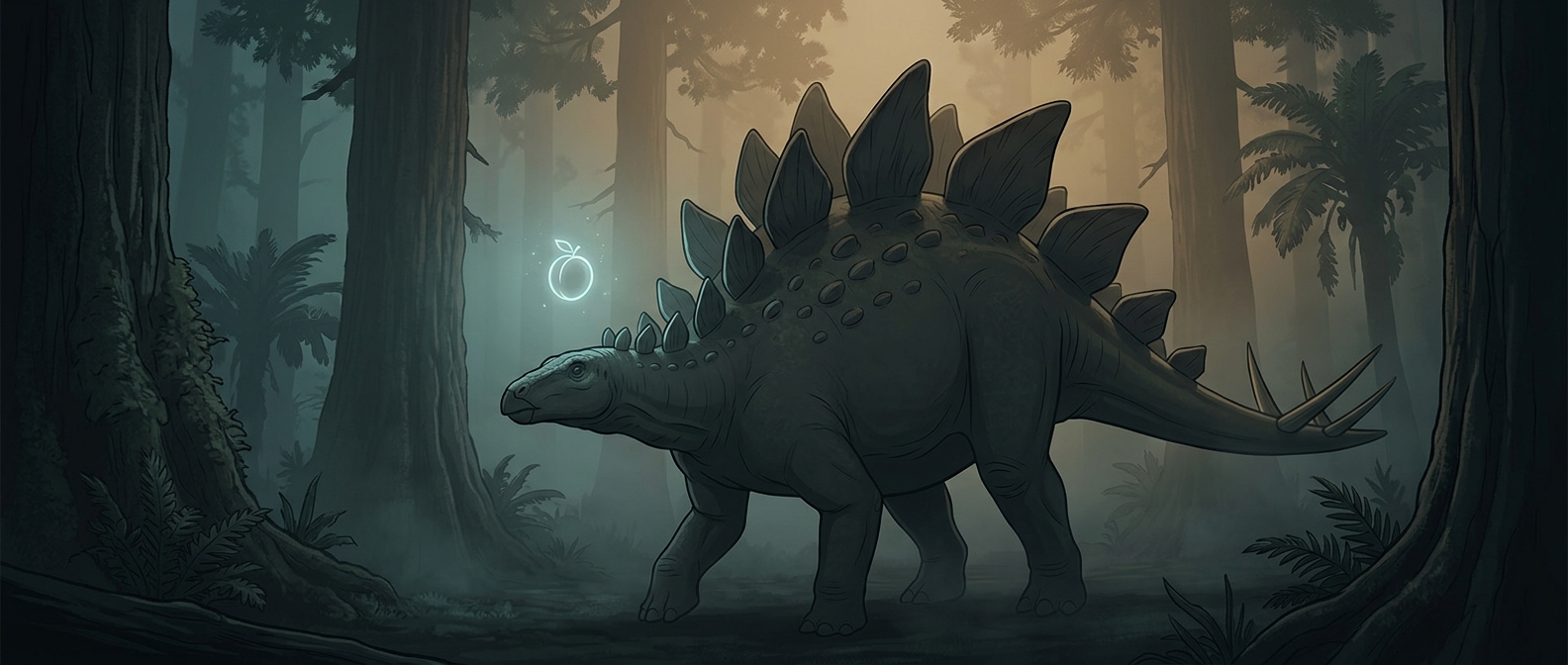
Stegosaurus had a small brain for its large body, but its unusual anatomy created a bigger puzzle. Near the pelvis, the spinal canal—the passage through the backbone that carries the spinal cord—widened into a roomy space. Early researchers thought the space might have held a second brain, helping control the dinosaur’s enormous hindquarters.
The idea was memorable, but it confused room for nerves with room for thought. A wide canal does not by itself show that a brain sat inside it. The enlarged area was more plausibly associated with nerves serving the rear legs and nearby tissues.
What a spinal-canal enlargement can mean
The spinal cord carries signals between the brain and the body. Along its length, nerves branch off to control movement and carry sensation. Where a body region needs substantial nerve connections, the spinal canal may be enlarged to accommodate a thicker part of the cord or related neural structures. In an animal with a massive body and powerful hind legs, a pelvic enlargement is not surprising.
That is different from a second thinking center. A brain is a distinct organ, and the fossil evidence for the Stegosaurus pelvic space does not establish one. The space itself was real; its interpretation as a brain was the leap.
A fossil clue, and its limit
The story shows why paleontologists have to infer soft tissues from bones. Fossils preserve hard structures far more often than brains, nerves, or spinal cords, so a hollow or enlarged passage can invite competing explanations. Its shape offers evidence about what may have occupied it, but not every roomy cavity marks a remarkable organ.
In this case, the less dramatic explanation fits the anatomy better: the enlargement likely related to nerve supply for the hindquarters. Stegosaurus may have had a notably small brain, but the famous “second brain” was a mistaken reading of the space around its spinal cord.