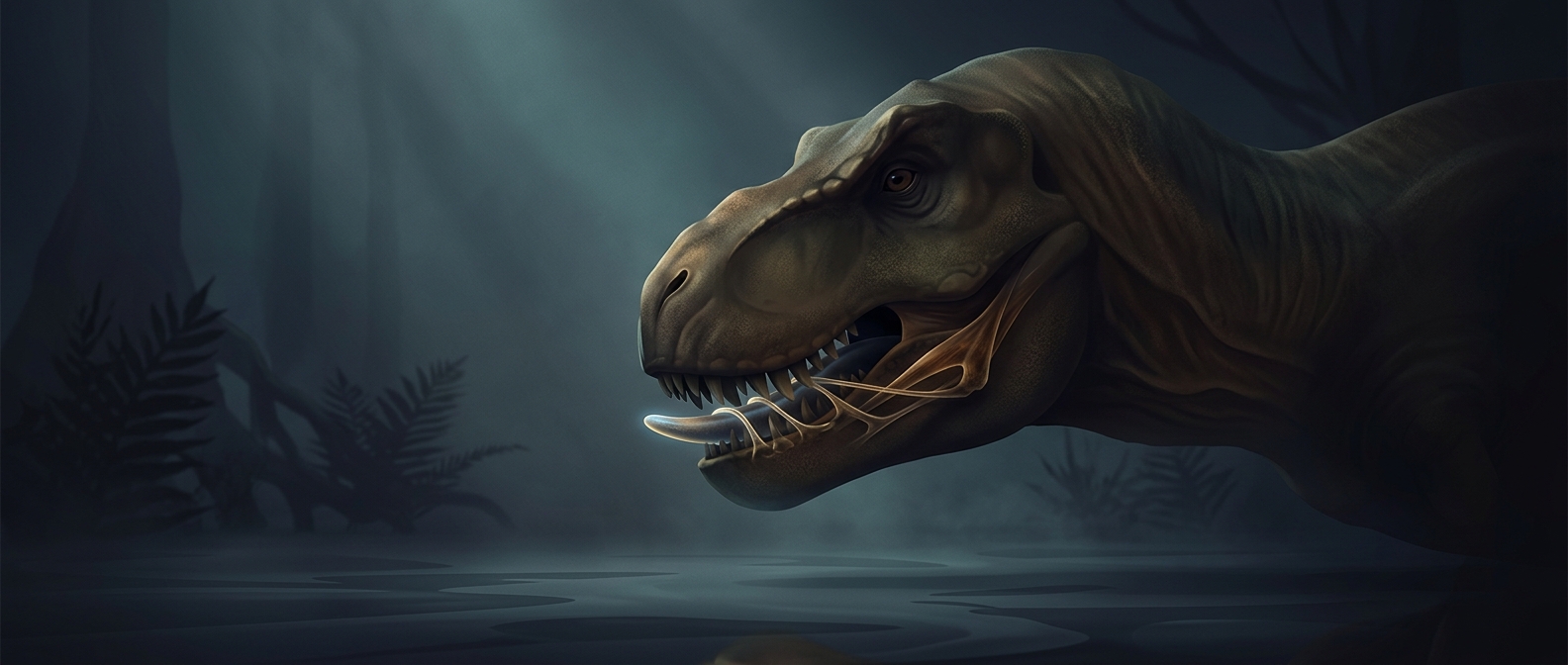
What the bones can tell us about a tongue
A tongue is mostly soft tissue, so it usually disappears long before a fossil forms. The clue in T. rex fossils is the hyoid apparatus: a set of small bones and cartilage in the throat that supports the tongue and helps connect it to the mouth and neck.
Those bones do not preserve the tongue’s shape or show it moving. Instead, their arrangement gives paleontologists a framework for inferring how the tongue was supported. In T. rex, that framework suggests the tongue was anchored low in the mouth, rather than freely suspended as it is in many mammals.
A crocodile-like arrangement
Crocodiles have a similarly low, relatively fixed tongue. Comparing the fossil hyoid bones with those of living animals helps researchers reconstruct the most plausible arrangement in a dinosaur whose soft tissues are gone.
That does not mean anyone has found a T. rex tongue preserved in place, or can know exactly how much it moved. The inference is narrower: its bony supports point to a tongue held against the floor of the mouth. So the familiar image of a roaring tyrannosaur dramatically lolling its tongue out is probably a poor match for its anatomy.