Short Arms, Built for Force
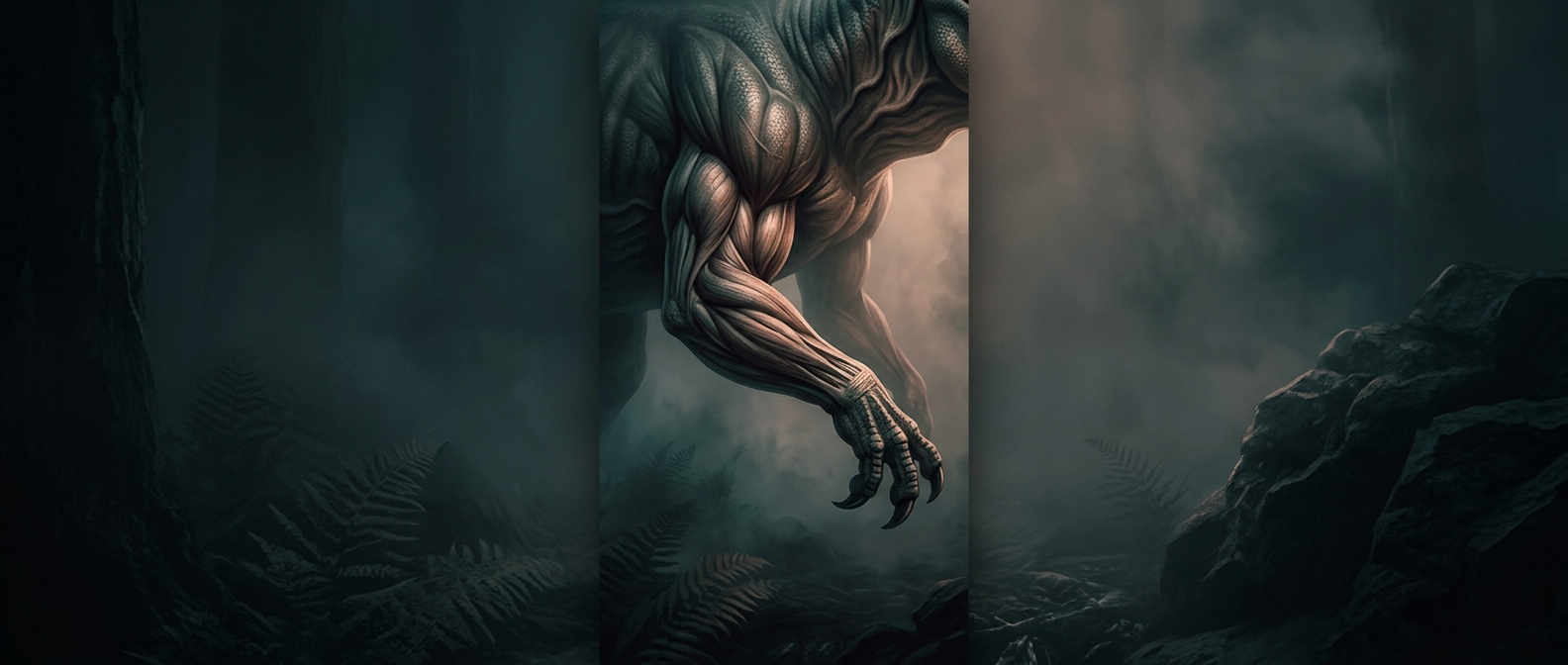
A Tyrannosaurus rex’s arms were tiny compared with its enormous body, but size alone does not tell you how much force a limb could produce. The upper-arm bone, or humerus, has rough areas where muscles attached. Those attachment marks indicate that the arm was not merely a limp, useless remnant: it had substantial muscles capable of moving and gripping with force.
Muscle attachment marks are clues, not a complete blueprint. They can help researchers infer where muscles acted and how strongly, but they cannot reveal exactly what a living T. rex did with its arms. Fossils preserve the bones, not the full muscles or the animal’s behavior.
Strength Does Not Reveal the Job
A limb can be powerful without having a clear purpose to us. T. rex’s short forelimbs had limited reach, so they could not do the same work as the long arms of many other meat-eating dinosaurs. Their proportions may have made them useful for particular close-range movements, but the evidence does not settle which ones.
That leaves a distinction worth keeping in mind: the arms show signs of strength, while their exact function remains uncertain. A fossil can tell us that muscles were anchored there; it cannot, by itself, tell us whether the animal used its arms to hold, brace, or perform some other task. The striking puzzle is not simply why T. rex had short arms, but how a short limb could still be muscular and forceful.