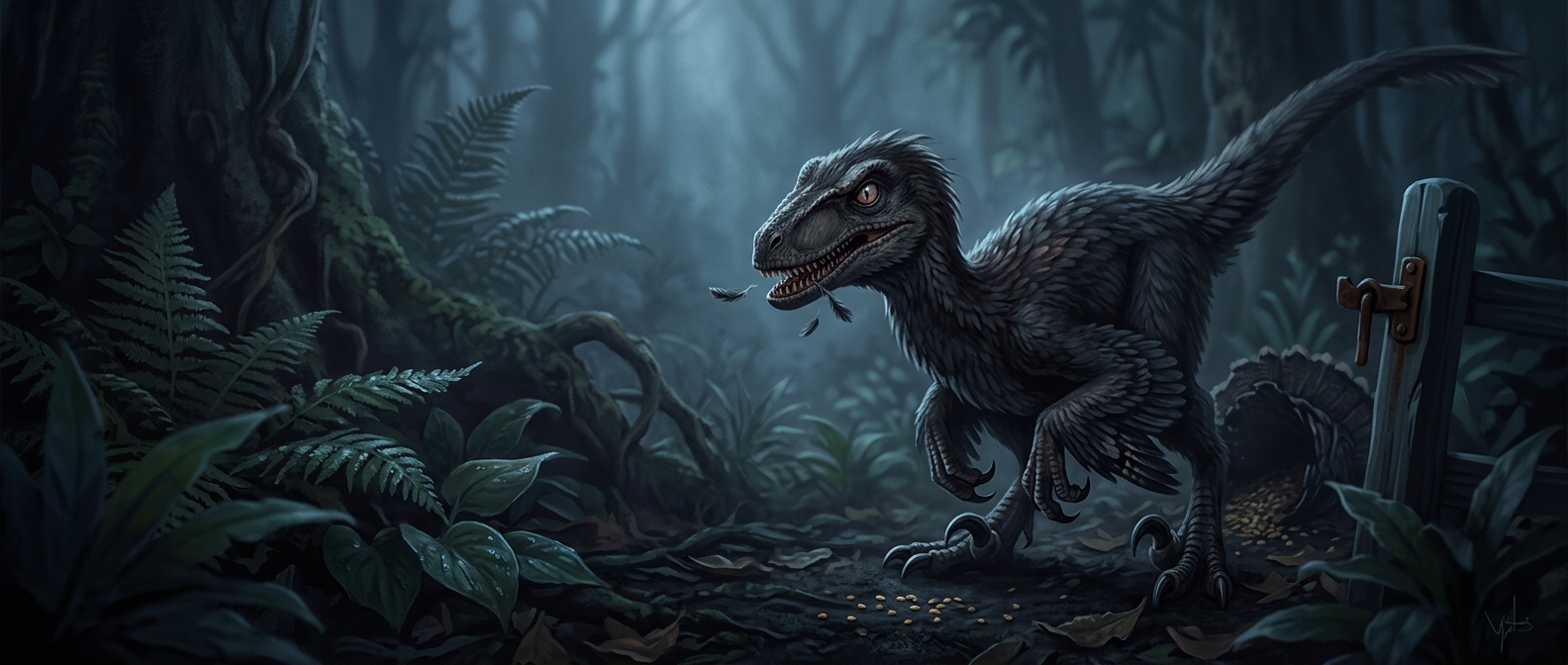
The evidence is in the arm bones
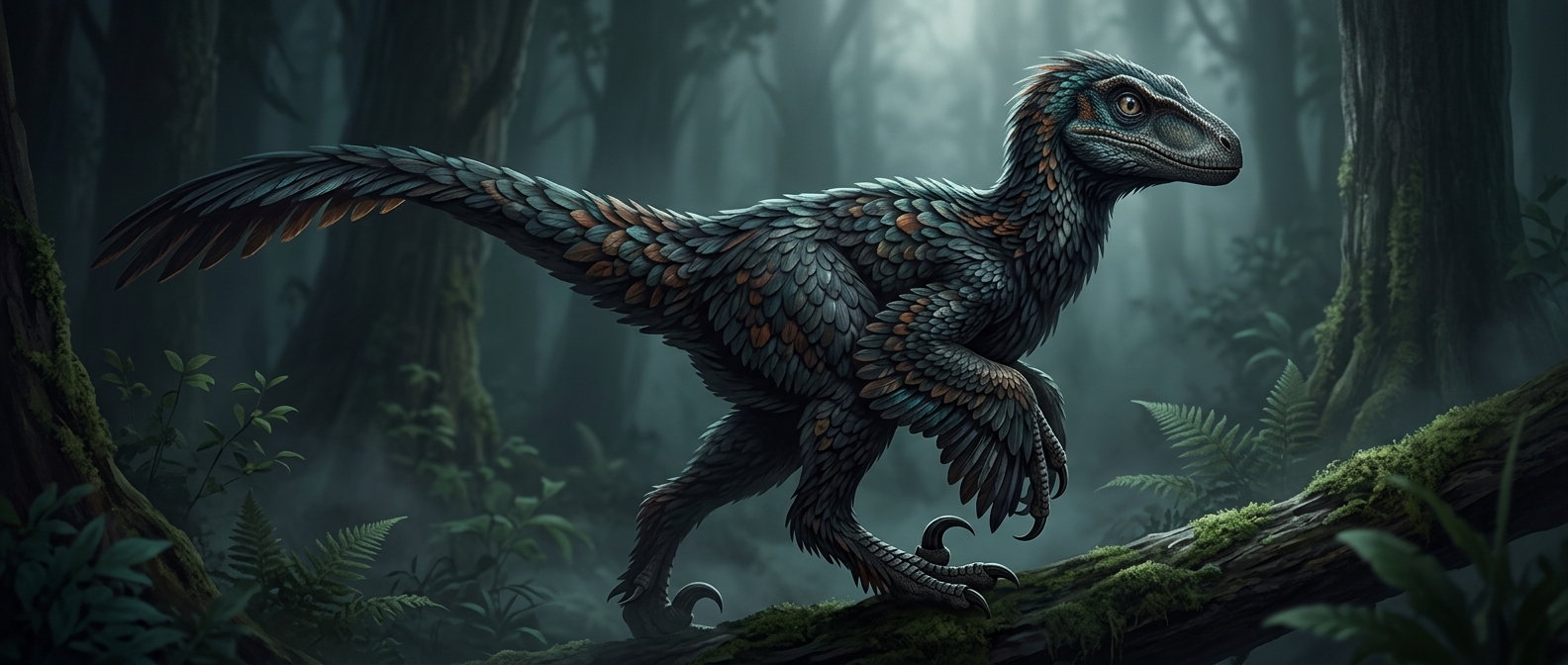
Velociraptor’s feathers are known not just from comparisons with living birds. Fossils preserve small bumps along the forearm bones called quill knobs—places where the ligaments anchoring large feathers attached. The feathers themselves rarely fossilize, so these marks provide a durable clue to what the animal’s arms carried.
Those feathers would have formed a broad surface, but that alone does not mean the arms were wings. Velociraptor’s body and forelimbs were not suited to generating enough lift to fly. A feathered arm could be useful without leaving the ground.
Feathers can do more than enable flight
Feathers evolved in the dinosaur lineage before powered flight. In Velociraptor, they may have helped with display, temperature control, or stability as the animal moved; scientists cannot identify one definite purpose from the bones alone. If the feathers spread its arms’ surface area, for instance, they might have helped it steady itself while turning or handling prey.
This is why the familiar image of a bare-skinned reptilian hunter misses an important evolutionary detail. Velociraptor had a birdlike covering, but its feathers did not make it a bird in the modern sense—or a flyer. They show that feathers were already part of dinosaur life for purposes that could matter on the ground.