How a hadrosaur’s tooth battery worked
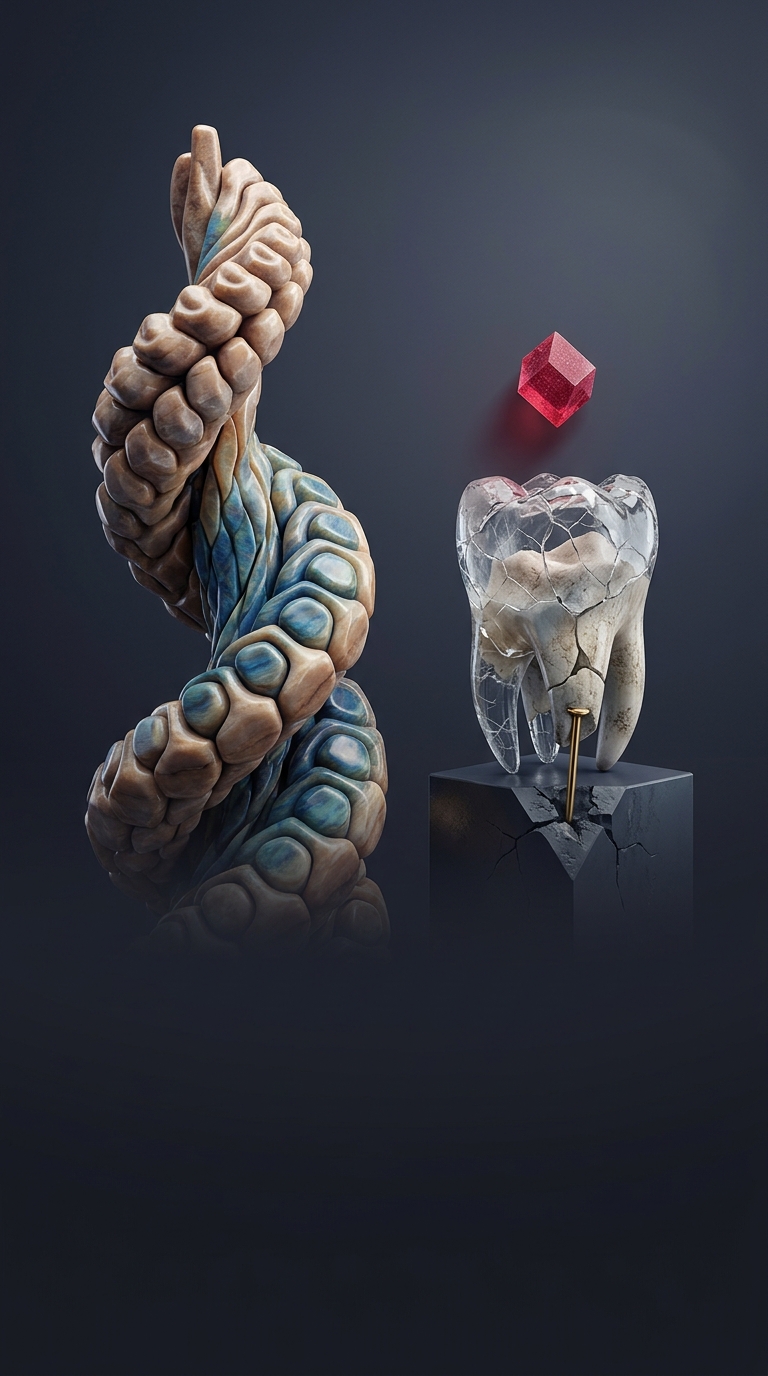
A hadrosaur did not have a thousand teeth all lined up like a modern animal’s. Its upper and lower jaws held dental batteries: tightly packed groups of teeth arranged in several overlapping rows. In each battery, only some teeth formed the active chewing surface at a time. Their angled surfaces met as the jaws closed, slicing and grinding plant material rather than merely puncturing it.
This arrangement mattered because tough leaves and stems are hard to break down. The more thoroughly an animal chews them, the more surface area digestive juices can reach. A broad, ridged grinding surface let hadrosaurs process large amounts of fibrous vegetation without relying on sharp teeth that would quickly lose their cutting edge.
The replacement process
A battery was not a fixed set of teeth. Beneath the teeth doing the chewing, replacement teeth developed inside the jaw. As the working surfaces wore down, new teeth moved into position and joined the grinding face. The worn teeth were shed or reduced through use, while the next ones continued the cycle.
That continual replacement was especially useful for an animal whose teeth faced constant abrasion from chewing plant matter, including material carrying grit. Hadrosaurs could keep renewing the surfaces that did the work instead of depending on a single set to last for life.
A jaw built around its food
The battery’s many teeth worked together, so the animal’s chewing capacity depended on the whole arrangement—not on any one tooth. Estimates of tooth counts can sound startling because they include teeth in different stages of use and replacement, not a thousand independent chewing tools active at once.
The result was a specialized feeding system: a jaw that could keep presenting fresh, tightly packed grinding surfaces as old ones wore away. For a large plant-eater, replacing the wear-prone parts was not a luxury; it was what made prolonged chewing practical.