Why Spinosaurus Was Built for Fish
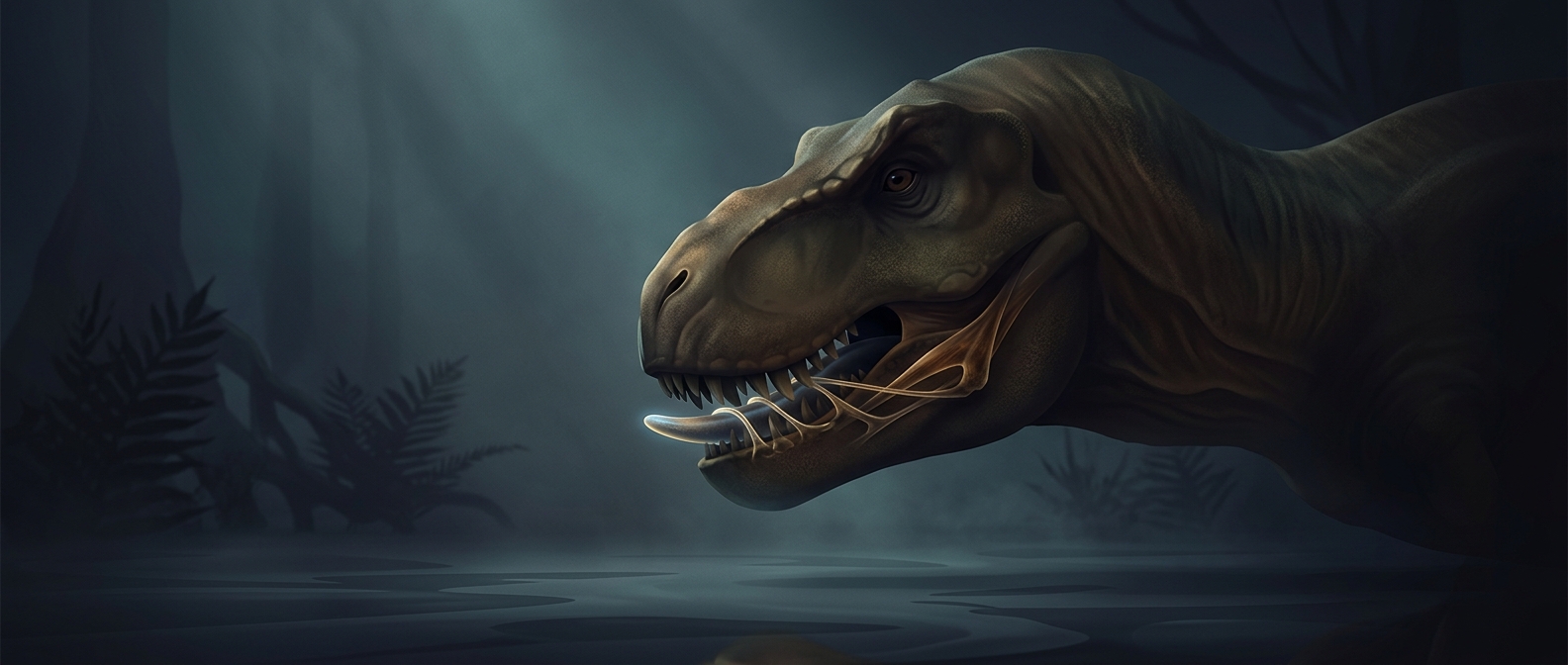
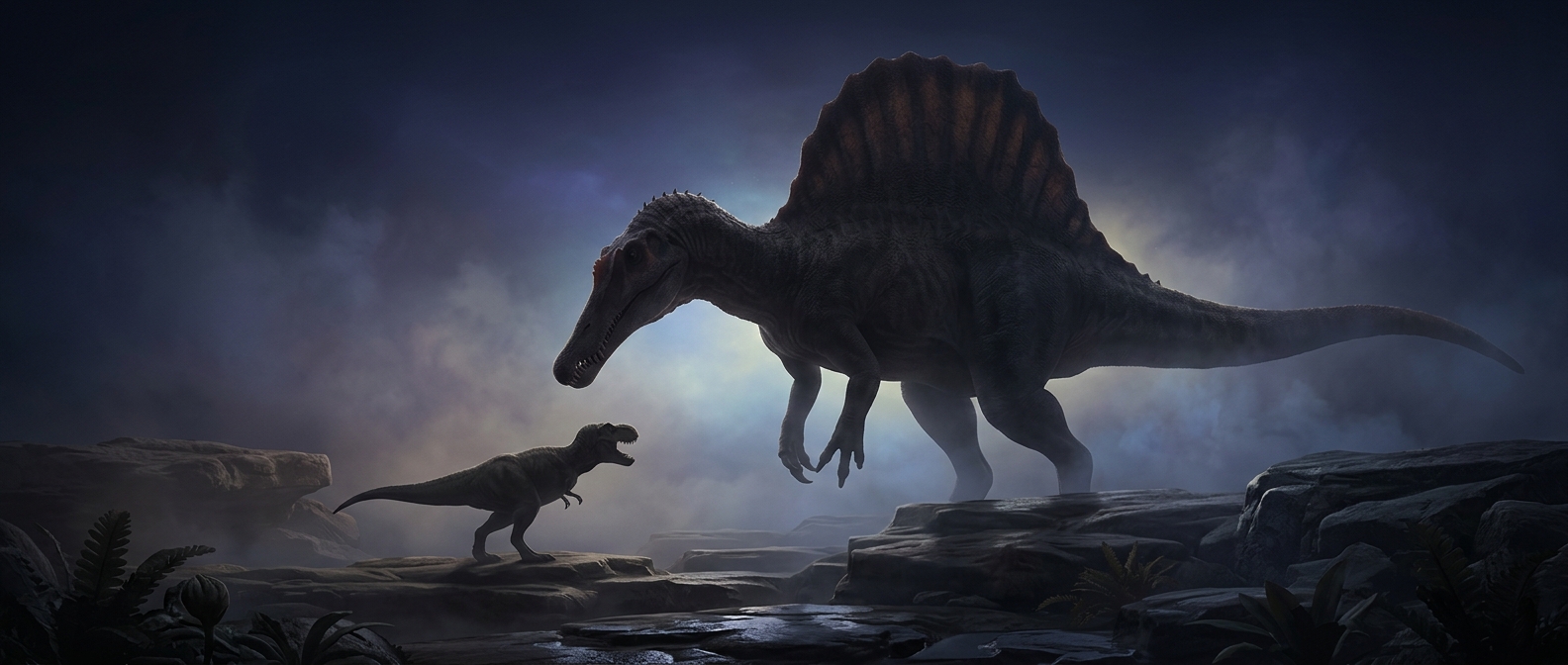
Spinosaurus’s long, narrow snout and cone-shaped teeth point to a different way of feeding from the bone-crushing image many people associate with Tyrannosaurus rex. Those teeth were suited to gripping slippery prey, while the jaws could reach into the water. Together, they suggest a predator that caught fish around rivers and other waterways.
That is a strong clue, not a preserved record of every meal. Fossils reveal the shapes of the teeth and skull; they do not show a dinosaur hunting. The fish-catching interpretation comes from connecting those features to what they could do.
A Bigger Dinosaur? The Measurement Is Less Certain
Spinosaurus may have stretched farther from nose to tail than T. rex, but that comparison rests on incomplete fossils. When parts of a skeleton are missing, researchers must estimate the animal’s full length from the pieces that remain. A long body estimate can make Spinosaurus seem like the clear winner, even though the yardstick is less secure than the skull evidence.
The distinction matters: a persuasive picture of how Spinosaurus fed does not automatically make its exact size just as certain. Its narrow jaws and fish-gripping teeth offer a concrete window into its likely menu; its proposed greater length remains a comparison with pieces missing.