Reading a catastrophe in layers of rock
A rock outcrop can preserve a sequence of ancient environments like pages stacked in a book. As sediment settles, it buries remains and forms new layers; unless the sequence has been disturbed, deeper layers are older than those above them. Scientists can therefore compare fossils from below and above the thin geological boundary associated with the asteroid impact about 66 million years ago.
The boundary is marked by material linked to the impact, including an unusual concentration of iridium, an element scarce in Earth’s crust but more common in asteroids. It gives researchers a recognizable horizon to follow across sites. Fossils beneath it record life before the catastrophe; fossils above it show which organisms persisted into the aftermath.
Testing the timing of extinction
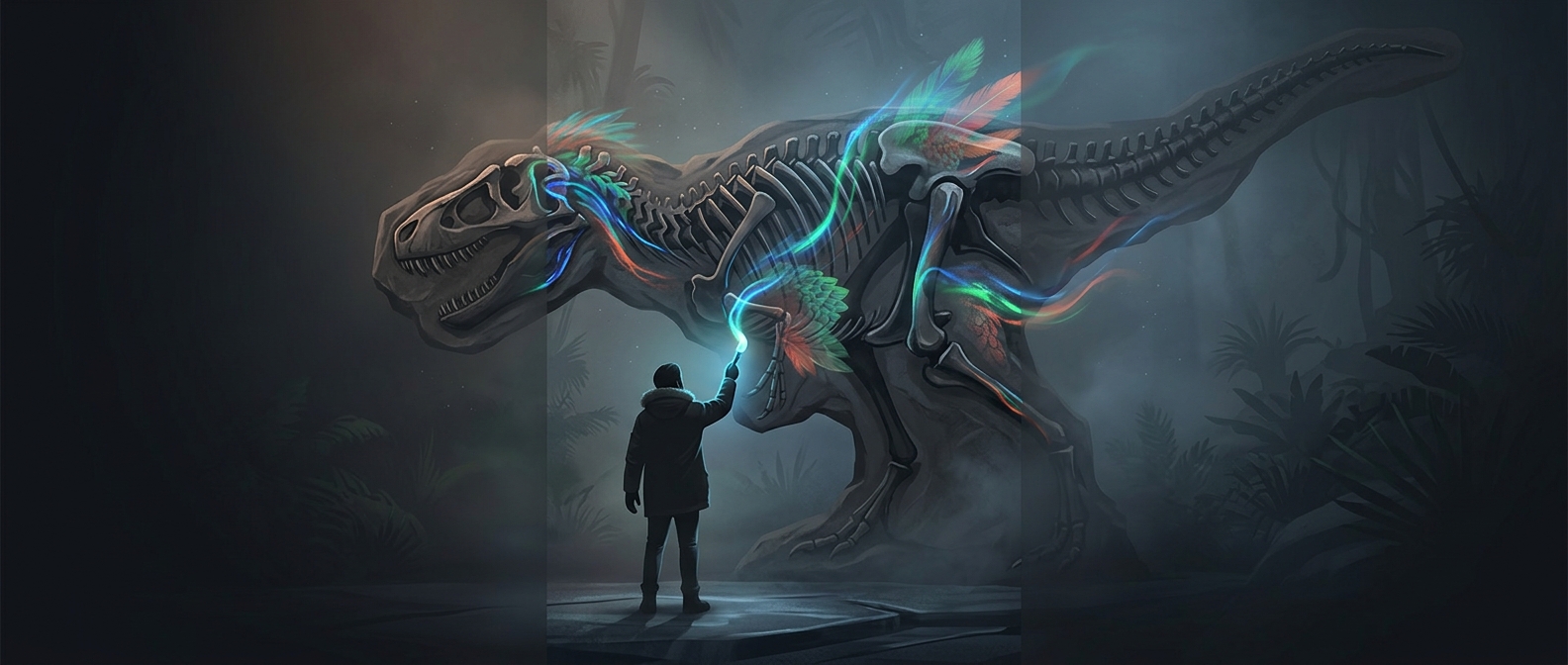
The key question is not simply whether non-bird dinosaurs vanish from the record, but when. If their fossils become less common or less diverse through many layers below the boundary, that could point to changes already underway. If they remain present close to the boundary and are absent above it, the pattern supports a sharp disappearance associated with the impact.
That comparison takes care. Fossils are rare, and a layer without dinosaur remains does not prove dinosaurs were absent: the animals may not have lived nearby, or the right conditions to preserve their remains may not have occurred. Researchers examine repeated patterns across rock layers and locations rather than treating one missing fossil as a verdict.
What the rocks can—and cannot—show
This method turns scattered fossils into a timeline, but it works best where the layers are intact and detailed enough to capture change near the boundary. A sudden shift in the record can reveal how abruptly ecosystems changed; gradual shifts below it can show that some trends preceded the catastrophe. The distinction matters because it helps separate long-term ecological change from the event that ended the age of non-bird dinosaurs.
In a well-preserved sequence, the last dinosaur fossil below the boundary and the first post-impact fossils above it are not just isolated finds: their positions help constrain how quickly the world’s living communities were transformed.