How a giant pterosaur could get airborne
Some of the largest pterosaurs had bodies that posed a daunting engineering problem: they needed to lift a huge frame and broad wings from the ground. Their likely solution was a four-limbed launch. Rather than building speed in a long, birdlike runway sprint, the animal could brace on its hind legs and use its powerful forelimbs to thrust upward. Those forelimbs supported the wings, so the same anatomy that helped it fly could also help propel it into the air.
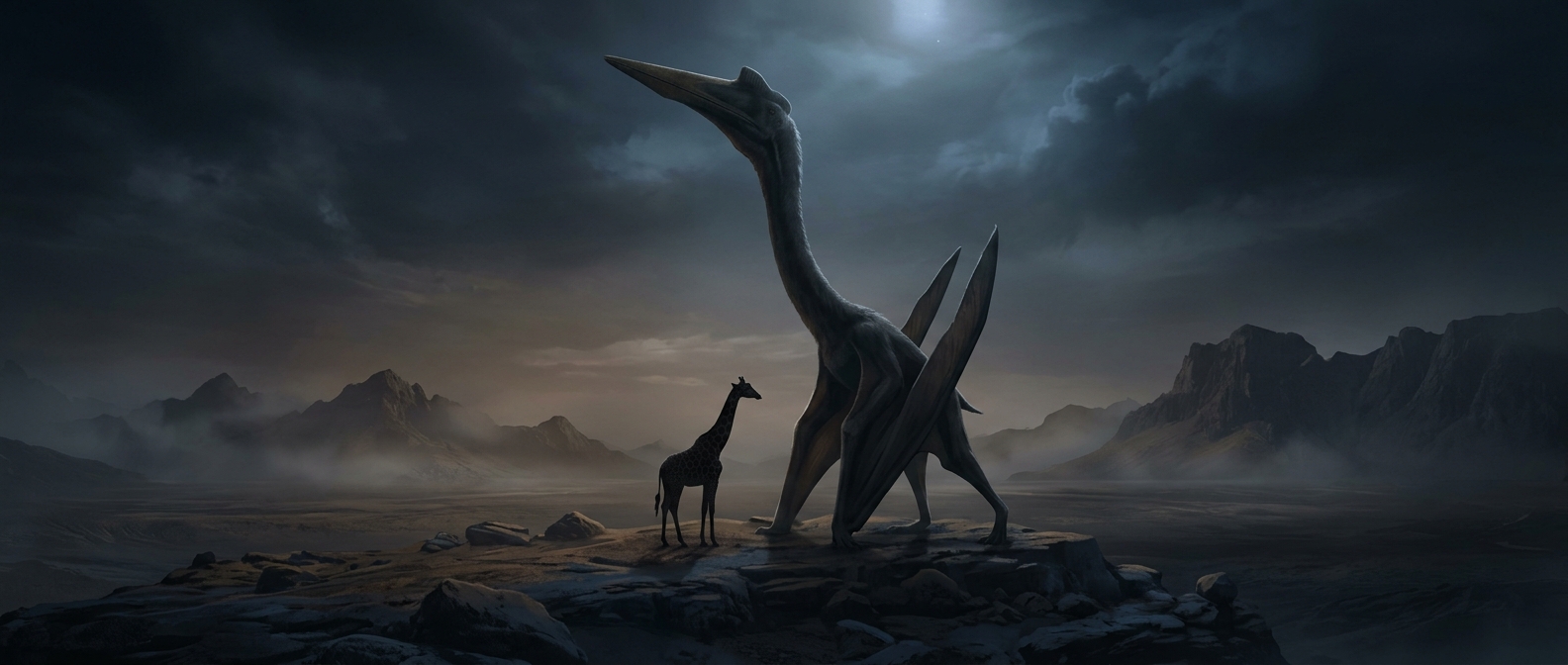
That launch would have mattered especially for an animal with very long legs and a long neck. A giraffe-like standing height did not mean it had to take off from a high perch; it could begin on the ground, compress its limbs, and spring up. Once airborne, it could use its wings to gain lift and remain aloft.
What its height says about feeding
Long legs and a long neck would have let the animal reach down to food without needing to land on all fours or crawl along the ground. That makes feeding from the ground plausible, but it does not settle what the animal ate or how it hunted. Paleontologists infer behavior from fossil anatomy, and the same reach could fit more than one feeding strategy.
The distinction is important: a body plan can suggest what an animal was capable of without revealing exactly what it did. A towering pterosaur might have been able to forage at ground level, but its height alone cannot show whether it picked up prey, searched for other food, or used a different approach.
A spring, not a runway
The four-limb launch offers a way to reconcile enormous size with flight. It shifts the key question from “How fast could it run?” to “How much force could its limbs deliver in one push?” The answer is not directly visible in a fossil, and the details of takeoff and hunting remain debated. But the basic implication is striking: the wings may have helped an animal launch before they ever carried it through the sky.